












Core properties and the role of screw dislocations in the bulk n-type conductivity in InN
文献情報
出版日
2019-07-01
DOI
10.1039/C9CP02062D
インパクトファクター
3.676
著者
Imad Belabbas, Laurent Pizzagalli, Joseph Kioseoglou, Jun Chen
原文を見る
要旨
First principles calculations, based on density functional theory, have been carried out to investigate the role of screw dislocations in the bulk n-type conductivity which is usually observed in indium nitride. Energetics, atomic and electronic structures of different core configurations of dislocations, running along the [0001] polar or along the [110] non-polar direction, have been determined and compared. This enabled inspection of the modifications in the properties of screw dislocations when the growth direction is changed. For the c-type screw dislocation, the configuration with a double 6-atom ring, involving wrong bonds was revealed as a ground state configuration, and for the a-type screw dislocation, the shuffle configuration was found to be energetically favoured over glide ones. Unlike core configurations of the a-type screw dislocation, those of the c-type screw dislocation have their Fermi levels pinned in the conduction band and thus act as a source of non-intentional n-type conductivity. This demonstrates that eliminating the contribution of screw dislocations to the n-type conductivity can be achieved by growing wurtzite InN along the non-polar direction.
関連文献
Orientation of nitro-group governs the fluorescence lifetime of nitrobenzoxadiazole (NBD)-labeled lipids in lipid bilayers
Šárka Pokorná, Martin Hof, Mariana Amaro
2018-11-05
Paper
DOI: 10.1039/C8CP06064A
Electron transfer mediates vibrational relaxation of CO in collisions with Ag(111)
Mareike Wallrabe
2018-11-09
Paper
DOI: 10.1039/C8CP06041J
Identification of the maze in the conformational landscape of fenchol
E. M. Neeman, T. R. Huet
2018-09-12
Paper
DOI: 10.1039/C8CP04011G
Atomically-defined model catalysts in ultrahigh vacuum and in liquid electrolytes: particle size-dependent CO adsorption on Pt nanoparticles on ordered Co3O4(111) films
Firas Faisal, Corinna Stumm, Manon Bertram, Tobias Wähler, Ralf Schuster, Feifei Xiang, Ole Lytken, Ioannis Katsounaros, Karl J. J. Mayrhofer, M. Alexander Schneider, Olaf Brummel
2018-08-29
Paper
DOI: 10.1039/C8CP03770A
Two-dimensional stable transition metal carbides (MnC and NbC) with prediction and novel functionalizations
Yina Huang, Baolin Wang, Qiangqiang Meng, Lele Fan, Qinfang Zhang
2018-09-10
Paper
DOI: 10.1039/C8CP04541K
First-principles calculations of the electronic properties of SiC-based bilayer and trilayer heterostructures
Song Li, Jyh-Pin Chou, Jie Wei, Huaizhong Xing, Alice Hu
2018-09-03
Paper
DOI: 10.1039/C8CP03508C
The prediction of far-infrared spectra for planetary nitrile ices using periodic density functional theory with comparison to thin film experiments
C. Ennis, D. R. T. Appadoo, E. G. Robertson
2018-09-07
Paper
DOI: 10.1039/C8CP04219E
Correction: Two-dimensional nitrides as highly efficient potential candidates for CO2 capture and activation
Raul Morales-Salvador, Ángel Morales-García, Francesc Viñes, Francesc Illas
2018-09-14
Correction
DOI: 10.1039/C8CP91852J
Role of sterics in phosphine-ligated gold clusters
Katherine A. Parrish, Mary King, Marshall R. Ligare, Grant E. Johnson, Heriberto Hernández
2018-09-20
Paper
DOI: 10.1039/C8CP04961K
Detecting weak signals from interfaces by high accuracy phase-resolved SFG spectroscopy
Martin Thämer, R. Kramer Campen, Martin Wolf
2018-09-28
Paper
DOI: 10.1039/C8CP04239J
こちらもおすすめ
化合物よくある質問
四氢-3-呋喃羧酰胺を含む廃棄物はどのように処理すべきですか?
四氢-3-呋喃羧酰胺を含む廃棄物の処理は、まず安全に収集し、化学的処理または専門廃棄処理を行うことが推奨されます。高温焼却は一般的な選択肢ですが、環境保護の観点...
871677-92-8Tetrahydro-3-furanca...
化合物よくある質問
DIMETHYL 3-AMINO-2,5-THIOPHENEDICARBOXYLATEについて「に適用される法規ガイドラインは何ですか」
DIMETHYL 3-AMINO-2,5-THIOPHENEDICARBOXYLATE(CAS番号: 785803-74-9)は、GHS( Globally H...
785803-74-9Dimethyl 3-amino-2,5...
化合物よくある質問
5-フェニル-2,2'-ビピリジンはどのように合成されますか?
5-フェニル-2,2'-ビピリジンは、ピリジン環とフェニル基を有する化合物から合成されます。一般的な合成方法は、4-ブロミノ苯と2,2'-ビピリジンの窒素上的ウ...
156972-80-45-Phenyl-2,2'-bipyri...
化合物よくある質問
三溴甲基苯砜とは何ですか?
三溴甲基苯砜はCAS番号17025-47-7の化合物で、(Tribromomethyl)sulfonyl]benzeneと呼ばれています。この物質は、芳香族化合...
17025-47-7[(Tribromomethyl)sul...
化合物よくある質問
四氢吡喃-4,4-二甲酸二甲酯を含む廃棄物はどのように処理すべきですか?
四氢吡喃-4,4-二甲酸二甲酯の廃棄物は、専門の廃棄処理業者に委託して安全に処理することが推奨されます。具体的には、反応性の点から常温で保存し、容器は密閉状態で...
149777-00-4Dimethyl tetrahydro-...
化合物よくある質問
N-叔丁氧羰基-N-甲乙二胺はどのように合成されますか?
N-叔丁氧羰基-N-甲乙二胺は、N-叔丁氧羰基アミンとプロピニルアミンのジアミン反応により合成されます。反応は無機触媒なしで行え、選択性と収率は良好です。
121492-06-62-Methyl-2-propanyl ...
化合物よくある質問
1,2-プロパンジオール-D6はどのように合成されますか?
1,2-プロパンジオール-D6は、プロパン-1,2-ジオールをD6同位体と交換反応を行うことで合成されます。この反応は触媒を必要とし、選択性と収率が良好です。
52910-80-21,2-Propane-d6-diol
化合物よくある質問
4,4'-異プロピルジキレートとは何ですか?
4,4'-異プロピルジキレートは、CAS番号7418-16-8の化合物で、4,4'-(2,2-プロパネディイル)ジシクロヘキサンカーボン酸は、白色の粉末またはク...
7418-16-84,4'-(2,2-Propanediy...
化合物よくある質問
2-メチル-2-プロパンチル (2S)-4-酸化-2-(1,3-チアゾリジン-3-イルカルベニル)-1-ピロリジンカルボキシレートの主な用途は何ですか?
この化合物は主に医薬品の開発に関与しており、特に抗炎症薬や神経保護剤の研究に利用されます。また、有機合成の中間体として工業製品の製造にも応用されることがあります...
401564-36-12-Methyl-2-propanyl ...
化合物よくある質問
ナトリウム5'-O-{ヘキシロキシ[(ヘキシロキシフォスフィニルオキシ)フィロホスフィル]アデノシン}を含む廃棄物はどのように処理すべきですか?
ナトリウム5'-O-{ヘキシロキシ[(ヘキシロキシフォスフィニルオキシ)フィロホスフィル]アデノシン}を含む廃棄物は、適切な化学廃棄処理施設に引き渡す必要があり...
1172-42-5Sodium 5'-O-{hydroxy...
掲載誌
Physical Chemistry Chemical Physics

CiteScore:
5.5
自己引用率:
10.3%
年間論文数:
3036
Physical Chemistry Chemical Physics (PCCP) is an international journal co-owned by 19 physical chemistry and physics societies from around the world. This journal publishes original, cutting-edge research in physical chemistry, chemical physics and biophysical chemistry. To be suitable for publication in PCCP, articles must include significant innovation and/or insight into physical chemistry; this is the most important criterion that reviewers and Editors will judge against when evaluating submissions. The journal has a broad scope and welcomes contributions spanning experiment, theory, computation and data science. Topical coverage includes spectroscopy, dynamics, kinetics, statistical mechanics, thermodynamics, electrochemistry, catalysis, surface science, quantum mechanics, quantum computing and machine learning. Interdisciplinary research areas such as polymers and soft matter, materials, nanoscience, energy, surfaces/interfaces, and biophysical chemistry are welcomed if they demonstrate significant innovation and/or insight into physical chemistry. Joined experimental/theoretical studies are particularly appreciated when complementary and based on up-to-date approaches.
おすすめ化合物
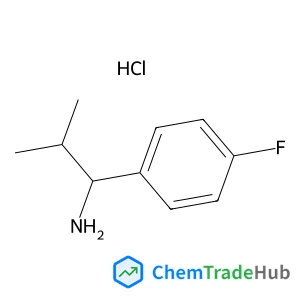
(1R)-1-(4-Fluorophenyl)-2-methyl-1-propanamine hydrochloride (1:1)
CAS番号:
1213329-40-8
分子式:
C10H15ClFN
おすすめサプライヤー





免責事項
このページに表示される学術雑誌情報は、参考および研究目的のみを目的としています。当社は雑誌出版社とは提携しておらず、投稿の取り扱いも行っておりません。出版に関するお問い合わせは、各雑誌出版社に直接ご連絡ください。
表示されている情報に誤りがある場合は、support@chemtradehub.com までご連絡ください。迅速に確認し、対応いたします。