












Reaction mechanism between small-sized Ce clusters and water molecules II: an ab initio investigation on Cen (n = 1–3) + mH2O (m = 2–6)
文献情報
出版日
2019-04-04
DOI
10.1039/C9CP01027K
インパクトファクター
3.676
著者
Rulong Zhou, Shanshan Ma, Yang Yang, Dongdong Li, Bingyan Qu, Xiao Cheng Zeng
原文を見る
要旨
Possible reactions between the products of the three independent reactions involving a small Ce cluster and a single water molecule, Cen + H2O (n = 1–3), and an additional H2O molecule are systematically investigated. The ground-state isomers of the final products and the reaction pathways involving multiple water molecules are predicted. We find that under either ambient or UV-irradiation conditions, all the reactions can entail low energy barriers. In addition, the final products of the reaction between Cen and more than two H2O molecules are also predicted through an extensive structural search. The calculated reaction energies suggest that although small-sized Ce clusters can react with more than two water molecules, the reactions with one or two water molecules are dominant. The electronic structures of all the ground-state isomers and the corresponding oxidation states of Ce atoms in these isomers are computed and determined via the natural bond orbital (NBO) method. The results indicate that a single Ce atom and a Ce2 cluster can react with a maximum of four and six water molecules, respectively, while a Ce3 cluster can react with more than six water molecules. This comprehensive study offers an improved understanding of the mechanism underlying the reactions between a single Ce atom or a small Ce cluster and two or more H2O molecules. Knowledge obtained from this study can be helpful for the development of high-performance Ce-doped or Ce-based catalysts.
関連文献
An injectable hyaluronic acid/PEG hydrogel for cartilage tissue engineering formed by integrating enzymatic crosslinking and Diels–Alder “click chemistry”
2013-08-09
Paper
DOI: 10.1039/C3PY00869J
Use of a switchable hydrophobic associative polymer to create an aqueous solution of CO2-switchable viscosity
Xin Su, Philip G. Jessop
2013-10-08
Paper
DOI: 10.1039/C3PY01382K
Combining surface topography with polymer chemistry: exploring new interfacial biological phenomena
Dan Li, Qing Zheng, Yanwei Wang, Hong Chen
2013-07-29
Review Article
DOI: 10.1039/C3PY00739A
One-step synthesis of polypyrazoles and self-assembled polypyrazole–copper catalysts for click chemistry
Longqiang Xiao, Shaojun Cai, Qingye Liu, Liqiong Liao, Xin Guo, Yan Li, Xiangxiang Jia, Feifei Li, Lijian Liu
2013-09-03
Paper
DOI: 10.1039/C3PY01105D
Nonvolatile organic field-effect transistor memory devices using polymer electrets with different thiophene chain lengths
Ying-Hsuan Chou, Sanae Takasugi, Raita Goseki, Takashi Ishizone, Wen-Chang Chen
2013-10-14
Paper
DOI: 10.1039/C3PY01124K
Nitroxide mediated polymerization of methacrylates at moderate temperature
Christophe Detrembleur, Christine Jérôme, Julien De Winter, Pascal Gerbaux, Jean-Louis Clément, Yohann Guillaneuf, Didier Gigmes
2013-09-17
Communication
DOI: 10.1039/C3PY01133J
Photosensitizer-conjugated redox-responsive dextran theranostic nanoparticles for near-infrared cancer imaging and photodynamic therapy
Peng Liu, Caixia Yue, Zonghai Sheng, Guanhui Gao, Mingxing Li, Huqiang Yi, Cuifang Zheng, Bi Wang, Lintao Cai
2013-09-20
Paper
DOI: 10.1039/C3PY01173A
Reversibly crosslinked thermo- and redox-responsive nanogels for controlled drug release
Christophe Detrembleur, Marie Hurtgen, Antoine Debuigne, Marie-Claire De Pauw-Gillet, Stéphane Mornet, Etienne Duguet, Christine Jérôme
2013-07-31
Paper
DOI: 10.1039/C3PY00839H
The use of a carbon paste electrode mixed with multiwalled carbon nanotube/electroactive polyimide composites as an electrode for sensing ascorbic acid
Tsao-Cheng Huang, Lu-Chen Yeh, Hsiu-Ying Huang, Zheng-Yong Nian, Yi-Chun Yeh, Yi-Chen Chou, Jui-Ming Yeh, Mei-Hui Tsai
2013-09-05
Paper
DOI: 10.1039/C3PY00787A
Introduction of self-healing properties into covalent polymer networks via the photodissociation of alkoxyamine junctions
Siham Telitel, Yoshifumi Amamoto, Julien Poly, Fabrice Morlet-Savary, Olivier Soppera, Jacques Lalevée, Krzysztof Matyjaszewski
2013-09-26
Paper
DOI: 10.1039/C3PY01162C
こちらもおすすめ
化合物よくある質問
S-(甲硅烷基丙基)異硫酰氯を取り扱う際の実験室安全事項は何ですか?
取り扱う際にはPPE(防護具)が必要です。特に手袋と面マスクは必須です。ドラフトチャンバーを使用して漏洩処理を行い、温度は常温、湿度は乾燥状態、容器はガラス容器...
84682-36-02-Amino-7,7-dimethox...
化合物よくある質問
8-硝基-咪唑并[1,2-a]吡啶とは何ですか?
8-硝基-咪唑并[1,2-a]吡啶は、CAS番号52310-46-0の化合物で、8-位に硝基を有する咪唑並みの结构をもつ吡啶の化合物です。この化合物は、酸化還元...
52310-46-08-Nitroimidazo[1,2-a...
化合物よくある質問
4-ブロモ-5-メトキシピリジン-2-甲醇の代替品はありますか?
4-ブロモ-5-メトキシピリジン-2-甲醇の代替品には、類似構造を持つ化合物や機能性に等しい代替試薬があります。例えば、4-クロロ-5-メトキシピリジン-2-甲...
1454849-84-3(4-Bromo-5-methoxy-2...
化合物よくある質問
全氟-1,2-二甲基環己烷を含む廃棄物はどのように処理すべきですか?
全氟-1,2-二甲基環己烷(CAS番号:306-98-9)の廃棄物は、特別な処理が必要です。まず、廃棄物を密閉容器に収集し、適切な防漏容器に保管します。次に、専...
306-98-91,1,2,2,3,3,4,4,5,6-...
化合物よくある質問
3-(溴甲基)苯乙酸の主な用途は何ですか?
3-(溴甲基)苯乙酸は主に研究用化学薬品として利用され、有機合成や医薬品の開発に用いられます。また、特定の化合物の合成中間体としても使用されることがあります。
118647-53-32-(3-(Bromomethyl)ph...
化合物よくある質問
5-イドキド-4-メチオキシ-6-メチルピリミジニン-2-アミンはどのように保存すればよいですか?
5-イドキド-4-メチオキシ-6-メチルピリミジニン-2-アミンは冷暗所で密栓の容器に保存し、直射日光を避けて保管することをお勧めします。温度は常温とし、湿気を...
23368-84-55-Iodo-4-methoxy-6-m...
化合物よくある質問
1-(2-溴-6-甲氧基苯基)乙酮を取り扱う際の実験室安全事項は何ですか?
実験室では、1-(2- Bromo-6-methoxyphenyl)ethanoneを取り扱う際には、ゴーグルや面具、手袋などのPPEを使用することが推奨されま...
380225-68-31-(2-Bromo-6-methoxy...
化合物よくある質問
5-(4,4,5,5-テトラメチル-1,3,2-ダイオキサボラロール-2-イル)-1,3-ジヒドロ-2-ベンゾフランは安全ですか?
5-(4,4,5,5-テトラメチル-1,3,2-ダイオキサボラロール-2-イル)-1,3-ジヒドロ-2-ベンゾフランは一般に安全ですが、取扱いには注意が必要です...
1352037-60-55-(4,4,5,5-Tetrameth...
化合物よくある質問
4-溴萘-1-甲酸の代替品はありますか?
4-溴萘-1-甲酸は比較的稀な化合物ですが、類似物としては、4-クロロ-1-ナフホリック酸やその他のブロモ置換ナフホリック酸が挙げられます。ただし、これらの代替...
16650-55-84-Bromo-1-naphthoic ...
化合物よくある質問
ε-白藜芦醇脱氢二聚体の代替品はありますか?
ε-白藜芦醇脱氢二聚体の代替品としては、ε-白藜芦醇、ポリフェノール類、フラボノイド類が挙げられます。これらは類似の化学構造と生物学的活性を持っています。ただし...
62218-08-05-{(2R,3R)-6-Hydroxy...
掲載誌
Physical Chemistry Chemical Physics

CiteScore:
5.5
自己引用率:
10.3%
年間論文数:
3036
Physical Chemistry Chemical Physics (PCCP) is an international journal co-owned by 19 physical chemistry and physics societies from around the world. This journal publishes original, cutting-edge research in physical chemistry, chemical physics and biophysical chemistry. To be suitable for publication in PCCP, articles must include significant innovation and/or insight into physical chemistry; this is the most important criterion that reviewers and Editors will judge against when evaluating submissions. The journal has a broad scope and welcomes contributions spanning experiment, theory, computation and data science. Topical coverage includes spectroscopy, dynamics, kinetics, statistical mechanics, thermodynamics, electrochemistry, catalysis, surface science, quantum mechanics, quantum computing and machine learning. Interdisciplinary research areas such as polymers and soft matter, materials, nanoscience, energy, surfaces/interfaces, and biophysical chemistry are welcomed if they demonstrate significant innovation and/or insight into physical chemistry. Joined experimental/theoretical studies are particularly appreciated when complementary and based on up-to-date approaches.
おすすめ化合物
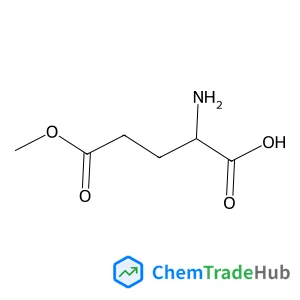
![2-Methyl-2-propanyl 4-{2-fluoro-5-[(4-oxo-3,4-dihydro-1-phthalazinyl)methyl]benzoyl}-1-piperazinecarboxylate structure](https://static.chemtradehub.com/structs/763/763114-04-1-65a9.webp "2-Methyl-2-propanyl 4-{2-fluoro-5-[(4-oxo-3,4-dihydro-1-phthalazinyl)methyl]benzoyl}-1-piperazinecarboxylate structure")
おすすめサプライヤー




免責事項
このページに表示される学術雑誌情報は、参考および研究目的のみを目的としています。当社は雑誌出版社とは提携しておらず、投稿の取り扱いも行っておりません。出版に関するお問い合わせは、各雑誌出版社に直接ご連絡ください。
表示されている情報に誤りがある場合は、support@chemtradehub.com までご連絡ください。迅速に確認し、対応いたします。