












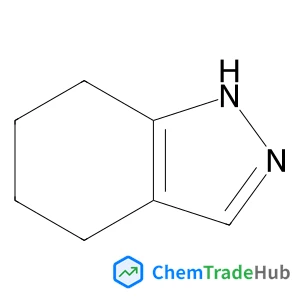
Atmospheric oxidation reactions of imidazole initiated by hydroxyl radicals: kinetics and mechanism of reactions and atmospheric implications
文献情報
出版日
2019-04-05
DOI
10.1039/C9CP00632J
インパクトファクター
3.676
著者
Zahra Safaei, Abolfazl Shiroudi, Ehsan Zahedi, Mika Sillanpää
原文を見る
要旨
The atmospheric oxidation mechanism of imidazole initiated by hydroxyl radicals is investigated via OH-addition and H-abstraction pathways by quantum chemistry calculations at the M06-2X/aug-cc-pVTZ level of theory coupled with reaction kinetics calculations using statistical Rice–Ramsperger–Kassel–Marcus (RRKM) theory and transition state theory (TST). It was found that OH addition proceeds more rapidly than H-abstraction by several orders of magnitude. Moreover, H-abstraction reactions with submerged barriers exhibit positive temperature dependence. Effects of reaction temperature and pressure on the reaction between imidazole and OH radicals are studied by means of RRKM calculations. Effective rate coefficients involve two-step mechanisms. According to the experiment, the obtained branching ratios show that the kinetically most efficient process corresponds to OH addition onto a carbon atom which is adjacent to a nitrogen atom having a lower energy barrier. These ratios also reveal that the regioselectivity of the oxidation reaction decreases with increasing temperatures and decreasing pressures. Because of negative activation energies, pressures larger than 100 bar are required to reach the high pressure limit. The atmospheric lifetime of imidazole in the presence of OH radicals is estimated to be ∼4.74 days, based on the calculated overall kinetic rate constant of 1.22 × 10⁻¹² cm3 molecule−1 s−1 at a pressure of 1 bar and nearly ambient temperature. NBO analysis demonstrates that the calculated energy barriers are dictated by charge transfer effects and aromaticity changes because of the delocalization of nitrogen lone pairs to empty π* orbitals.
関連文献
Heterogeneous colorimetric sensor for mercuric salts
Emilio Palomares, Ramón Vilar, James R. Durrant
2004-01-19
Communication
DOI: 10.1039/B314138A
Prediction of formation constants of metal–ammonia complexes in aqueous solution using density functional theory calculations
Robert D. Hancock, Libero J. Bartolotti
2004-01-27
Communication
DOI: 10.1039/B312518C
Utilisation of [11C]-labelled boron carbonyl complexes in palladium carbonylation reaction
Hélène Audrain, Laurent Martarello, Antony Gee, Dirk Bender
2004-01-29
Communication
DOI: 10.1039/B314982J
Recycling of the homogeneous Co-Jacobsen catalyst through solvent-resistent nanofiltration (SRNF)
H. Weyten, A. Buekenhoudt, L. E. M. Gevers, I. F. J. Vankelecom, P. A. Jacobs
2004-02-16
Communication
DOI: 10.1039/B312580G
Hydrogen adsorption in the nanoporous metal-benzenedicarboxylate M(OH)(O2C–C6H4–CO2) (M = Al3+, Cr3+), MIL-53
Gérard Férey, Michel Latroche, Christian Serre, Franck Millange, Thierry Loiseau, Annick Percheron-Guégan
2003-11-04
Communication
DOI: 10.1039/B308903G
Cooperative C–F⋯Si interaction in optically active helical polysilanes
Sun-Young Kim, Giseop Kwak, Yusuke Kawakami
2004-01-27
Communication
DOI: 10.1039/B314723A
The intramolecular Baylis–Hillman reaction: easy preparation of versatile substrates, facile reactions, and synthetic applications
Jung Eun Yeo, Xiuling Yang, Hee Jin Kim, Sangho Koo
2003-11-10
Communication
DOI: 10.1039/B311951C
Selective 1,3-complexation of p-tBu-calix[4]arene by [TiCp2Me2]
Colin L. Raston
2003-11-25
Communication
DOI: 10.1039/B309455C
Novel cofacial oxidative coupling reaction of phosphinine in the presence of Cu(i) and ClO4−
Takahiko Kojima, Yoshitaka Ishioka, Yoshihisa Matsuda
2004-01-16
Communication
DOI: 10.1039/B308892H
Disc-shaped triphenylenes in a smectic organisation
Paul H. J. Kouwer, Jahan Pourzand, Georg H. Mehl
2003-11-21
Communication
DOI: 10.1039/B311919J
こちらもおすすめ
化合物よくある質問
S-(甲硅烷基丙基)異硫酰氯を取り扱う際の実験室安全事項は何ですか?
取り扱う際にはPPE(防護具)が必要です。特に手袋と面マスクは必須です。ドラフトチャンバーを使用して漏洩処理を行い、温度は常温、湿度は乾燥状態、容器はガラス容器...
84682-36-02-Amino-7,7-dimethox...
化合物よくある質問
8-硝基-咪唑并[1,2-a]吡啶とは何ですか?
8-硝基-咪唑并[1,2-a]吡啶は、CAS番号52310-46-0の化合物で、8-位に硝基を有する咪唑並みの结构をもつ吡啶の化合物です。この化合物は、酸化還元...
52310-46-08-Nitroimidazo[1,2-a...
化合物よくある質問
4-ブロモ-5-メトキシピリジン-2-甲醇の代替品はありますか?
4-ブロモ-5-メトキシピリジン-2-甲醇の代替品には、類似構造を持つ化合物や機能性に等しい代替試薬があります。例えば、4-クロロ-5-メトキシピリジン-2-甲...
1454849-84-3(4-Bromo-5-methoxy-2...
化合物よくある質問
全氟-1,2-二甲基環己烷を含む廃棄物はどのように処理すべきですか?
全氟-1,2-二甲基環己烷(CAS番号:306-98-9)の廃棄物は、特別な処理が必要です。まず、廃棄物を密閉容器に収集し、適切な防漏容器に保管します。次に、専...
306-98-91,1,2,2,3,3,4,4,5,6-...
化合物よくある質問
3-(溴甲基)苯乙酸の主な用途は何ですか?
3-(溴甲基)苯乙酸は主に研究用化学薬品として利用され、有機合成や医薬品の開発に用いられます。また、特定の化合物の合成中間体としても使用されることがあります。
118647-53-32-(3-(Bromomethyl)ph...
化合物よくある質問
5-イドキド-4-メチオキシ-6-メチルピリミジニン-2-アミンはどのように保存すればよいですか?
5-イドキド-4-メチオキシ-6-メチルピリミジニン-2-アミンは冷暗所で密栓の容器に保存し、直射日光を避けて保管することをお勧めします。温度は常温とし、湿気を...
23368-84-55-Iodo-4-methoxy-6-m...
化合物よくある質問
1-(2-溴-6-甲氧基苯基)乙酮を取り扱う際の実験室安全事項は何ですか?
実験室では、1-(2- Bromo-6-methoxyphenyl)ethanoneを取り扱う際には、ゴーグルや面具、手袋などのPPEを使用することが推奨されま...
380225-68-31-(2-Bromo-6-methoxy...
化合物よくある質問
5-(4,4,5,5-テトラメチル-1,3,2-ダイオキサボラロール-2-イル)-1,3-ジヒドロ-2-ベンゾフランは安全ですか?
5-(4,4,5,5-テトラメチル-1,3,2-ダイオキサボラロール-2-イル)-1,3-ジヒドロ-2-ベンゾフランは一般に安全ですが、取扱いには注意が必要です...
1352037-60-55-(4,4,5,5-Tetrameth...
化合物よくある質問
4-溴萘-1-甲酸の代替品はありますか?
4-溴萘-1-甲酸は比較的稀な化合物ですが、類似物としては、4-クロロ-1-ナフホリック酸やその他のブロモ置換ナフホリック酸が挙げられます。ただし、これらの代替...
16650-55-84-Bromo-1-naphthoic ...
化合物よくある質問
ε-白藜芦醇脱氢二聚体の代替品はありますか?
ε-白藜芦醇脱氢二聚体の代替品としては、ε-白藜芦醇、ポリフェノール類、フラボノイド類が挙げられます。これらは類似の化学構造と生物学的活性を持っています。ただし...
62218-08-05-{(2R,3R)-6-Hydroxy...
掲載誌
Physical Chemistry Chemical Physics

CiteScore:
5.5
自己引用率:
10.3%
年間論文数:
3036
Physical Chemistry Chemical Physics (PCCP) is an international journal co-owned by 19 physical chemistry and physics societies from around the world. This journal publishes original, cutting-edge research in physical chemistry, chemical physics and biophysical chemistry. To be suitable for publication in PCCP, articles must include significant innovation and/or insight into physical chemistry; this is the most important criterion that reviewers and Editors will judge against when evaluating submissions. The journal has a broad scope and welcomes contributions spanning experiment, theory, computation and data science. Topical coverage includes spectroscopy, dynamics, kinetics, statistical mechanics, thermodynamics, electrochemistry, catalysis, surface science, quantum mechanics, quantum computing and machine learning. Interdisciplinary research areas such as polymers and soft matter, materials, nanoscience, energy, surfaces/interfaces, and biophysical chemistry are welcomed if they demonstrate significant innovation and/or insight into physical chemistry. Joined experimental/theoretical studies are particularly appreciated when complementary and based on up-to-date approaches.
おすすめ化合物
おすすめサプライヤー




免責事項
このページに表示される学術雑誌情報は、参考および研究目的のみを目的としています。当社は雑誌出版社とは提携しておらず、投稿の取り扱いも行っておりません。出版に関するお問い合わせは、各雑誌出版社に直接ご連絡ください。
表示されている情報に誤りがある場合は、support@chemtradehub.com までご連絡ください。迅速に確認し、対応いたします。