












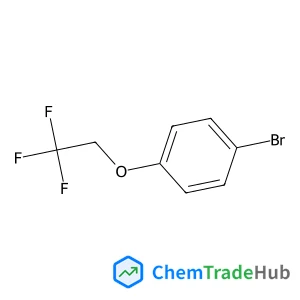
Pathways of amyloid-beta absorption and aggregation in a membranous environment
文献情報
出版日
2019-03-27
DOI
10.1039/C9CP00040B
インパクトファクター
3.676
著者
Abhilash Sahoo, Hongcheng Xu
原文を見る
要旨
Aggregation of misfolded oligomeric amyloid-beta (Aβ) peptides on lipid membranes has been identified as a primary event in Alzheimer's pathogenesis. However, the structural and dynamical features of this membrane assisted Aβ aggregation have not been well characterized. The microscopic characterization of dynamic molecular-level interactions in peptide aggregation pathways has been challenging both computationally and experimentally. In this work, we explore differential patterns of membrane-induced Aβ 16–22 (K–L–V–F–F–A–E) aggregation from the microscopic perspective of molecular interactions. Physics-based coarse-grained molecular dynamics (CG-MD) simulations were employed to investigate the effect of lipid headgroup charge – zwitterionic (1-palmitoyl-2-oleoyl-sn-glycero-3-phosphocholine: POPC) and anionic (1-palmitoyl-2-oleoyl-sn-glycero-3-phospho-L-serine: POPS) – on Aβ 16–22 peptide aggregation. Our analyses present an extensive overview of multiple pathways for peptide absorption and biomechanical forces governing peptide folding and aggregation. In agreement with experimental observations, anionic POPS molecules promote extended configurations in Aβ peptides that contribute towards faster emergence of ordered β-sheet-rich peptide assemblies compared to POPC, suggesting faster fibrillation. In addition, lower cumulative rates of peptide aggregation in POPS due to higher peptide–lipid interactions and slower lipid diffusion result in multiple distinct ordered peptide aggregates that can serve as nucleation seeds for subsequent Aβ aggregation. This study provides an in-silico assessment of experimentally observed aggregation patterns, presents new morphological insights and highlights the importance of lipid headgroup chemistry in modulating the peptide absorption and aggregation process.
関連文献
Large macroscopic size changes in chemomechanical polymers with binding sites for metal ions
Hans-Jörg Schneider, Tianjun Liu
2003-11-13
Communication
DOI: 10.1039/B310939A
Room-temperature one-step immobilization of rod-like helical polymer onto hydrophilic substrates
Guangqing Guo, Masanobu Naito, Michiya Fujiki, Anubhav Saxena, Kento Okoshi, Yonggang Yang, Masaaki Ishikawa, Takahiro Hagihara
2004-01-07
Communication
DOI: 10.1039/B310985B
Fabrication of two-dimensionally ordered macroporous silica materials with controllable dimensions
Mandakini Kanungo, Maryanne M. Collinson
2004-02-04
Communication
DOI: 10.1039/B311936J
Rational design of porous titanophosphates
Christian Serre, Francis Taulelle, Gérard Ferey
2003-08-28
Feature Article
DOI: 10.1039/B304703B
Controlled functionalization of gold nanoparticles through a solid phase synthesis approach
James G. Worden, Andrew W. Shaffer, Qun Huo
2004-02-04
Communication
DOI: 10.1039/B312819A
Time dependent size and shape control of germanium nanocrystals
2003-11-04
Communication
DOI: 10.1039/B310770A
Living cationic ring-opening polymerization by water-stable initiator: synthesis of a well-defined optically active polythiourethane
Atsushi Nagai, Bungo Ochiai, Takeshi Endo
2003-11-07
Communication
DOI: 10.1039/B310735C
Generation of strong, homochiral bases by electrochemical reduction of phenazine derivatives
A. Mateo Alonso, Roberto Horcajada, Helen J. Groombridge, Reshma Mandalia, Majid Motevalli, James H. P. Utley, Peter B. Wyatt
2004-01-20
Communication
DOI: 10.1039/B313995F
Multiple active oxidants in competitive epoxidations catalyzed by porphyrins and corroles
James P. Collman, Li Zeng, Richard A. Decréau
2003-11-03
Communication
DOI: 10.1039/B310763A
Thioglycosynthases: double mutant glycosidases that serve as scaffolds for thioglycoside synthesis
Jennifer Marles, R. Antony J. Warren
2004-01-05
Communication
DOI: 10.1039/B313155F
こちらもおすすめ
化合物よくある質問
S-(甲硅烷基丙基)異硫酰氯を取り扱う際の実験室安全事項は何ですか?
取り扱う際にはPPE(防護具)が必要です。特に手袋と面マスクは必須です。ドラフトチャンバーを使用して漏洩処理を行い、温度は常温、湿度は乾燥状態、容器はガラス容器...
84682-36-02-Amino-7,7-dimethox...
化合物よくある質問
8-硝基-咪唑并[1,2-a]吡啶とは何ですか?
8-硝基-咪唑并[1,2-a]吡啶は、CAS番号52310-46-0の化合物で、8-位に硝基を有する咪唑並みの结构をもつ吡啶の化合物です。この化合物は、酸化還元...
52310-46-08-Nitroimidazo[1,2-a...
化合物よくある質問
4-ブロモ-5-メトキシピリジン-2-甲醇の代替品はありますか?
4-ブロモ-5-メトキシピリジン-2-甲醇の代替品には、類似構造を持つ化合物や機能性に等しい代替試薬があります。例えば、4-クロロ-5-メトキシピリジン-2-甲...
1454849-84-3(4-Bromo-5-methoxy-2...
化合物よくある質問
全氟-1,2-二甲基環己烷を含む廃棄物はどのように処理すべきですか?
全氟-1,2-二甲基環己烷(CAS番号:306-98-9)の廃棄物は、特別な処理が必要です。まず、廃棄物を密閉容器に収集し、適切な防漏容器に保管します。次に、専...
306-98-91,1,2,2,3,3,4,4,5,6-...
化合物よくある質問
3-(溴甲基)苯乙酸の主な用途は何ですか?
3-(溴甲基)苯乙酸は主に研究用化学薬品として利用され、有機合成や医薬品の開発に用いられます。また、特定の化合物の合成中間体としても使用されることがあります。
118647-53-32-(3-(Bromomethyl)ph...
化合物よくある質問
5-イドキド-4-メチオキシ-6-メチルピリミジニン-2-アミンはどのように保存すればよいですか?
5-イドキド-4-メチオキシ-6-メチルピリミジニン-2-アミンは冷暗所で密栓の容器に保存し、直射日光を避けて保管することをお勧めします。温度は常温とし、湿気を...
23368-84-55-Iodo-4-methoxy-6-m...
化合物よくある質問
1-(2-溴-6-甲氧基苯基)乙酮を取り扱う際の実験室安全事項は何ですか?
実験室では、1-(2- Bromo-6-methoxyphenyl)ethanoneを取り扱う際には、ゴーグルや面具、手袋などのPPEを使用することが推奨されま...
380225-68-31-(2-Bromo-6-methoxy...
化合物よくある質問
5-(4,4,5,5-テトラメチル-1,3,2-ダイオキサボラロール-2-イル)-1,3-ジヒドロ-2-ベンゾフランは安全ですか?
5-(4,4,5,5-テトラメチル-1,3,2-ダイオキサボラロール-2-イル)-1,3-ジヒドロ-2-ベンゾフランは一般に安全ですが、取扱いには注意が必要です...
1352037-60-55-(4,4,5,5-Tetrameth...
化合物よくある質問
4-溴萘-1-甲酸の代替品はありますか?
4-溴萘-1-甲酸は比較的稀な化合物ですが、類似物としては、4-クロロ-1-ナフホリック酸やその他のブロモ置換ナフホリック酸が挙げられます。ただし、これらの代替...
16650-55-84-Bromo-1-naphthoic ...
化合物よくある質問
ε-白藜芦醇脱氢二聚体の代替品はありますか?
ε-白藜芦醇脱氢二聚体の代替品としては、ε-白藜芦醇、ポリフェノール類、フラボノイド類が挙げられます。これらは類似の化学構造と生物学的活性を持っています。ただし...
62218-08-05-{(2R,3R)-6-Hydroxy...
掲載誌
Physical Chemistry Chemical Physics

CiteScore:
5.5
自己引用率:
10.3%
年間論文数:
3036
Physical Chemistry Chemical Physics (PCCP) is an international journal co-owned by 19 physical chemistry and physics societies from around the world. This journal publishes original, cutting-edge research in physical chemistry, chemical physics and biophysical chemistry. To be suitable for publication in PCCP, articles must include significant innovation and/or insight into physical chemistry; this is the most important criterion that reviewers and Editors will judge against when evaluating submissions. The journal has a broad scope and welcomes contributions spanning experiment, theory, computation and data science. Topical coverage includes spectroscopy, dynamics, kinetics, statistical mechanics, thermodynamics, electrochemistry, catalysis, surface science, quantum mechanics, quantum computing and machine learning. Interdisciplinary research areas such as polymers and soft matter, materials, nanoscience, energy, surfaces/interfaces, and biophysical chemistry are welcomed if they demonstrate significant innovation and/or insight into physical chemistry. Joined experimental/theoretical studies are particularly appreciated when complementary and based on up-to-date approaches.
おすすめ化合物

おすすめサプライヤー





免責事項
このページに表示される学術雑誌情報は、参考および研究目的のみを目的としています。当社は雑誌出版社とは提携しておらず、投稿の取り扱いも行っておりません。出版に関するお問い合わせは、各雑誌出版社に直接ご連絡ください。
表示されている情報に誤りがある場合は、support@chemtradehub.com までご連絡ください。迅速に確認し、対応いたします。