












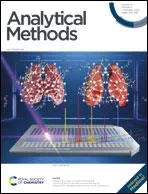
Determination of bioavailable lead in atmospheric aerosols using unmodified screen-printed carbon electrodes
文献情報
出版日
2019-08-29
DOI
10.1039/C9AY01301F
インパクトファクター
2.896
著者
Habdias de A. Silva-Neto, Thiago M. G. Cardoso, Wendell K. T. Coltro, Roberta C. Urban
原文を見る
要旨
Atmospheric aerosol or particulate matter (PM) has huge potential to affect health and climate. The adverse effects of particulate matter exposure on human health depend on its size and composition, and toxic metals, such as lead, are some of the constituents. Conventional methods to detect lead include atomic absorption and flame emission spectroscopy, which require high cost and bulky instrumentation, generate noticeable amounts of residues and need trained technicians or users. In this study, a simple, portable and low-cost electrochemical method is reported to determine bioavailable lead in PM using an unmodified screen-printed carbon electrode (SPCE) based on square wave anodic stripping voltammetry performed on a portable potentiostat. The proposed approach has provided excellent sensitivity (21 ± 1 μA μg−1 L) with a detection limit of 0.023 μg L−1, low interference from other metals and a recovery of ca. 90%. The accuracy of the method was confirmed by comparison with inductively coupled plasma mass spectrometry. Moreover, the use of the SPCE exhibited good stability allowing quantification of lead in atmospheric PM collected in Goiania city (2016). The achieved concentrations of lead ranged from 0.04 to 0.21 ng m−3. Based on the reported data, the unmodified SPCE device has successfully demonstrated great selectivity and sensitivity for environmental analysis at trace levels, making possible the monitoring of bioavailable lead in PM samples.
おすすめジャーナル
関連文献
The unusual surface chemistry of α-Al2O3 (0001)
Die Yang, Marta Krasowska, Rossen Sedev, John Ralston
2010-09-15
Paper
DOI: 10.1039/C001222J
A chemistry/physics pathway with nanofibrous scaffolds for gene delivery
Fen Wan, Zhaohui Tang, Weidong He, Benjamin Chu
2010-08-19
Perspective
DOI: 10.1039/C002515A
Amperometric proton selective sensors utilizing ion transfer reactions across a microhole liquid/gel interface‡
Shaikh Nayeem Faisal, Carlos M. Pereira, Sangchul Rho, Hye Jin Lee
2010-10-05
Paper
DOI: 10.1039/C0CP00750A
Direct assay of electropermeabilization in a 2D pseudo tissue
2010-10-06
Communication
DOI: 10.1039/C0CP01343A
Field-controlled magnetic order with insulator–metal transitions in a periodic Anderson-like organic polymer
L. J. Ding, H. H. Fu
2010-10-29
Paper
DOI: 10.1039/C0CP00185F
Alkyl-chain dividing layer at an alcohol/ionic liquid buried interface studied by sum-frequency generation vibrational spectroscopy
Yasunari Sakai, Kaname Kanai, Doseok Kim, Yukio Ouchi
2010-09-08
Communication
DOI: 10.1039/C0CP00520G
Grand canonical ensemble molecular dynamics simulation of water solubility in polyamide-6,6
Nargess Mehdipour
2010-10-29
Paper
DOI: 10.1039/C0CP00910E
Tuning the mechanical properties of silica microcapsules
Lijuan Zhang, Maria D'Acunzi, Michael Kappl, Arnout Imhof, Alfons van Blaaderen, Hans-Jürgen Butt, Robert Graf, Doris Vollmer
2010-10-21
Paper
DOI: 10.1039/C0CP00871K
Infrared spectroscopic study of the amidation reaction of aminophenyl modified Au surfaces and p-nitrobenzoic acid as model system
Xin Zhang, Guoguang Sun, Karsten Hinrichs, Silvia Janietz, Joerg Rappich
2010-08-25
Communication
DOI: 10.1039/C0CP00058B
こちらもおすすめ
化合物よくある質問
(S)-四氢呋喃-3-羧酸の物理化学的性質は何ですか?
CAS番号168395-26-4の(S)-四氢呋喃-3-羧酸は、白色の結晶が特徴的な性質を持ちます。分子量は128.08であり、水に溶けやすく、アルコールなど...
168395-26-4(3S)-Tetrahydro-3-fu...
化合物よくある質問
塩基性硫黄化合物1,3-ジメチル-1-[5-(三氟甲基)-1,3,4-硫杂环己二酮-2-基]尿素を含む廃棄物はどのように処理すべきですか?
塩基性硫黄化合物1,3-ジメチル-1-[5-(三氟甲基)-1,3,4-硫杂环己二酮-2-基]尿素を含む廃棄物は、専門的な廃棄処理施設で焼却処理を行うべきです。ま...
25366-23-81,3-Dimethyl-1-[5-(t...
化合物よくある質問
インドリジン-2-カルボン酸は安全ですか?
インドリジン-2-カルボン酸は一般的に安全ですが、過度に濃い状態では刺激性があります。取り扱いには適切な防護具を使用し、直接触れや吸入を避ける必要があります。
3189-48-8Indolizine-2-carboxy...
化合物よくある質問
5-甲基-2-(3-ピリジニル)-1,3-テイゾール-4-オールの市場動向や研究トレンドはどうですか?
5-甲基-2-(3-ピリジニル)-1,3-テイゾール-4-オールは、医薬品や農薬、および合成化学の分野において研究が進められています。市場動向としては、化学物質...
131786-48-65-Methyl-2-(3-pyridi...
化合物よくある質問
4,4',4''-(嘧啶-2,4,6-三基)三苯甲醛はどのように保存すればよいですか?
4,4',4''-(嘧啶-2,4,6-三基)三苯甲醛は、密閉容器に保管し、避けておくことが重要です。室温で保管し、直射日光を避けてください。
2230887-23-54,4',4''-(2,4,6-Pyri...
化合物よくある質問
(3aR)-1,3,3-トリフェニルテトラヒドロ-3H-ピロロ[1,2-c][1,3,2]-オキザボロロールについて、適用される法規ガイドラインは何ですか?
(3aR)-1,3,3-トリフェニルテトラヒドロ-3H-ピロロ[1,2-c][1,3,2]-オキザボロロールは、GHS(国際危険物識別ルール)の分類が適用されま...
145238-45-5(3aR)-1,3,3-Tripheny...
102-83-0N,N-Dibutyl-1,3-prop...
化合物よくある質問
6-(4-氯苯氧基)吡啶-3-胺の代替品はありますか?
6-(4-氯苯氧基)吡啶-3-胺の代替品としては、他の芳香族アミン化合物や類似の除草剤が考えられます。ただし、他の化合物と同様に、代替品の選択には安全性と効果性...
75926-64-66-(4-Chlorophenoxy)-...
79408-85-84-Methyl-2-oxo-2H-ch...
化合物よくある質問
3-フェニル-3,4-ジヒドロ-2H-1,4-ベンゾキサジンを取り扱う際の実験室安全事項は何ですか?
3-フェニル-3,4-ジヒドロ-2H-1,4-ベンゾキサジンを取り扱う際は、防塵マスク、ゴーグル、ゴム手袋を使用し、ドラフトチャンバー内で作業することを推奨しま...
70310-30-43-Phenyl-3,4-dihydro...
掲載誌
Analytical Methods
CiteScore:
5.1
自己引用率:
3.7%
年間論文数:
655
Analytical Methods welcomes early applications of new analytical and bioanalytical methods and technology demonstrating the potential for societal impact. We require that methods and technology reported in the journal are sufficiently innovative, robust, accurate, and compared to other available methods for the intended application. Developments with interdisciplinary approaches are particularly welcome. Systems should be proven with suitably complex and analytically challenging samples. We encourage developments within, but not limited to, the following technologies and applications: global health, point-of-care and molecular diagnostics biosensors and bioengineering drug development and pharmaceutical analysis applied microfluidics and nanotechnology omics studies, such as proteomics, metabolomics or glycomics environmental, agricultural and food science neuroscience biochemical and clinical analysis forensic analysis industrial process and method development
おすすめ化合物
![9,9'-Spirobi[fluoren]-2-amine structure](https://static.chemtradehub.com/structs/118/118951-68-1-0d14.webp "9,9'-Spirobi[fluoren]-2-amine structure")
![[2-(Benzyloxy)-3-bromo-5-methylphenyl]boronic acid structure](https://static.chemtradehub.com/structs/870/870777-20-1-24ac.webp "[2-(Benzyloxy)-3-bromo-5-methylphenyl]boronic acid structure")
おすすめサプライヤー





免責事項
このページに表示される学術雑誌情報は、参考および研究目的のみを目的としています。当社は雑誌出版社とは提携しておらず、投稿の取り扱いも行っておりません。出版に関するお問い合わせは、各雑誌出版社に直接ご連絡ください。
表示されている情報に誤りがある場合は、support@chemtradehub.com までご連絡ください。迅速に確認し、対応いたします。