












An efficient method for high-pH peptide fractionation based on C18 StageTips for in-depth proteome profiling
文献情報
出版日
2019-08-20
DOI
10.1039/C9AY01269A
インパクトファクター
2.896
著者
Kisoon Dan, Hyunsuk Shin, Junghun Lee, Joseph Injae Wang, Dohyun Han
原文を見る
要旨
In-depth proteome profiling still relies widely on extensive off-line peptide fractionation to reduce the complexity of the proteome. However, the fractionation of protein samples in the sub-microgram range can be limited owing to sample loss during the fractionation process. Thus, it is essential to develop efficient microscale fractionation strategies. Here, we describe a modified method for high-pH peptide fractionation using C18-StageTips. Compared to a conventional strategy, our method generates improved peptide and protein identification rates under the same LC-MS/MS conditions. Finally, proteome profiling of sub-regions of the mouse brain suggested that our method can be used to analyze the proteome in-depth with limited amounts of protein samples.
関連文献
The proton affinities of CO and CO2 and the first hydration energy of gaseous H3O+ from mass spectrometric investigations of ions in rich flames of C2H2
Allan N. Hayhurst, Stephen G. Taylor
2001-09-13
Paper
DOI: 10.1039/B102973H
Kinetics of the gas-phase reaction of atomic chlorine with selected monoterpenes
Qadir K. Timerghazin, Parisa A. Ariya
2001-08-22
Paper
DOI: 10.1039/B101380G
Experimental and theoretical CO2–Ar pressure-broadening cross sections and their temperature dependence
F. Thibault, B. Calil, J. Buldyreva, M. Chrysos, J.-M. Hartmann, J.-P. Bouanich
2001-08-31
Paper
DOI: 10.1039/B103625B
Processes during liquation of Vycor glass studied by positron annihilation lifetime spectroscopy
Bożena Jasińska, Andrzej L. Dawidowicz, Tomasz Goworek, Stanisław Radkiewicz
2000-06-22
Paper
DOI: 10.1039/B002499F
The effect of anionic, cationic and neutral surfactants on the photophysics and isomerization of 3,3′-diethylthiacarbocyanine
Sílvia M. B. Costa
2001-09-05
Paper
DOI: 10.1039/B104807B
H2-reduction of Pt/MoO3 to MoOx with a large surface area and its catalytic activities for the conversions of heptane and propan-2-ol
Takeshi Matsuda, Fumiko Uchijima, Hirotoshi Sakagami, Nobuo Takahashi
2001-09-11
Paper
DOI: 10.1039/B105680H
Comparison of the cross-sections and thermal rate constants for the reactions of C(3PJ) atoms with O2 and NO
Delphine Chastaing, Sébastien D. Le Picard, Ian R. Sims, Ian W. M. Smith
2000-06-16
Paper
DOI: 10.1039/B002583F
こちらもおすすめ
化合物よくある質問
S-(甲硅烷基丙基)異硫酰氯を取り扱う際の実験室安全事項は何ですか?
取り扱う際にはPPE(防護具)が必要です。特に手袋と面マスクは必須です。ドラフトチャンバーを使用して漏洩処理を行い、温度は常温、湿度は乾燥状態、容器はガラス容器...
84682-36-02-Amino-7,7-dimethox...
化合物よくある質問
8-硝基-咪唑并[1,2-a]吡啶とは何ですか?
8-硝基-咪唑并[1,2-a]吡啶は、CAS番号52310-46-0の化合物で、8-位に硝基を有する咪唑並みの结构をもつ吡啶の化合物です。この化合物は、酸化還元...
52310-46-08-Nitroimidazo[1,2-a...
化合物よくある質問
4-ブロモ-5-メトキシピリジン-2-甲醇の代替品はありますか?
4-ブロモ-5-メトキシピリジン-2-甲醇の代替品には、類似構造を持つ化合物や機能性に等しい代替試薬があります。例えば、4-クロロ-5-メトキシピリジン-2-甲...
1454849-84-3(4-Bromo-5-methoxy-2...
化合物よくある質問
全氟-1,2-二甲基環己烷を含む廃棄物はどのように処理すべきですか?
全氟-1,2-二甲基環己烷(CAS番号:306-98-9)の廃棄物は、特別な処理が必要です。まず、廃棄物を密閉容器に収集し、適切な防漏容器に保管します。次に、専...
306-98-91,1,2,2,3,3,4,4,5,6-...
化合物よくある質問
3-(溴甲基)苯乙酸の主な用途は何ですか?
3-(溴甲基)苯乙酸は主に研究用化学薬品として利用され、有機合成や医薬品の開発に用いられます。また、特定の化合物の合成中間体としても使用されることがあります。
118647-53-32-(3-(Bromomethyl)ph...
化合物よくある質問
5-イドキド-4-メチオキシ-6-メチルピリミジニン-2-アミンはどのように保存すればよいですか?
5-イドキド-4-メチオキシ-6-メチルピリミジニン-2-アミンは冷暗所で密栓の容器に保存し、直射日光を避けて保管することをお勧めします。温度は常温とし、湿気を...
23368-84-55-Iodo-4-methoxy-6-m...
化合物よくある質問
1-(2-溴-6-甲氧基苯基)乙酮を取り扱う際の実験室安全事項は何ですか?
実験室では、1-(2- Bromo-6-methoxyphenyl)ethanoneを取り扱う際には、ゴーグルや面具、手袋などのPPEを使用することが推奨されま...
380225-68-31-(2-Bromo-6-methoxy...
化合物よくある質問
5-(4,4,5,5-テトラメチル-1,3,2-ダイオキサボラロール-2-イル)-1,3-ジヒドロ-2-ベンゾフランは安全ですか?
5-(4,4,5,5-テトラメチル-1,3,2-ダイオキサボラロール-2-イル)-1,3-ジヒドロ-2-ベンゾフランは一般に安全ですが、取扱いには注意が必要です...
1352037-60-55-(4,4,5,5-Tetrameth...
化合物よくある質問
4-溴萘-1-甲酸の代替品はありますか?
4-溴萘-1-甲酸は比較的稀な化合物ですが、類似物としては、4-クロロ-1-ナフホリック酸やその他のブロモ置換ナフホリック酸が挙げられます。ただし、これらの代替...
16650-55-84-Bromo-1-naphthoic ...
化合物よくある質問
ε-白藜芦醇脱氢二聚体の代替品はありますか?
ε-白藜芦醇脱氢二聚体の代替品としては、ε-白藜芦醇、ポリフェノール類、フラボノイド類が挙げられます。これらは類似の化学構造と生物学的活性を持っています。ただし...
62218-08-05-{(2R,3R)-6-Hydroxy...
掲載誌
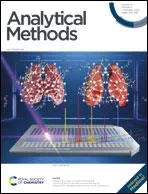
Analytical Methods
CiteScore:
5.1
自己引用率:
3.7%
年間論文数:
655
Analytical Methods welcomes early applications of new analytical and bioanalytical methods and technology demonstrating the potential for societal impact. We require that methods and technology reported in the journal are sufficiently innovative, robust, accurate, and compared to other available methods for the intended application. Developments with interdisciplinary approaches are particularly welcome. Systems should be proven with suitably complex and analytically challenging samples. We encourage developments within, but not limited to, the following technologies and applications: global health, point-of-care and molecular diagnostics biosensors and bioengineering drug development and pharmaceutical analysis applied microfluidics and nanotechnology omics studies, such as proteomics, metabolomics or glycomics environmental, agricultural and food science neuroscience biochemical and clinical analysis forensic analysis industrial process and method development
おすすめ化合物

おすすめサプライヤー




免責事項
このページに表示される学術雑誌情報は、参考および研究目的のみを目的としています。当社は雑誌出版社とは提携しておらず、投稿の取り扱いも行っておりません。出版に関するお問い合わせは、各雑誌出版社に直接ご連絡ください。
表示されている情報に誤りがある場合は、support@chemtradehub.com までご連絡ください。迅速に確認し、対応いたします。