












FTIR bio-spectroscopy scattering correction using natural biological characteristics of different cell lines
文献情報
出版日
2019-08-21
DOI
10.1039/C9AN00811J
インパクトファクター
4.616
著者
Sara Hariri, Sahar Barzegari B., Kamyar Keshavarz F., Nastaran Nikounezhad, Behnoosh Safaei, Golrokh Farnam
原文を見る
要旨
Fourier transform infrared (FTIR) spectroscopy is a well-known method of analysis, with various applications, including promising potential for analyzing biological samples. In the bio-spectroscopy of cells, Mie scattering may increase, which then causes spectral distortion, due to the similarity of cell size with the IR medium-wavelength. These changes make the spectrum unreliable. In previous scattering elimination studies, questionable estimations were considered. For instance, all cells were considered as spherical objects or cell size was estimated randomly. In an attempt to provide the best equation based on the natural existence of cells for the FTIR Mie scattering correction, we examined the actual biological data of cells – as opposed to those yielded from mathematical manipulations. So five biological factors: cell size, shape, granularity, circularity, and edge irregularities, for each cell line were considered as factors which cause scattering. For measuring cell size, roundness and edge irregularity, microscopy images were obtained and processed. For evaluating cell line granularity, flow cytometry was used. Finally, by including these factors, an algorithm was designed. To assess the accuracy of the proposed algorithm, the trypsinized cell spectrum was considered as the high scattering spectrum. Cells were also cultured on a MirrIR slide, and their ATR-FTIR spectrum was considered as the minimum scattering spectrum. The algorithm using the abovementioned five characteristics was used for 13 different cell lines, and in some cases the corrected spectrum demonstrated more than 97% resemblance with the ATR spectra of the same cells. A comparison between the results of this algorithm with the Bassan et al. (2017) algorithm for scattering correction that is freely available on the Internet was then conducted on two different cell lines, clearly showing the advantages of our algorithm, in terms of accuracy and precision. Therefore, this method can be viewed as a more suitable solution for scattering correction in cell investigations.
関連文献
Conformation-induced separation of 3-chloropropene from 1-chloropropane through nanoporous monolayer graphenes
Steven Wang, Junbo Xu
2019-02-05
Paper
DOI: 10.1039/C9CP00137A
Transition metal-containing molecular devices: controllable single-spin negative differential thermoelectric resistance effects under gate voltages
Xifeng Yang, Fangxin Tan, Yaojun Dong, Hailin Yu, Yushen Liu
2019-02-07
Paper
DOI: 10.1039/C8CP07049K
Liquid–liquid phase separation and evaporation of a laser-trapped organic–organic airborne droplet using temporal spatial-resolved Raman spectroscopy
Aimable Kalume, Chuji Wang, Joshua Santarpia, Yong-Le Pan
2018-06-14
Paper
DOI: 10.1039/C8CP02372G
Electrical conductivity and oxygen diffusion behaviour of the (La0.8Sr0.2)0.95CrxFe1−xO3−δ (x = 0.3, 0.5 and 0.7) A-site deficient perovskites
Zonghao Shen, John A. Kilner, Stephen J. Skinner
2018-06-21
Paper
DOI: 10.1039/C8CP02797H
Luminescence spectroscopy of oxazine dye cations isolated in vacuo
Christina Kjær, Steen Brøndsted Nielsen
2019-02-04
Paper
DOI: 10.1039/C8CP07340F
Role of suppressed oxygen vacancies in the BiFeO3 nanofiller to improve the polar phase and multifunctional performance of poly(vinylidene fluoride)
Abhishek Sasmal, Shrabanee Sen, P. Sujatha Devi
2019-02-21
Paper
DOI: 10.1039/C8CP07281G
Spectroscopic characterisation of centropolyindanes
Stewart F. Parker, Lisha Zhong, Marco Harig, Dietmar Kuck
2019-02-04
Paper
DOI: 10.1039/C8CP07311B
Electron localization in niobium doped CaMnO3 due to the energy difference of electronic states of Mn and Nb
Yi Li, Jian Liu, Ji-Chao Li, Yu-Fei Chen, Xin-Miao Zhang, Xue-Jin Wang, Fu-Ning Wang, Wen-Bin Su, Lan-Ling Zhao, Chun-Lei Wang
2018-07-23
Paper
DOI: 10.1039/C8CP02783H
Growth of nanodroplets on a still microfiber under flow conditions
Maaike Rump, Shantanu Maheshwari, Lei Bao
2018-06-18
Paper
DOI: 10.1039/C8CP02353K
こちらもおすすめ
化合物よくある質問
2-ブロモ-9,9-ジフェニル-9H-フルオレンの主な用途は何ですか?
2-溴-9,9-二苯基芴は、医薬品、工業材料、有機合成の研究分野で応用されます。特に、レーザー材料や機能性ポリマーの合成に使用されることがあります。また、蛍光色...
474918-32-62-Bromo-9,9-diphenyl...
化合物よくある質問
四氯化铱の市場動向や研究トレンドはどうですか?
四氯化铱の市場は研究開発分野で注目されており、特にナノ技術や金属有機框架(MOFs)の分野での需要が増加傾向にあります。価格は安定しており、中国や韓国での生産が...
207399-11-9Tetrachloroiridium h...
882-06-44-Nitrocinnamic acid
化合物よくある質問
1-(4-溴-3-氟苯基)-2-氯乙酮を含む廃棄物はどのように処理すべきですか?
1-(4-溴-3-氟苯基)-2-氯乙酮 (CAS番号: 1260857-14-4) の廃棄物は専門的な廃棄処理が必要です。まず、廃棄物は密閉された容器に収集し、...
1260857-14-41-(4-Bromo-3-fluorop...
化合物よくある質問
苦参酚Kとは何ですか?
苦参酚Kは、CAS番号101236-49-1を持つ化合物で、主に天然由来の生薬から抽出されます。この化合物は、抗炎症作用や抗癌作用を持つことが報告されています。
101236-49-1Kushenol K
化合物よくある質問
POTASSIUM (1-(TERTBUTOXYCARBONYL)AZETIDIN-3-YL)TRIFLUOROBORATE を含む廃棄物はどのように処理すべきですか?
POTASSIUM (1-(TERTBUTOXYCARBONYL)AZETIDIN-3-YL)TRIFLUOROBORATE を含む廃棄物は、まず安全なエント...
1430219-73-0Potassium (1-(tert-b...
化合物よくある質問
4-庚基-4’-联苯羧酸の市場動向や研究トレンドはどうですか?
4-庚基-4’-聯苯羧酸は、特殊化学品や合成化学の分野で用いられる化学物質ですが、市場動向としては、研究開発の進展とともに需要が増加しています。また、環境配慮型...
58573-94-74'-Heptyl-4-biphenyl...
化合物よくある質問
6-ブロモ-3-メトキシ-1-フェニル-1H-インドゾールを含む廃棄物はどのように処理すべきですか?
6-ブロモ-3-メトキシ-1-フェニル-1H-インドゾールを含む廃棄物は、適切な化学廃棄処理が必要です。通常、廃棄物は密閉容器に収集され、専門の廃棄処理業者に引...
1332527-03-36-Bromo-3-methoxy-1-...
化合物よくある質問
4,4-二甲基-2-吡咯烷酮はどの業界で使用されていますか?
4,4-二甲基-2-吡咯烷酮は医薬、ポリマー、センサー、半導体などの業界で広く使用されています。特に溶媒としての性能が高く評価されています。
66899-02-34,4-dimethylpyrrolid...
51312-42-6Sodium Phosphotungst...
掲載誌
Analyst

CiteScore:
7.8
自己引用率:
5.6%
年間論文数:
653
Analyst publishes analytical and bioanalytical research that reports premier fundamental discoveries and inventions, and the applications of those discoveries, unconfined by traditional discipline barriers.
おすすめ化合物
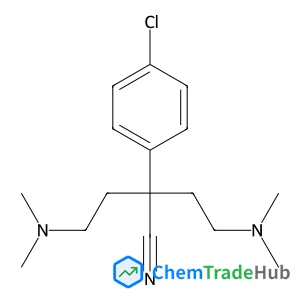
2-(4-Chlorophenyl)-4-(dimethylamino)-2-(2-(dimethylamino)ethyl)butanenitrile
CAS番号:
1246816-57-8
分子式:
C16H24ClN3
![1-[3-(4-Morpholinylsulfonyl)phenyl]methanamine structure](https://static.chemtradehub.com/structs/933/933989-32-3-51af.webp "1-[3-(4-Morpholinylsulfonyl)phenyl]methanamine structure")
おすすめサプライヤー





免責事項
このページに表示される学術雑誌情報は、参考および研究目的のみを目的としています。当社は雑誌出版社とは提携しておらず、投稿の取り扱いも行っておりません。出版に関するお問い合わせは、各雑誌出版社に直接ご連絡ください。
表示されている情報に誤りがある場合は、support@chemtradehub.com までご連絡ください。迅速に確認し、対応いたします。