












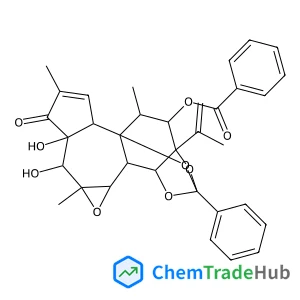
Front cover
文献情報
出版日
DOI
10.1039/C8OB90009D
インパクトファクター
3.876
著者
原文を見る
要旨
A graphical abstract is available for this content
関連文献
Role of spatial ionic distribution on the energetics of hydrophobic assembly and properties of the water/hydrophobe interface
Brad A. Bauer, Shuching Ou, Sandeep Patel
2012-01-09
Paper
DOI: 10.1039/C1CP20839J
Molecular origin of differences in hole and electron mobility in amorphous Alq3—a multiscale simulation study
Thomas Steinbrecher, Mario S. Mommer, Yuki Nagata, Marcus Elstner
2012-01-17
Paper
DOI: 10.1039/C2CP23489K
An operando DRIFTS investigation into the resistance against CO2 poisoning of a Rh/alumina catalyst during toluenehydrogenation
Julien Scalbert, Frederic C. Meunier, Cecile Daniel, Yves Schuurman
2011-10-11
Paper
DOI: 10.1039/C1CP22620G
Sea urchin TiO2–nanoparticle hybrid composite photoelectrodes for CdS/CdSe/ZnS quantum-dot-sensitized solar cells
Eui-Hyun Kong, Yong-June Chang, Yoon-Cheol Park, Yeon-Hee Yoon, Hyun-Jin Park, Hyun Myung Jang
2012-02-08
Paper
DOI: 10.1039/C2CP24106D
Faraday rotation and its dispersion in the visible region for saturated organic liquids
Stefaan Vandendriessche, Ventsislav K. Valev, Thierry Verbiest
2011-12-06
Paper
DOI: 10.1039/C2CP23311H
Formation and oxidation mechanisms of Pd–Zn nanoparticles on a ZnO supported Pd catalyst studied by in situ time-resolved QXAFS and DXAFS
Yasuhiro Inada, Yasuhiro Niwa, Masao Kimura, Kyoko K. Bando, Akira Yagishita, Yasuhiro Iwasawa, Masaharu Nomura
2011-10-13
Paper
DOI: 10.1039/C1CP22466B
Polymer dynamics in responsive microgels: influence of cononsolvency and microgel architecture
C. Scherzinger, O. Holderer, D. Richter, W. Richtering
2012-01-17
Paper
DOI: 10.1039/C2CP23328B
Pulsed EPR characterization of encapsulated atomic hydrogen in octasilsesquioxane cages
George Mitrikas
2012-01-23
Paper
DOI: 10.1039/C2CP24057B
Matrix isolation ESR spectroscopy and quantum chemical calculations on 5-methylhexa-1,2,4-triene-1,3-diyl, a highly delocalized triplet “hybrid” carbene
Eugenii Ya. Misochko, Alexander V. Akimov, Denis V. Korchagin, Artem A. Masitov, Konstantin N. Shavrin
2012-01-10
Paper
DOI: 10.1039/C2CP22853J
Solvation effects and stabilization of multicharged ions: a case study of ArmBeOq+ complexes
Roberto Linguerri, Najia Komiha, Majdi Hochlaf
2012-02-02
Paper
DOI: 10.1039/C2CP24004A
こちらもおすすめ
化合物よくある質問
カルボニル基が付いた5-氰基-1-{[(2-メチル-2-プロpanyl)オキシ]カーボンイル}1H-吲哚-2-イリド-2-ボリン酸はどのように保存すればよいですか?
カルボニル基が付いた5-氰基-1-{[(2-メチル-2-プロpanyl)オキシ]カーボンイル}1H-吲哚-2-イリド-2-ボリン酸は、直射日光を避けて室温(15...
475102-15-9(5-Cyano-1-{[(2-meth...
化合物よくある質問
tert-ブチル2-クロロメチルピリジン-3-基炭酸エステルの市場動向や研究トレンドはどうですか?
この化合物は合成化学分野において、特にピリジン化合物の合成や改良に用いられます。最近の研究では、ピリジン化合物の新規合成法や特性の改良が注目されています。市場動...
1203498-98-9tert-Butyl 2-chloro-...
化合物よくある質問
聚二季戊四醇六丙烯酸酯はどの業界で使用されていますか?
聚二季戊四醇六丙烯酸酯は、医薬品、ポリマー、センサー、半導体などの業界で広く使用されています。特にポリマー業界では硬化剤として、医薬分野では医療機器の製造に使用...
29570-58-93-(Acryloyloxy)-2-({...
化合物よくある質問
1-氯-5-硝基异喹啉の市場動向や研究トレンドはどうですか?
1-氯-5-硝基异喹啉は、薬理学や合成化学の研究分野で注目されています。市場動向としては、その生物学的な活性や合成可能性を評価する研究が増えています。また、代替...
58142-97-51-Chloro-5-nitroisoq...
化合物よくある質問
2-チロール-5-メチルスルフェニル-3-trifルオルメチルベンゼンはどのように合成されますか?
2-チロール-5-メチルスルフェニル-3-trifルオルメチルベンゼンは、トリフルオロメチル化反応と硫化反応を経て合成されます。通常、トリフルオロメチル化剤と硫...
957066-04-51-Chloro-4-(methylsu...
化合物よくある質問
p-トールイルマグネシウムブロミドの物理化学的性質は何ですか?
p-トールイルマグネシウムブロミドのCAS番号は4294-57-9です。この化合物は白色の結晶性粉末で、分子量は204.32です。溶剤中で良好に溶解しますが、水...
4294-57-9p-Tolylmagnesium bro...
化合物よくある質問
1-(5-甲基-2-硫化素基)プロパン-1-酮の市場動向や研究トレンドはどうですか?
1-(5-甲基-2-硫化素基)プロパン-1-酮の市場動向は、化学産業全体の需要に影響を受けますが、最近では pharmaceutical 分野での応用が注目され...
59303-13-81-(5-Methyl-2-thieny...
化合物よくある質問
十一碳烯酰甘氨酸を取り扱う際の実験室安全事項は何ですか?
十一碳烯酰甘氨酸は吸入や皮膚から吸収されることがあり、取り扱う際には防塵マスクと手袋を使用してください。ドラフトチャンバーを用いて漏洩を処理し、適切なSDS(S...
54301-26-7N-10-Undecenoylglyci...
化合物よくある質問
1H,1H-全氟-3,6-二氧杂葵-1-醇を取り扱う際の実験室安全事項は何ですか?
この化合物は吸入や皮膚吸収による毒性があるため、防塵マスク、ゴーグル、防護手袋を使用する必要があります。ドラフトチャンバーでの操作が必要です。漏洩時には即座に換...
152914-73-32,2-Difluoro-2-[1,1,...
化合物よくある質問
3-(4-(フルオロメチルオキシ)フェニル)-1,2,4-オキサジアゾール-5-カルボハイドライドは安全ですか?
安全性は化合物の使用方法によります。直接的な毒性は報告されていませんが、吸入や皮膚接触には注意が必要です。適切な防護服を着用し、換気を図ることを推奨します。
883028-82-83-(4-(Trifluorometho...
掲載誌
Organic & Biomolecular Chemistry

CiteScore:
3.4
自己引用率:
10.3%
年間論文数:
1041
Organic & Biomolecular Chemistry (OBC) publishes original and high impact research and reviews in organic chemistry. We welcome research that shows new or significantly improved protocols or methodologies in total synthesis, synthetic methodology or physical and theoretical organic chemistry as well as research that shows a significant advance in the organic chemistry or molecular design aspects of chemical biology, catalysis, supramolecular and macromolecular chemistry, theoretical chemistry, mechanism-oriented physical organic chemistry, medicinal chemistry or natural products. Articles published in the journal should report new work which makes a highly-significant impact in the field. Routine and incremental work is generally not suitable for publication in the journal. More details about key areas of our scope are below. In all cases authors should include in their article clear rationale for why their research has been carried out.
おすすめ化合物
![4,4-Difluoro-2-methyl-1-{[(2-methyl-2-propanyl)oxy]carbonyl}-L-proline structure](https://static.chemtradehub.com/structs/119/1194032-23-9-f426.webp "4,4-Difluoro-2-methyl-1-{[(2-methyl-2-propanyl)oxy]carbonyl}-L-proline structure")
4,4-Difluoro-2-methyl-1-{[(2-methyl-2-propanyl)oxy]carbonyl}-L-proline
CAS番号:
1194032-23-9
分子式:
C11H17F2NO4
おすすめサプライヤー





免責事項
このページに表示される学術雑誌情報は、参考および研究目的のみを目的としています。当社は雑誌出版社とは提携しておらず、投稿の取り扱いも行っておりません。出版に関するお問い合わせは、各雑誌出版社に直接ご連絡ください。
表示されている情報に誤りがある場合は、support@chemtradehub.com までご連絡ください。迅速に確認し、対応いたします。