












Synthesis and characterization of various 5′-dye-labeled ribonucleosides
文献情報
出版日
2018-08-21
DOI
10.1039/C8OB01606B
インパクトファクター
3.876
著者
Coralie De Schutter, Vincent Roy, Patrick Favetta, Corentin Pavageau, Stéphane Maisonneuve, Nicolas Bogliotti, Juan Xie, Luigi A. Agrofoglio
原文を見る
要旨
Hitherto unknown chromophoric nucleosides are reported. This novel set of visibly coloured dye-labeled 5′-nucleosides, including 1,2,4,5-tetrazine, dicyanomethylene-4H-pyran, benzophenoxazinone, 9,10-anthraquinone and azobenzene chromophores, were prepared mainly under Cu-catalyzed azide–alkyne cycloaddition (CuAAC). The design criteria are outlined. Several derivatives possess in supplement a fluorescence property. The absorption and fluorescence spectra of all coloured nucleosides were recorded to study their potential as visible-range probes. Such nucleodyes are of great interest for future competitive lateral flow test MIP-based strips.
関連文献
Investigation of the thermal decomposition mechanism of glycerol: the combination of a theoretical study based on the Minnesota functional and experimental support
Dongdong Zhang, Yi Cao, Pan Zhang, Jiankang Liang, Ke Xue, Yong Xia, Zhengjian Qi
2021-08-23
Paper
DOI: 10.1039/D1CP01526E
Quantitative analysis of ACE2 binding to coronavirus spike proteins: SARS-CoV-2 vs. SARS-CoV and RaTG13
Zhendong Li
2021-05-28
Paper
DOI: 10.1039/D1CP01075A
Single-molecule binding characterization of primosomal protein PriA involved in replication restart
Tzu-Yu Lee, Yi-Ching Li, Min-Guan Lin, Chwan-Deng Hsiao, Hung-Wen Li
2021-05-25
Paper
DOI: 10.1039/D1CP00638J
Second harmonic generation theory for a helical macromolecule with high sensitivity to structural disorder
Darius Abramavicius
2021-05-25
Paper
DOI: 10.1039/D1CP00694K
An experimental and master-equation modeling study of the kinetics of the reaction between resonance-stabilized (CH3)2CCHCH2 radical and molecular oxygen
Satya P. Joshi, Timo T. Pekkanen, Prasenjit Seal, Raimo S. Timonen, Arkke J. Eskola
2021-08-02
Paper
DOI: 10.1039/D1CP02210E
Relating the structure and dynamics of ionic liquids under shear by means of reverse non-equilibrium molecular dynamics simulations
Kalil Bernardino, Mauro C. C. Ribeiro
2021-06-04
Paper
DOI: 10.1039/D1CP01205C
Raman and ROA analyses of twisted anthracenes: connecting vibrational and electronic/photonic structures
Luis Palomo, Fernando Gordillo Gámez, Ori Gidron, Juan Casado, Francisco J. Ramírez
2021-05-31
Paper
DOI: 10.1039/D1CP01505B
Sequence-selective recognition of cationic amphipathic tripeptides with similar structures in aqueous solutions by cucurbit[7]uril
Fenfen Ma, Xiaoyan Zheng, Zesheng Li
2021-05-28
Paper
DOI: 10.1039/D1CP01326B
こちらもおすすめ
化合物よくある質問
3-イチチルビフェニルはどのように合成されますか?
3-イチチルビフェニルは、ビフェニルとイチプロピオニトリルを回収率約90%で反応させて合成されます。触媒は通常、亜リチウムホウ素を用います。
5668-93-93-Ethylbiphenyl
化合物よくある質問
8-溴-5-三氟甲基喹啉はどのように合成されますか?
8-溴-5-三氟甲基喹啉は、5-トリフルオロメチル-2-メチル-1,3-ベンゼンジオールをブロモエタノールと反応させて生成します。この反応は塩基性条件下で行われ...
917251-92-48-Bromo-5-(trifluoro...
化合物よくある質問
ジメチル4-(4,4,5,5-テトラメチル-1,3,2-ドioxaborolan-2-基)-2,6-ピリジンジカルボイル酸フェニルアミニドの代替品はありますか?
ジメチル4-(4,4,5,5-テトラメチル-1,3,2-ドioxaborolan-2-基)-2,6-ピリジンジカルボイル酸フェニルアミニドの代替品としては、4-...
741709-66-0Dimethyl 4-(4,4,5,5-...
化合物よくある質問
N-(3,5-ヘキサクロロ-4-ピリドインイル)-8-メチオキシ-5-キノリンカーボン酸の市場動向や研究トレンドはどのようなものでしょうか?
N-(3,5-ヘキサクロロ-4-ピリドインイル)-8-メチオキシ-5-キノリンカーボン酸の市場動向は、主に産業用途での需要により影響を受けます。研究トレンドとし...
199871-63-1N-(3,5-Dichloro-4-py...
化合物よくある質問
イソステアロイルグリセリルは安全ですか?
イソステアロイルグリセリルは一般的に安全性が高いとされていますが、過度な使用や個人差により皮�owsん炎などの反応が起こる可能性があります。使用前に医師に相談す...
222723-55-92-[(5Z,8Z,11Z,14Z)-5...
化合物よくある質問
1-(二苯甲基)-3,3-二氟-氮杂环丁烷の市場動向や研究トレンドはどうですか?
1-(二苯甲基)-3,3-二氟-氮杂环丁烷の市場動向は、医薬品や合成化学の研究分野で注目を集めています。新興研究は、該当化合物の合成改良と生体内での作用メカニズ...
288315-02-61-Benzhydryl-3,3-dif...
化合物よくある質問
3-チオフェンスチオールの物理化学的性質は何ですか?
3-チオフェンスチオールのCAS番号は7774-73-4です。結晶性の白色粉末で、分子量は122.17です。この化合物は水に微溶解し、エタノールやジクロロメタン...
7774-73-43-Thiophenethiol
化合物よくある質問
2-Methyl-2-propanyl (2S)-2-(aminomethyl)-1-piperidinecarboxylateは安全ですか?
2-Methyl-2-propanyl (2S)-2-(aminomethyl)-1-piperidinecarboxylateは一定の安全性基準を満たしていま...
475105-35-22-Methyl-2-propanyl ...
化合物よくある質問
CAS番号1316822-90-8の化合物は安全ですか?
CAS番号1316822-90-8の化合物は安全性に関しては評価が不足していますが、一般的には生物学的に活性な物質であり、取り扱いには適切な安全防護措置が必要で...
1316822-90-8Gal beta(1-3)[Neu5Ac...
化合物よくある質問
Tert-butyl 2-(2-羟基乙基)哌嗪-1-羧酸はどのように保存すればよいですか?
Tert-butyl 2-(2-羟基乙基)哌嗪-1-羧酸は、冷暗所で保存し、直射日光から遠ざけてください。容器は密閉し、高湿度や高温を避けて保管してください。
517866-79-4Tert-butyl 2-(2-hydr...
掲載誌
Organic & Biomolecular Chemistry

CiteScore:
3.4
自己引用率:
10.3%
年間論文数:
1041
Organic & Biomolecular Chemistry (OBC) publishes original and high impact research and reviews in organic chemistry. We welcome research that shows new or significantly improved protocols or methodologies in total synthesis, synthetic methodology or physical and theoretical organic chemistry as well as research that shows a significant advance in the organic chemistry or molecular design aspects of chemical biology, catalysis, supramolecular and macromolecular chemistry, theoretical chemistry, mechanism-oriented physical organic chemistry, medicinal chemistry or natural products. Articles published in the journal should report new work which makes a highly-significant impact in the field. Routine and incremental work is generally not suitable for publication in the journal. More details about key areas of our scope are below. In all cases authors should include in their article clear rationale for why their research has been carried out.
おすすめ化合物
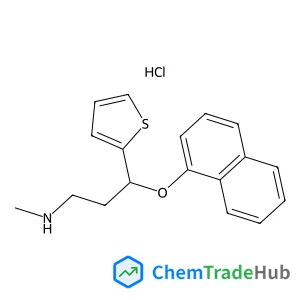
N-Methyl-3-(1-naphthyloxy)-3-(2-thienyl)-1-propanamine hydrochloride (1:1)
CAS番号:
1188266-11-6
分子式:
C18H20ClNOS
![1,10-bis(3,5-dimethylphenyl)-12-hydroxy-4,5,6,7-tetrahydroiindeno[7,1-de:1',7'-fg][1,3,2]dioxaphosphocine 12-oxide structure](https://static.chemtradehub.com/structs/141/1412439-82-7-b9a9.webp "1,10-bis(3,5-dimethylphenyl)-12-hydroxy-4,5,6,7-tetrahydroiindeno[7,1-de:1',7'-fg][1,3,2]dioxaphosphocine 12-oxide structure")
おすすめサプライヤー






免責事項
このページに表示される学術雑誌情報は、参考および研究目的のみを目的としています。当社は雑誌出版社とは提携しておらず、投稿の取り扱いも行っておりません。出版に関するお問い合わせは、各雑誌出版社に直接ご連絡ください。
表示されている情報に誤りがある場合は、support@chemtradehub.com までご連絡ください。迅速に確認し、対応いたします。