












![2-Methyl-2-propanyl 4-[3-(aminomethyl)phenyl]-1-piperazinecarboxylate structure](https://static.chemtradehub.com/structs/889/889948-55-4-5c12.webp "2-Methyl-2-propanyl 4-[3-(aminomethyl)phenyl]-1-piperazinecarboxylate structure")
2-Methyl-2-propanyl 4-[3-(aminomethyl)phenyl]-1-piperazinecarboxylate
CAS番号:
889948-55-4
分子式:
C16H25N3O2
Dewal S. Deshmukh, Bhalchandra M. Bhanage
A green and sustainable methodology for the synthesis of isoquinolines using Ru(II)/PEG-400 as a homogeneous recyclable catalytic system has been demonstrated. N-Tosylhydrazone, a rarely explored directing group, has been successfully employed for an annulation type of reaction with alkynes via C–H/N–N activation. A short reaction time with a simple extraction procedure, a wide substrate scope with high yields of products, easily prepared substrates, biodegradable solvent, and scalability up to the gram level enhance the efficiency and sustainability of the proposed protocol. Further, the expensive ruthenium-based homogeneous catalytic system could be reused up to a fourth consecutive cycle without any loss in its activity.
DOI: 10.1039/AN940650601B
DOI: 10.1039/AN941660062B
DOI: 10.1039/AN940650359A
5-苄基四氢吡咯并[3,4-c]吡咯-1,3[2H,3ah]-二酮は、主に薬理学的研究と合成化学に使用されます。また、特定の医薬品の合成原材料としても利用されま...
唾液酸路易ス Aの取り扱いでは、個別の防護具(PPE)が必要で、手袋、顔面保護具、防塵マスクを着用します。ドラフトチャンバーを使用し、漏洩時の適切な処理を行うこ...
タルトブチル ((1-(2-クロロアセチル)ピペリジン-4-イルメチル)カーバamatは、医薬品業界、ポリマー業界、センサー技術、半導体業界などで使用されていま...
3-烯丙基-2-羟基苯甲醛のCAS番号は24019-66-7です。物化性質としては、白色結晶性粉末で、分子量は174.22です。この化合物は水に溶けやすく、反応...
乳清酸 Potassium Orotateは、CAS番号24598-73-0の化合物で、乳清酸と Potassium(カリウム)による塩基です。化学式はC7H7...
4-甲基苯磺酸异丙酯は医薬品業界で広く使用されています。また、ポリマーの増塑剤や半導体製造におけるセンサー材料としても使用されることがあります。
6-(3-氟苯基)-N-[1-(2,2,2-三氟乙基)-4-哌啶基]-3-吡啶羧酰胺は医薬品産業で広く使用されており、その特性は抗炎症作用や抗ウイルス作用など、...
左西孟旦は、3-[(2-メチルフェニル)-2-(4-メチルフェニル)-1-オキシエチル]-1,2,4-トリTürkiyeン-5-カルボン酸と4-メチルフェニル-...
CAS番号1159826-79-5の3-乙氧基哌啶盐酸盐は、GHS分類ではイエローカテゴリーに分類され、毒性物質として扱われます。REACH規則では、製造または...
Diethyl (hydroxymethyl)phosphonateは、医薬品の製造や農薬、合成化学の一部として利用されます。

Organic & Biomolecular Chemistry (OBC) publishes original and high impact research and reviews in organic chemistry. We welcome research that shows new or significantly improved protocols or methodologies in total synthesis, synthetic methodology or physical and theoretical organic chemistry as well as research that shows a significant advance in the organic chemistry or molecular design aspects of chemical biology, catalysis, supramolecular and macromolecular chemistry, theoretical chemistry, mechanism-oriented physical organic chemistry, medicinal chemistry or natural products. Articles published in the journal should report new work which makes a highly-significant impact in the field. Routine and incremental work is generally not suitable for publication in the journal. More details about key areas of our scope are below. In all cases authors should include in their article clear rationale for why their research has been carried out.
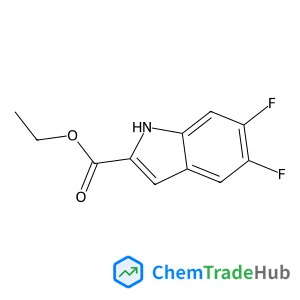
![4-[(2-Fluoro-4-methylphenyl)amino]-6-[4-(2-hydroxyethyl)-1-piperazinyl]-7-methoxy-3-cinnolinecarboxamide structure](https://static.chemtradehub.com/structs/104/1041852-85-0-fb1c.webp "4-[(2-Fluoro-4-methylphenyl)amino]-6-[4-(2-hydroxyethyl)-1-piperazinyl]-7-methoxy-3-cinnolinecarboxamide structure")
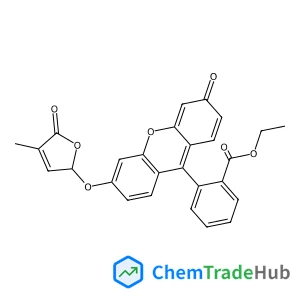
![9-Ethyl-3-{(E)-[ethyl(2-methylphenyl)hydrazono]methyl}-9H-carbazole structure](https://static.chemtradehub.com/structs/127/1274948-12-7-301f.webp "9-Ethyl-3-{(E)-[ethyl(2-methylphenyl)hydrazono]methyl}-9H-carbazole structure")





