












C8-Guanine modifications: effect on Z-DNA formation and its role in cancer
文献情報
出版日
2018-03-02
DOI
10.1039/C8OB00030A
インパクトファクター
3.876
著者
V. Vongsutilers, P. M. Gannett
原文を見る
要旨
Base modifications are known to affect the structure and function of DNA. C8-guanine adducts from various carcinogenic compounds have been shown to be potent Z-DNA inducers. Hence, it has been hypothesized that Z-DNA plays a role in cancer and other genetic diseases. In this comprehensive review, Z-DNA and the effect of prevalent C8-guanine adducts on the B–Z transition are addressed. The discoveries of Z-DNA binding proteins including ADAR1, E3L, DLM1, and PKZ have suggested the relevance of Z-DNA in living systems. In addition, increasing evidence on the Z-DNA connection to gene transcription and inhibition reveals potential biological functions of the left-handed DNA. Finally, C8-guanine adducts that promote Z-DNA formation can be used as a tool to explore the Z-DNA function and its role in carcinogenesis.
関連文献
Reactive oxygen species, proinflammatory and immunosuppressive mediators induced in COVID-19: overlapping biology with cancer
2021-06-30
Review Article
DOI: 10.1039/D1CB00042J
Hyaluronan (HA)-inspired glycopolymers as molecular tools for studying HA functions
Dominic W. P. Collis, Yichen Yuan, Guy Ochbaum, Yejiao Shi, Veselina Uzunova, Richard Napier, Ronit Bitton
2021-01-28
Paper
DOI: 10.1039/D0CB00223B
Intermediary conformations linked to the directionality of the aminoacylation pathway of nonribosomal peptide synthetases
Florian Mayerthaler, Anna-Lena Feldberg, Jonas Alfermann, Xun Sun, Wieland Steinchen, Haw Yang, Henning D. Mootz
2021-03-04
Paper
DOI: 10.1039/D0CB00220H
Fluorescence lifetime predicts performance of voltage sensitive fluorophores in cardiomyocytes and neurons
Steven C. Boggess, Julia R. Lazzari-Dean, Benjamin K. Raliski, Dong Min Mun, Amy Y. Li, Joshua L. Turnbull
2020-12-11
Paper
DOI: 10.1039/D0CB00152J
Site-specific modification and segmental isotope labelling of HMGN1 reveals long-range conformational perturbations caused by posttranslational modifications
Gerhard Niederacher, Debra Urwin, Yasmin Dijkwel, David J. Tremethick, K. Johan Rosengren, Christian F. W. Becker, Anne C. Conibear
2021-01-05
Paper
DOI: 10.1039/D0CB00175A
Evaluating the effect of ionic strength on PNA:DNA duplex formation kinetics
Colin S. Swenson, Hershel H. Lackey, Eric J. Reece, Joel M. Harris, Jennifer M. Heemstra, Eric M. Peterson
2021-05-21
Paper
DOI: 10.1039/D1CB00025J
Modified nucleoside triphosphates in bacterial research for in vitro and live-cell applications
Adeline Espinasse, Hannah K. Lembke, Angela A. Cao
2020-09-14
Review Article
DOI: 10.1039/D0CB00078G
Medicinal chemistry of the myeloid C-type lectin receptors Mincle, Langerin, and DC-SIGN
Jonathan Cramer
2021-09-16
Review Article
DOI: 10.1039/D1MD00238D
In vivo delivery of a fluorescent FPR2/ALX-targeted probe using focused ultrasound and microbubbles to image activated microglia
Sophie V. Morse, Tamara Boltersdorf, Felicity N. E. Gavins, James J. Choi, Nicholas J. Long
2020-09-23
Communication
DOI: 10.1039/D0CB00140F
こちらもおすすめ
化合物よくある質問
2-メトキシ-4-(メチルスルフィニル)アミンの主な用途は何ですか?
2-メトキシ-4-(メチルスルフィニル)アミンは、主に医薬品および農薬の製造に使用されます。また、合成化学の一部として研究用材料としても利用されます。
41608-73-52-Methoxy-4-(methyls...
118684-13-24-(Bromomethyl)-3-me...
化合物よくある質問
4,6-二氯-N-甲基ピラミジンアミンの代替品はありますか?
代替品としては、4,6-二クロロピラミジンアミンや他のピラミジン系化合物が考えられます。ただし、目的と用途によって最適な代替品は異なります。
10397-15-64,6-Dichloro-N-methy...
化合物よくある質問
6-氯-4-甲基-1H-吲哚を含む廃棄物はどのように処理すべきですか?
6-氯-4-甲基-1H-吲哚の廃棄物は、適切な容器に収集し、密閉して保管します。温度は常温、湿度は低く、直射日光を避けて保管することを推奨します。廃棄処理は専門...
885520-84-36-chloro-4-methyl-1H...
化合物よくある質問
2-フローユロ-4-(トリフルオロメチル)ベンゾイドについて「に適用される法規ガイドラインは何ですか」
2-フローユロ-4-(トリフルオロメチル)ベンゾイドのCAS番号は207974-08-1です。この化合物はGHS分類で毒性物質と有害な反応物質として分類されます...
207974-08-1[2-Fluoro-4-(trifluo...
化合物よくある質問
4-ニトロフェニルN-[(ベンゼルオキシルカーボンイル]グリシングリシングリシン酸はどのように保存すればよいですか?
4-ニトロフェニルN-[(ベンゼルオキシルカーボンイル]グリシングリシングリシン酸は、室温で暗所に保管し、乾燥した環境で保存することを推奨します。容器は密閉性の...
19811-64-44-Nitrophenyl N-[(be...
化合物よくある質問
イソデスロラタドリンの代替品はありますか?
イソデスロラタドリンの代替品としては、デスロラタドリンや他の抗ヒスタミン薬が挙げられます。具体的には、デスロラタドリン、ラセカミド、フェルタドリンなどが、症状や...
183198-49-4Iso Desloratadine
化合物よくある質問
5-甲氧基-1,2,3,4-四氢异喹啉盐酸盐はどのように合成されますか?
5-甲氧基-1,2,3,4-四氢异喹啉盐酸盐の一般的な合成方法は、メタノール中で5-メトキシ-1,2,3,4-四ヒュドロイソキシンを塩酸で塩化します。この反応で...
103030-69-95-Methoxy-1,2,3,4-te...
化合物よくある質問
4-アミノ-5-メトキシ-2-トルエンサルホニック酸についての法規ガイドラインは何ですか?
CAS番号6471-78-9の4-アミノ-5-メトキシ-2-トルエンサルホニック酸は、GHS分類では corrosive(腐食性)と識別されます。EUのREAC...
6471-78-94-Amino-5-Methoxy-2-...
化合物よくある質問
甲基孕酮を取り扱う際の実験室安全事項は何ですか?
甲基孕酮の取り扱いは、PPE(個人保護具)の使用が必要な重要な安全事項を伴います。防塵マスク、ゴーグル、手袋を着用することが推奨されます。ドラフトチャンバーを使...
204063-33-22-[(Diphenylmethyl)a...
掲載誌
Organic & Biomolecular Chemistry

CiteScore:
3.4
自己引用率:
10.3%
年間論文数:
1041
Organic & Biomolecular Chemistry (OBC) publishes original and high impact research and reviews in organic chemistry. We welcome research that shows new or significantly improved protocols or methodologies in total synthesis, synthetic methodology or physical and theoretical organic chemistry as well as research that shows a significant advance in the organic chemistry or molecular design aspects of chemical biology, catalysis, supramolecular and macromolecular chemistry, theoretical chemistry, mechanism-oriented physical organic chemistry, medicinal chemistry or natural products. Articles published in the journal should report new work which makes a highly-significant impact in the field. Routine and incremental work is generally not suitable for publication in the journal. More details about key areas of our scope are below. In all cases authors should include in their article clear rationale for why their research has been carried out.
おすすめ化合物

![5-Acetyl-2,3-dihydrobenzo[b]furan structure](https://static.chemtradehub.com/structs/908/90843-31-5-eea4.webp "5-Acetyl-2,3-dihydrobenzo[b]furan structure")
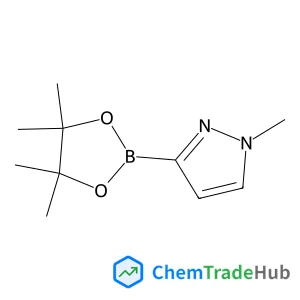
1-Methyl-3-(4,4,5,5-tetramethyl-1,3,2-dioxaborolan-2-yl)-1H-pyrazole
CAS番号:
1020174-04-2
分子式:
C10H17BN2O2
おすすめサプライヤー




免責事項
このページに表示される学術雑誌情報は、参考および研究目的のみを目的としています。当社は雑誌出版社とは提携しておらず、投稿の取り扱いも行っておりません。出版に関するお問い合わせは、各雑誌出版社に直接ご連絡ください。
表示されている情報に誤りがある場合は、support@chemtradehub.com までご連絡ください。迅速に確認し、対応いたします。