












Thermal stability of p-type Ag-doped Mg3Sb2 thermoelectric materials investigated by powder X-ray diffraction
文献情報
出版日
2019-01-22
DOI
10.1039/C8CP07648K
インパクトファクター
3.676
著者
Lirong Song, Jiawei Zhang, Bo Brummerstedt Iversen
原文を見る
要旨
The thermal stability of the p-type Mg2.985Ag0.015Sb2 material with reported good thermoelectric performance is systematically investigated using powder X-ray diffraction (PXRD). Rietveld refinements were performed to extract the quantitative compositional and structural information from PXRD data. For both densified bulk samples and powdered samples of Mg2.985Ag0.015Sb2 studied under vacuum, a secondary phase, Sb, appears upon the first heating process at temperatures above 500 K, but the amount of the Sb phase stabilizes in subsequent thermal cycles. This is consistent with the good repeatability of the electrical resistivity data after the first cycle measurement, and it indicates that the appearance of the Sb phase does not result in structural decomposition or degradation of the thermoelectric properties. To investigate the effect of the Mg vacancy concentration on the formation of the secondary Sb phase, Mg3.5−xAgxSb2 (x = 0 and 0.015) samples with nominal excess Mg were synthesized and characterized. Compared with Mg2.985Ag0.015Sb2, it is found that Mg3.5−xAgxSb2 (x = 0.015) shows no Sb phase appearing for the bulk sample after heat treatment, and only a small amount of Sb emerges in the powdered sample. This reveals that decreasing the Mg deficiency is beneficial for reducing the amount of emerging Sb secondary phase. In addition, there is less Sb appearing in the Ag-doped powder sample of Mg3.5−xAgxSb2 (x = 0.015) than the undoped Mg3.5Sb2 powder sample, indicating that Ag doping at the Mg sites can inhibit the appearance of the Sb phase to some extent. Our work implies that the emergence of the Sb phase is unlikely due to the decomposition of the Mg3Sb2 structure and can be hindered by reducing the Mg deficiency or Ag doping on the Mg sites.
関連文献
Graphene and graphene–cellulose nanocrystal composite films for sustainable anodes in biophotovoltaic devices
Laura T. Wey, Jouko Peltonen, Yagut Allahverdiyeva
2023-12-01
Paper
DOI: 10.1039/D3SE01185B
Correction: Extracting accurate information from triplet–triplet annihilation upconversion data with a mass-conserving kinetic model
Abhishek Kalpattu, Tristan Dilbeck, Kenneth Hanson
2023-12-14
Correction
DOI: 10.1039/D3CP90241B
Polymer mechanochemistry: from single molecule to bulk material
Qifeng Mu, Jian Hu
2023-12-05
Review Article
DOI: 10.1039/D3CP04160C
The single metal atom (Ni, Pd, Pt) anchored on defective hexagonal boron nitride for oxidative desulfurization
Naixia Lv, Hongshun Ran, Jinrui Zhang, Jie Yin, Yuan Zhang, Hongping Li, Linhua Zhu
2023-12-19
Paper
DOI: 10.1039/D3CP04963A
The controlled engineering of surface oxygen defects on Bi2Zr2O7 compounds for catalytic soot combustion by adjusting the preparation methods
Shijing Zhang, Xiaohui Feng, Zekai Xu, Yuting Li, Ping Wang, Jiating Shen, Junwei Xu, Xianglan Xu, Xiuzhong Fang, Xiang Wang
2023-11-24
Paper
DOI: 10.1039/D3CP04104B
Measuring metal halide perovskite single cell degradation consistent with module-based conditions
Robert Tirawat, Mengjin Yang, Severin N. Habisreutinger, Soňa Uličná, Ross A. Kerner, Kai Zhu, Laura T. Schelhas, Axel F. Palmstrom
2024-01-02
Paper
DOI: 10.1039/D3SE01268A
Effects of surface chemistry on the mechanochemical decomposition of tricresyl phosphate
Fakhrul H. Bhuiyan, Ashlie Martini
2023-11-30
Paper
DOI: 10.1039/D3CP05320B
こちらもおすすめ
化合物よくある質問
2-メトキシ-4-(メチルスルフィニル)アミンの主な用途は何ですか?
2-メトキシ-4-(メチルスルフィニル)アミンは、主に医薬品および農薬の製造に使用されます。また、合成化学の一部として研究用材料としても利用されます。
41608-73-52-Methoxy-4-(methyls...
118684-13-24-(Bromomethyl)-3-me...
化合物よくある質問
4,6-二氯-N-甲基ピラミジンアミンの代替品はありますか?
代替品としては、4,6-二クロロピラミジンアミンや他のピラミジン系化合物が考えられます。ただし、目的と用途によって最適な代替品は異なります。
10397-15-64,6-Dichloro-N-methy...
化合物よくある質問
6-氯-4-甲基-1H-吲哚を含む廃棄物はどのように処理すべきですか?
6-氯-4-甲基-1H-吲哚の廃棄物は、適切な容器に収集し、密閉して保管します。温度は常温、湿度は低く、直射日光を避けて保管することを推奨します。廃棄処理は専門...
885520-84-36-chloro-4-methyl-1H...
化合物よくある質問
2-フローユロ-4-(トリフルオロメチル)ベンゾイドについて「に適用される法規ガイドラインは何ですか」
2-フローユロ-4-(トリフルオロメチル)ベンゾイドのCAS番号は207974-08-1です。この化合物はGHS分類で毒性物質と有害な反応物質として分類されます...
207974-08-1[2-Fluoro-4-(trifluo...
化合物よくある質問
4-ニトロフェニルN-[(ベンゼルオキシルカーボンイル]グリシングリシングリシン酸はどのように保存すればよいですか?
4-ニトロフェニルN-[(ベンゼルオキシルカーボンイル]グリシングリシングリシン酸は、室温で暗所に保管し、乾燥した環境で保存することを推奨します。容器は密閉性の...
19811-64-44-Nitrophenyl N-[(be...
化合物よくある質問
イソデスロラタドリンの代替品はありますか?
イソデスロラタドリンの代替品としては、デスロラタドリンや他の抗ヒスタミン薬が挙げられます。具体的には、デスロラタドリン、ラセカミド、フェルタドリンなどが、症状や...
183198-49-4Iso Desloratadine
化合物よくある質問
5-甲氧基-1,2,3,4-四氢异喹啉盐酸盐はどのように合成されますか?
5-甲氧基-1,2,3,4-四氢异喹啉盐酸盐の一般的な合成方法は、メタノール中で5-メトキシ-1,2,3,4-四ヒュドロイソキシンを塩酸で塩化します。この反応で...
103030-69-95-Methoxy-1,2,3,4-te...
化合物よくある質問
4-アミノ-5-メトキシ-2-トルエンサルホニック酸についての法規ガイドラインは何ですか?
CAS番号6471-78-9の4-アミノ-5-メトキシ-2-トルエンサルホニック酸は、GHS分類では corrosive(腐食性)と識別されます。EUのREAC...
6471-78-94-Amino-5-Methoxy-2-...
化合物よくある質問
甲基孕酮を取り扱う際の実験室安全事項は何ですか?
甲基孕酮の取り扱いは、PPE(個人保護具)の使用が必要な重要な安全事項を伴います。防塵マスク、ゴーグル、手袋を着用することが推奨されます。ドラフトチャンバーを使...
204063-33-22-[(Diphenylmethyl)a...
掲載誌
Physical Chemistry Chemical Physics

CiteScore:
5.5
自己引用率:
10.3%
年間論文数:
3036
Physical Chemistry Chemical Physics (PCCP) is an international journal co-owned by 19 physical chemistry and physics societies from around the world. This journal publishes original, cutting-edge research in physical chemistry, chemical physics and biophysical chemistry. To be suitable for publication in PCCP, articles must include significant innovation and/or insight into physical chemistry; this is the most important criterion that reviewers and Editors will judge against when evaluating submissions. The journal has a broad scope and welcomes contributions spanning experiment, theory, computation and data science. Topical coverage includes spectroscopy, dynamics, kinetics, statistical mechanics, thermodynamics, electrochemistry, catalysis, surface science, quantum mechanics, quantum computing and machine learning. Interdisciplinary research areas such as polymers and soft matter, materials, nanoscience, energy, surfaces/interfaces, and biophysical chemistry are welcomed if they demonstrate significant innovation and/or insight into physical chemistry. Joined experimental/theoretical studies are particularly appreciated when complementary and based on up-to-date approaches.
おすすめ化合物
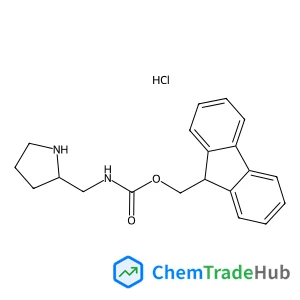
(S)-(9H-Fluoren-9-yl)methyl (pyrrolidin-2-ylmethyl)carbamate hydrochloride
CAS番号:
1217813-15-4
分子式:
C20H23ClN2O2
![2-Methylbenzo[h]quinoline structure](https://static.chemtradehub.com/structs/605/605-88-9-ac43.webp "2-Methylbenzo[h]quinoline structure")
![2-Methyl-2-propanyl {3-[4-(4,4,5,5-tetramethyl-1,3,2-dioxaborolan-2-yl)phenyl]-3-oxetanyl}carbamate structure](https://static.chemtradehub.com/structs/127/1279090-25-3-1b84.webp "2-Methyl-2-propanyl {3-[4-(4,4,5,5-tetramethyl-1,3,2-dioxaborolan-2-yl)phenyl]-3-oxetanyl}carbamate structure")
おすすめサプライヤー




免責事項
このページに表示される学術雑誌情報は、参考および研究目的のみを目的としています。当社は雑誌出版社とは提携しておらず、投稿の取り扱いも行っておりません。出版に関するお問い合わせは、各雑誌出版社に直接ご連絡ください。
表示されている情報に誤りがある場合は、support@chemtradehub.com までご連絡ください。迅速に確認し、対応いたします。