












Ligand binding effects on the activation of the EGFR extracellular domain
文献情報
出版日
2019-03-18
DOI
10.1039/C8CP07496H
インパクトファクター
3.676
著者
原文を見る
要旨
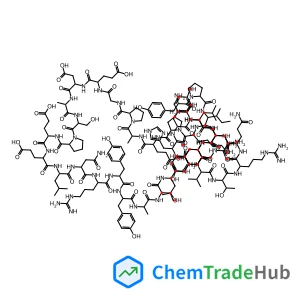
The epidermal growth factor receptor (EGFR) is one of the most common target proteins in anti-cancer therapy. The binding of the EGF ligand to the EGFR extracellular domain (EGFR-ECD) promotes its inactive-to-active conformational transition (activation) but the relevant detailed mechanism remains elusive still. Here, the structural characterization and energetics of the EGFR-ECD conformational transition with and without the binding of the EGF are quantitatively explored using an innovative enhanced sampling MD simulation method. Intriguingly, the EGF offers hydrophobic interactions (e.g., EGF residues of Tyr44 and Leu47) and electrostatic interactions (e.g., the EGF residues of Glu5, Asp11, Asp17, and Arg41) to play a dominant role in dragging domain III to close the ligand binding domain gap. Subsequently, the correlation between domains III and II is enhanced through salt-bridges among Glu376, Arg403, and Arg405 from domain III and Glu293, Glu295, and Arg300 from domain II. Finally, the structural bending of domain II is regulated to facilitate the disengagement of domain II from domain IV. In this regard, the functional conformational transition of EGFR-ECD is a consequence of the cooperative motion of protein domains driven by the EGF ligand binding. The present study shows a detailed scenario of the EGF induced activation of EGFR-ECD and provides valuable information for drug discovery targeting the EGFR.
関連文献
A three-dimensional cross-linking supramolecular polymer stabilized by the cooperative dimerization of the viologen radical cation
Cen Zhou, Jia Tian, Ji-Liang Wang, Dan-Wei Zhang, Xin Zhao, Yi Liu, Zhan-Ting Li
2013-09-09
Communication
DOI: 10.1039/C3PY01006F
Self-activation and activation of Cu(0) wire for SET-LRP mediated by fluorinated alcohols
Shampa R. Samanta, Hao-Jan Sun, David M. Haddleton, Virgil Percec
2013-08-01
Paper
DOI: 10.1039/C3PY01007D
Nonvolatile organic field-effect transistor memory devices using polymer electrets with different thiophene chain lengths
Ying-Hsuan Chou, Sanae Takasugi, Raita Goseki, Takashi Ishizone, Wen-Chang Chen
2013-10-14
Paper
DOI: 10.1039/C3PY01124K
A novel route for polymerisation of thiophene based conducting polymers using trace-free oxidants
Jimy Hadiono So, David Mayevsky, Orawan Winther-Jensen, Bjorn Winther-Jensen
2013-10-10
Communication
DOI: 10.1039/C3PY01265D
The use of a carbon paste electrode mixed with multiwalled carbon nanotube/electroactive polyimide composites as an electrode for sensing ascorbic acid
Tsao-Cheng Huang, Lu-Chen Yeh, Hsiu-Ying Huang, Zheng-Yong Nian, Yi-Chun Yeh, Yi-Chen Chou, Jui-Ming Yeh, Mei-Hui Tsai
2013-09-05
Paper
DOI: 10.1039/C3PY00787A
Facile preparation and cell imaging applications of fluorescent organic nanoparticles that combine AIE dye and ring-opening polymerization
Xiqi Zhang, Xiaoyong Zhang, Bin Yang, Junfeng Hui, Meiying Liu, Zhenguo Chi, Siwei Liu, Jiarui Xu, Yen Wei
2013-09-10
Communication
DOI: 10.1039/C3PY01143G
Synthesis and volume phase transition of concanavalin A-based glucose-responsive nanogels
Ting Ye, Suting Yan, Yumei Hu, Li Ding, Weitai Wu
2013-08-07
Paper
DOI: 10.1039/C3PY00778B
Synthesis of antimicrobial silsesquioxane–silica hybrids by hydrolytic co-condensation of alkoxysilanes
Shi-qiang Gong, D. Jeevanie Epasinghe, Wei Zhang, Bin Zhou, Li-na Niu, Heonjune Ryou, Ashraf A. Eid, Andrea Frassetto, Cynthia K. Y. Yiu, Dwayne D. Arola, Jing Mao, David H. Pashley, Franklin R. Tay
2013-08-14
Paper
DOI: 10.1039/C3PY00635B
Selective O-acyl ring-opening of β-butyrolactone catalyzed by trifluoromethane sulfonic acid: application to the preparation of well-defined block copolymers
Christophe Navarro
2013-08-07
Paper
DOI: 10.1039/C3PY00935A
The synthesis and characterization of supramolecular elastomers based on linear carboxyl-terminated polydimethylsiloxane oligomers
Lin Yang, Yaling Lin, Lianshi Wang, Anqiang Zhang
2013-08-07
Paper
DOI: 10.1039/C3PY01005H
こちらもおすすめ
化合物よくある質問
S-(甲硅烷基丙基)異硫酰氯を取り扱う際の実験室安全事項は何ですか?
取り扱う際にはPPE(防護具)が必要です。特に手袋と面マスクは必須です。ドラフトチャンバーを使用して漏洩処理を行い、温度は常温、湿度は乾燥状態、容器はガラス容器...
84682-36-02-Amino-7,7-dimethox...
化合物よくある質問
8-硝基-咪唑并[1,2-a]吡啶とは何ですか?
8-硝基-咪唑并[1,2-a]吡啶は、CAS番号52310-46-0の化合物で、8-位に硝基を有する咪唑並みの结构をもつ吡啶の化合物です。この化合物は、酸化還元...
52310-46-08-Nitroimidazo[1,2-a...
化合物よくある質問
4-ブロモ-5-メトキシピリジン-2-甲醇の代替品はありますか?
4-ブロモ-5-メトキシピリジン-2-甲醇の代替品には、類似構造を持つ化合物や機能性に等しい代替試薬があります。例えば、4-クロロ-5-メトキシピリジン-2-甲...
1454849-84-3(4-Bromo-5-methoxy-2...
化合物よくある質問
全氟-1,2-二甲基環己烷を含む廃棄物はどのように処理すべきですか?
全氟-1,2-二甲基環己烷(CAS番号:306-98-9)の廃棄物は、特別な処理が必要です。まず、廃棄物を密閉容器に収集し、適切な防漏容器に保管します。次に、専...
306-98-91,1,2,2,3,3,4,4,5,6-...
化合物よくある質問
3-(溴甲基)苯乙酸の主な用途は何ですか?
3-(溴甲基)苯乙酸は主に研究用化学薬品として利用され、有機合成や医薬品の開発に用いられます。また、特定の化合物の合成中間体としても使用されることがあります。
118647-53-32-(3-(Bromomethyl)ph...
化合物よくある質問
5-イドキド-4-メチオキシ-6-メチルピリミジニン-2-アミンはどのように保存すればよいですか?
5-イドキド-4-メチオキシ-6-メチルピリミジニン-2-アミンは冷暗所で密栓の容器に保存し、直射日光を避けて保管することをお勧めします。温度は常温とし、湿気を...
23368-84-55-Iodo-4-methoxy-6-m...
化合物よくある質問
1-(2-溴-6-甲氧基苯基)乙酮を取り扱う際の実験室安全事項は何ですか?
実験室では、1-(2- Bromo-6-methoxyphenyl)ethanoneを取り扱う際には、ゴーグルや面具、手袋などのPPEを使用することが推奨されま...
380225-68-31-(2-Bromo-6-methoxy...
化合物よくある質問
5-(4,4,5,5-テトラメチル-1,3,2-ダイオキサボラロール-2-イル)-1,3-ジヒドロ-2-ベンゾフランは安全ですか?
5-(4,4,5,5-テトラメチル-1,3,2-ダイオキサボラロール-2-イル)-1,3-ジヒドロ-2-ベンゾフランは一般に安全ですが、取扱いには注意が必要です...
1352037-60-55-(4,4,5,5-Tetrameth...
化合物よくある質問
4-溴萘-1-甲酸の代替品はありますか?
4-溴萘-1-甲酸は比較的稀な化合物ですが、類似物としては、4-クロロ-1-ナフホリック酸やその他のブロモ置換ナフホリック酸が挙げられます。ただし、これらの代替...
16650-55-84-Bromo-1-naphthoic ...
化合物よくある質問
ε-白藜芦醇脱氢二聚体の代替品はありますか?
ε-白藜芦醇脱氢二聚体の代替品としては、ε-白藜芦醇、ポリフェノール類、フラボノイド類が挙げられます。これらは類似の化学構造と生物学的活性を持っています。ただし...
62218-08-05-{(2R,3R)-6-Hydroxy...
掲載誌
Physical Chemistry Chemical Physics

CiteScore:
5.5
自己引用率:
10.3%
年間論文数:
3036
Physical Chemistry Chemical Physics (PCCP) is an international journal co-owned by 19 physical chemistry and physics societies from around the world. This journal publishes original, cutting-edge research in physical chemistry, chemical physics and biophysical chemistry. To be suitable for publication in PCCP, articles must include significant innovation and/or insight into physical chemistry; this is the most important criterion that reviewers and Editors will judge against when evaluating submissions. The journal has a broad scope and welcomes contributions spanning experiment, theory, computation and data science. Topical coverage includes spectroscopy, dynamics, kinetics, statistical mechanics, thermodynamics, electrochemistry, catalysis, surface science, quantum mechanics, quantum computing and machine learning. Interdisciplinary research areas such as polymers and soft matter, materials, nanoscience, energy, surfaces/interfaces, and biophysical chemistry are welcomed if they demonstrate significant innovation and/or insight into physical chemistry. Joined experimental/theoretical studies are particularly appreciated when complementary and based on up-to-date approaches.
おすすめ化合物
おすすめサプライヤー





免責事項
このページに表示される学術雑誌情報は、参考および研究目的のみを目的としています。当社は雑誌出版社とは提携しておらず、投稿の取り扱いも行っておりません。出版に関するお問い合わせは、各雑誌出版社に直接ご連絡ください。
表示されている情報に誤りがある場合は、support@chemtradehub.com までご連絡ください。迅速に確認し、対応いたします。