












Intercalation of first row transition metals inside covalent-organic frameworks (COFs): a strategy to fine tune the electronic properties of porous crystalline materials
文献情報
出版日
2019-04-02
DOI
10.1039/C8CP07396A
インパクトファクター
3.676
著者
原文を見る
要旨
Covalent-organic frameworks (COFs) have emerged as an important class of nano-porous crystalline materials with many potential applications. They are intriguing platforms for the design of porous skeletons with special functionality at the molecular level. However, despite their extraordinary structural tunability, it is difficult to control their electronic properties, thus hindering the potential implementation in electronic devices. A new family of nanoporous materials, COFs intercalated with first row transition metals, is proposed to address this fundamental drawback – the lack of electronic tunability. Using first-principles calculations, we designed 31 new COF materials in silico by intercalating all of the first row transition metals (TMs) with boroxine-linked and triazine-linked COFs: COF-TM-x (where TM = Sc–Zn and x = 3–5). We investigated their structure and electronic properties. Specifically, we predict that the band gap and density of states (DOS) of COFs can be controlled by intercalating first row transition metal atoms (TM: Sc–Zn) and fine tuned by the concentration of TMs. We also found that the d-subshell electron density of the TMs plays a main role in determining the electronic properties of the COFs. Thus intercalated-COFs provide a new strategy to control the electronic properties of materials within a porous network. This work opens up new avenues for the design of TM-intercalated materials with promising future applications in nanoporous electronic devices, where a high surface area coupled with fine-tuned electronic properties is desired.
関連文献
2-D Self-assembly of the bis(phthalocyaninato)terbium(iii) single-molecule magnet studied by scanning tunnelling microscopy
Jordi Gómez-Segura, Ismael Díez-Pérez, Naoto Ishikawa, Motohiro Nakano, Jaume Veciana, Daniel Ruiz-Molina
2006-06-15
Communication
DOI: 10.1039/B606276H
Nickeladihydrofuran. Key intermediate for nickel-catalyzed reaction of alkyne and aldehyde
Sensuke Ogoshi, Tomoya Arai, Masato Ohashi, Hideo Kurosawa
2008-01-21
Communication
DOI: 10.1039/B717261C
Reversible lithium insertion and copper extrusion in layered oxysulfides
Oliver J. Rutt, Gareth R. Williams, Simon J. Clarke
2006-06-06
Communication
DOI: 10.1039/B605105G
Capturing a [c2]daisy chain using the threading-followed-by-swelling approach
Shau-Hua Ueng, Sheng-Yao Hsueh, Chien-Chen Lai, Yi-Hung Liu, Shie-Ming Peng, Sheng-Hsien Chiu
2007-12-11
Communication
DOI: 10.1039/B716331B
Fabrication of Cd(OH)2 nanorings by ultrasonic chiselling on Cd(OH)2 nanoplates
Jian-Jun Miao, Rui-Ling Fu, Jian-Min Zhu, Ke Xu, Jun-Jie Zhu, Hong-Yuan Chen
2006-06-13
Communication
DOI: 10.1039/B604688F
A new, simple approach to confer permanent antimicrobial properties to hydroxylated surfaces by surface functionalization
Othman Bouloussa
2008-01-03
Communication
DOI: 10.1039/B716026G
Crystal structure of tricyclo-DNA: an unusual compensatory change of two adjacent backbone torsion angles
Pradeep S. Pallan, Damian Ittig, Annie Héroux, Zdzislaw Wawrzak, Christian J. Leumann, Martin Egli
2007-12-21
Communication
DOI: 10.1039/B716390H
The quest for secondary structure in chiral dendrimers
Susan E. Gibson, Jacob T. Rendell
2007-11-26
Feature Article
DOI: 10.1039/B712298E
Unprecedented twofold intramolecular hydroamination in diam(m)ine-dicarboxylatodichloridoplatinum(iv) complexes – ethane-1,2-diaminevs.ammine ligands
Michael R. Reithofer, Mathea S. Galanski, Vladimir B. Arion, Bernhard K. Keppler
2008-01-09
Communication
DOI: 10.1039/B715680D
Controlled self-assembly of squaraines to 1D supramolecular architectures with high molar absorptivity‡
Ayyappanpillai Ajayaghosh, Parayalil Chithra, Reji Varghese, Kizhumuri P. Divya
2008-01-07
Communication
DOI: 10.1039/B718054C
こちらもおすすめ
化合物よくある質問
6- bromo-1-cyclopropyl-1H-benzimidazoleの市場動向や研究トレンドはどうですか?
6- bromo-1-cyclopropyl-1H-benzimidazoleは、抗炎症、抗ウイルス作用を持つことが報告されており、新薬開発の研究対象として注目...
1416713-53-56-Bromo-1-cyclopropy...
化合物よくある質問
環氧プロpanol-d5を取り扱う際の実験室安全事項は何ですか?
取り扱う際には、防護眼鏡と手袋を使用し、ドラフトチャンバー内で操作することを推奨します。漏洩時には適切な手順で処理し、安全データシートを常に参照してください。
1246819-20-4Glycidol-d5
化合物よくある質問
2,2’-ジメチル-3,3’-ビピリジンはどのように合成されますか?
2,2’-ジメチル-3,3’-ビピリジンは、ピリジンと2-メチルアクリルアミドを有機合成反応で合成します。この反応では、ピリジンと2-メチルアクリルアミドを含有...
86156-55-02,2’-Dimethyl-3,3’-b...
化合物よくある質問
6-甲基ピリジン-2-ボリック酸の主な用途は何ですか?
6-甲基ピリジン-2-ボリック酸は、合成化学、医薬品合成、以及研究用途などに広く使用され、特に組換えDNA技術や分子生物学の研究において重要な役割を果たします。
372963-50-3(6-Methyl-2-pyridiny...
化合物よくある質問
(R)-3-(1-甲基-2-氧環己基)プロpano酸メチルは安全ですか?
(R)-3-(1-甲基-2-氧環己基)プロpano酸メチルは一定の安全性がありますが、直接的な皮膚接触や吸入は避けるべきです。使用する際は適切な個々の安全データ...
94089-47-1methyl 3-[(1R)-1-met...
化合物よくある質問
ketorolacはどのように保存すればよいですか?
ketorolacは、密封して遮光容器に保管し、直射日光や高温を避けて保存してください。温度は常温で保存し、湿度をなるべく低く保つことが推奨されます。
74103-06-3rac Ketorolac
化合物よくある質問
L-2,3-二氨基丙酸二盐酸盐を取り扱う際の実験室安全事項は何ですか?
L-2,3-二氨基丙酸二盐酸盐は腐食性が強く、皮膚や粘膜に刺激を与える可能性があります。取り扱う際は、防塵マスク、ゴーグル、手袋を使用し、適切な排気設備を使用し...
19777-68-5(S)-2,3-Diaminopropa...
化合物よくある質問
2-(4-溴ピリジン-2-基)乙腈の物理化学的性質は何ですか?
2-(4-溴ピリジン-2-基)乙腈のCAS番号は312325-73-8です。主に結晶形態で存在し、分子量は159.01 g/molです。この化合物は水に溶けやす...
312325-73-8(4-Bromo-2-pyridinyl...
化合物よくある質問
3-フローロ-[1,1-ベンジレン]-3,4-ジカルボン酸を取り扱う際の実験室安全事項は何ですか?
この化合物は毒性は低いですが、直接的な接触や吸入に注意が必要です。PPE(個人防護具)を着用し、ドラフトチャンバーを使用して操作することを推奨します。また、漏洩...
1261915-32-53'-Fluoro-[1,1'-biph...
化合物よくある質問
3-(1-氧代-1,3-二氢-2H-2-异吲哚)丙酸の主な用途は何ですか?
3-(1-氧代-1,3-二氢-2H-2-异吲哚)丙酸は、薬理学研究や医薬品製造において広く用いられる化合物です。また、工業的な用途でも一部の化学反応の触媒や助剤...
83747-30-23-(1-Oxo-1,3-dihydro...
掲載誌
Physical Chemistry Chemical Physics

CiteScore:
5.5
自己引用率:
10.3%
年間論文数:
3036
Physical Chemistry Chemical Physics (PCCP) is an international journal co-owned by 19 physical chemistry and physics societies from around the world. This journal publishes original, cutting-edge research in physical chemistry, chemical physics and biophysical chemistry. To be suitable for publication in PCCP, articles must include significant innovation and/or insight into physical chemistry; this is the most important criterion that reviewers and Editors will judge against when evaluating submissions. The journal has a broad scope and welcomes contributions spanning experiment, theory, computation and data science. Topical coverage includes spectroscopy, dynamics, kinetics, statistical mechanics, thermodynamics, electrochemistry, catalysis, surface science, quantum mechanics, quantum computing and machine learning. Interdisciplinary research areas such as polymers and soft matter, materials, nanoscience, energy, surfaces/interfaces, and biophysical chemistry are welcomed if they demonstrate significant innovation and/or insight into physical chemistry. Joined experimental/theoretical studies are particularly appreciated when complementary and based on up-to-date approaches.
おすすめ化合物
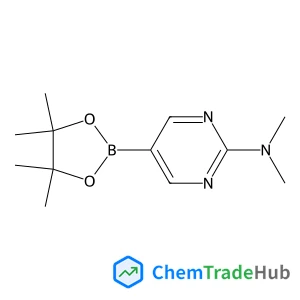
N,N-Dimethyl-5-(4,4,5,5-tetramethyl-1,3,2-dioxaborolan-2-yl)-2-pyrimidinamine
CAS番号:
1032759-30-0
分子式:
C12H20BN3O2
おすすめサプライヤー



免責事項
このページに表示される学術雑誌情報は、参考および研究目的のみを目的としています。当社は雑誌出版社とは提携しておらず、投稿の取り扱いも行っておりません。出版に関するお問い合わせは、各雑誌出版社に直接ご連絡ください。
表示されている情報に誤りがある場合は、support@chemtradehub.com までご連絡ください。迅速に確認し、対応いたします。