












Infrared spectroscopic characterization of phosphate binding at the goethite–water interface
文献情報
出版日
2019-01-24
DOI
10.1039/C8CP07168C
インパクトファクター
3.676
著者
Stella Gypser, Peter Leinweber, Dirk Freese
原文を見る
要旨
The interaction between phosphates and soil mineral surfaces, such as Fe- and Al-(oxyhydr)oxides, plays a crucial role in the immobilization of P and thus its availability for plants. The reactions of phosphates with Fe-hydroxides and especially goethite have been studied extensively. But a molecular-level picture of the phosphate binding mechanisms at the goethite–water interface is still lacking. Therefore, in the current contribution we have explored the molecular binding mechanisms for the adsorbed phosphate at the goethite–water interface by performing sorption kinetics experiments for orthophosphate and characterizing the adsorbed species by FT-IR spectroscopy. In parallel, periodic DFT calculations have been performed to explore the interaction mechanisms and to assign the IR spectra for monodentate (M) and bidentate (B) orthophosphate complexes at two different goethite surface planes (010 and 100) in the presence of water. In general, our interaction energy results give evidence that the mono-protonated B phosphate complex is favored to be formed at the goethite–water interface, although the M motif could exist as a minor fraction. Moreover, it was found that water plays an important role in controlling the phosphate adsorption process at the goethite surfaces. The interfacial water molecules form H-bonds (HBs) with the phosphate as well as with the goethite surface atoms. Furthermore, some water molecules form covalent bonds with goethite's Fe atoms while others dissociate at the surface to protons and hydroxyl groups. The present theoretical assignment of IR spectra introduces a benchmark for characterizing experimental IR data for the adsorbed KH2PO4 species at the goethite–water interface. In particular, the IR spectra of the mono-protonated (2O + 1Fe) B complex at the 010 goethite surface plane and the M complex at the 100 goethite surface plane were found to be consistent with the experimental data. In order to explore the role of different abundances of surface planes and binding motifs, IR spectra obtained from weighted averages have been analyzed. The results confirmed the conclusions drawn from interaction energy calculations.
関連文献
PVP-functionalized nanometre scale metal oxide coatings for cathode materials: successful application to LiMn2O4 spinel nanoparticles
2008-07-30
Communication
DOI: 10.1039/B807973K
Fused tetracycles with a benzene or cyclohexadiene core: [2 + 2 + 2] cycloadditions on macrocyclic systems
Sandra Brun, Lídia Garcia, Iván González, Anna Torrent, Anna Dachs, Anna Pla-Quintana, Teodor Parella, Anna Roglans
2008-07-16
Communication
DOI: 10.1039/B806524A
Highly stable dendritic trityl radicals as oxygen and pH probe
Yangping Liu, Jay L. Zweier
2008-08-15
Communication
DOI: 10.1039/B807406B
Activatable imaging probes with amplified fluorescent signals
Seulki Lee, Kyeongsoon Park, Kwangmeyung Kim, Kuiwon Choi, Ick Chan Kwon
2008-07-25
Feature Article
DOI: 10.1039/B806854M
Facile fabrication of conducting polymer hydrogels via supramolecular self-assembly
Tingyang Dai, Xiujuan Jiang, Shouhu Hua, Xiaoshu Wang, Yun Lu
2008-07-16
Communication
DOI: 10.1039/B807116K
State-resolved UV photofragmentation spectrum of the metal dication complex [Zn(pyridine)4]2+
Guohua Wu, Caroline Norris, Hamish Stewart, Hazel Cox, Anthony J. Stace
2008-07-11
Communication
DOI: 10.1039/B806469E
Electrochemical oxidation of double-stranded polybisnorbornenes containing linearly aligned ferrocene linkers
Cheng-Lan Lin, Hui-Chun Yang, Nai-Ti Lin, I-Jui Hsu, Yu Wang, Tien-Yau Luh
2008-07-30
Communication
DOI: 10.1039/B808958B
Proton-coupled electron transfer from a luminescent excited state
Jonathan C. Freys, Gérald Bernardinelli, Oliver S. Wenger
2008-07-15
Communication
DOI: 10.1039/B806175K
Hydrogen adsorption in microporous organic framework polymer
Saad Makhseed, Jacob Samuel
2008-07-18
Communication
DOI: 10.1039/B805656K
Ultra stable ordered mesoporous phenol/formaldehydepolymers as a heterogeneous support for vanadium oxide
Ilke Muylaert, Marijke Borgers, Els Bruneel, Joseph Schaubroeck, Francis Verpoort, Pascal Van Der Voort
2008-07-29
Communication
DOI: 10.1039/B808566H
こちらもおすすめ
化合物よくある質問
2-ブロモ-9,9-ジフェニル-9H-フルオレンの主な用途は何ですか?
2-溴-9,9-二苯基芴は、医薬品、工業材料、有機合成の研究分野で応用されます。特に、レーザー材料や機能性ポリマーの合成に使用されることがあります。また、蛍光色...
474918-32-62-Bromo-9,9-diphenyl...
化合物よくある質問
四氯化铱の市場動向や研究トレンドはどうですか?
四氯化铱の市場は研究開発分野で注目されており、特にナノ技術や金属有機框架(MOFs)の分野での需要が増加傾向にあります。価格は安定しており、中国や韓国での生産が...
207399-11-9Tetrachloroiridium h...
882-06-44-Nitrocinnamic acid
化合物よくある質問
1-(4-溴-3-氟苯基)-2-氯乙酮を含む廃棄物はどのように処理すべきですか?
1-(4-溴-3-氟苯基)-2-氯乙酮 (CAS番号: 1260857-14-4) の廃棄物は専門的な廃棄処理が必要です。まず、廃棄物は密閉された容器に収集し、...
1260857-14-41-(4-Bromo-3-fluorop...
化合物よくある質問
苦参酚Kとは何ですか?
苦参酚Kは、CAS番号101236-49-1を持つ化合物で、主に天然由来の生薬から抽出されます。この化合物は、抗炎症作用や抗癌作用を持つことが報告されています。
101236-49-1Kushenol K
化合物よくある質問
POTASSIUM (1-(TERTBUTOXYCARBONYL)AZETIDIN-3-YL)TRIFLUOROBORATE を含む廃棄物はどのように処理すべきですか?
POTASSIUM (1-(TERTBUTOXYCARBONYL)AZETIDIN-3-YL)TRIFLUOROBORATE を含む廃棄物は、まず安全なエント...
1430219-73-0Potassium (1-(tert-b...
化合物よくある質問
4-庚基-4’-联苯羧酸の市場動向や研究トレンドはどうですか?
4-庚基-4’-聯苯羧酸は、特殊化学品や合成化学の分野で用いられる化学物質ですが、市場動向としては、研究開発の進展とともに需要が増加しています。また、環境配慮型...
58573-94-74'-Heptyl-4-biphenyl...
化合物よくある質問
6-ブロモ-3-メトキシ-1-フェニル-1H-インドゾールを含む廃棄物はどのように処理すべきですか?
6-ブロモ-3-メトキシ-1-フェニル-1H-インドゾールを含む廃棄物は、適切な化学廃棄処理が必要です。通常、廃棄物は密閉容器に収集され、専門の廃棄処理業者に引...
1332527-03-36-Bromo-3-methoxy-1-...
化合物よくある質問
4,4-二甲基-2-吡咯烷酮はどの業界で使用されていますか?
4,4-二甲基-2-吡咯烷酮は医薬、ポリマー、センサー、半導体などの業界で広く使用されています。特に溶媒としての性能が高く評価されています。
66899-02-34,4-dimethylpyrrolid...
51312-42-6Sodium Phosphotungst...
掲載誌
Physical Chemistry Chemical Physics

CiteScore:
5.5
自己引用率:
10.3%
年間論文数:
3036
Physical Chemistry Chemical Physics (PCCP) is an international journal co-owned by 19 physical chemistry and physics societies from around the world. This journal publishes original, cutting-edge research in physical chemistry, chemical physics and biophysical chemistry. To be suitable for publication in PCCP, articles must include significant innovation and/or insight into physical chemistry; this is the most important criterion that reviewers and Editors will judge against when evaluating submissions. The journal has a broad scope and welcomes contributions spanning experiment, theory, computation and data science. Topical coverage includes spectroscopy, dynamics, kinetics, statistical mechanics, thermodynamics, electrochemistry, catalysis, surface science, quantum mechanics, quantum computing and machine learning. Interdisciplinary research areas such as polymers and soft matter, materials, nanoscience, energy, surfaces/interfaces, and biophysical chemistry are welcomed if they demonstrate significant innovation and/or insight into physical chemistry. Joined experimental/theoretical studies are particularly appreciated when complementary and based on up-to-date approaches.
おすすめ化合物
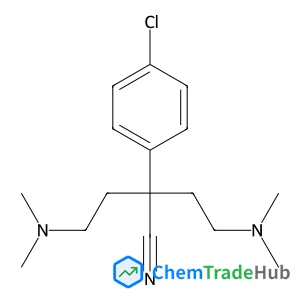
2-(4-Chlorophenyl)-4-(dimethylamino)-2-(2-(dimethylamino)ethyl)butanenitrile
CAS番号:
1246816-57-8
分子式:
C16H24ClN3
おすすめサプライヤー




免責事項
このページに表示される学術雑誌情報は、参考および研究目的のみを目的としています。当社は雑誌出版社とは提携しておらず、投稿の取り扱いも行っておりません。出版に関するお問い合わせは、各雑誌出版社に直接ご連絡ください。
表示されている情報に誤りがある場合は、support@chemtradehub.com までご連絡ください。迅速に確認し、対応いたします。