












Exposing catalytic versatility of GTPases: taking reaction detours in mutants of hGBP1 enzyme without additional energetic cost
文献情報
出版日
2018-12-07
DOI
10.1039/C8CP06343E
インパクトファクター
3.676
著者
Ravi Tripathi, Jan Noetzel, Dominik Marx
原文を見る
要旨
The catalytic power of enzymes is usually ascribed to a few catalytically competent residues as revealed by site-directed mutagenesis studies in conjunction with biochemical, thermodynamic and structural analyses. Surprisingly, the mutations of such pivotal residues in a GTPase that can hydrolyse GTP even to GMP, namely hGBP1, have been reported to result only in marginal changes of the catalytic rate compared to the wild type. Our large-scale ab initio quantum-mechanical/molecular-mechanical (QM/MM) metadynamics simulations disclose that the replacement of catalytically competent residues by the inert amino acid alanine, S73A and E99A, opens a plethora of molecularly different reaction pathways featuring very similar energy barriers and thus rates. These hitherto unknown reaction channels are established by mechanistically involving far-distant residues using “floating” water molecules, which connect them via hydrogen-bonding bridges to the nucleophilic water molecule, thus allowing for efficient long-distance proton transfer via the Grotthuss mechanism. Given the generic nature of the disclosed detour mechanisms that provide the molecular underpinning of catalytic versatility and thus mutational robustness of hGBP1, it is expected that the same concept is operational for GTPases in a broad sense.
関連文献
Phase transitions and chromium(iii) luminescence in perovskite-type [C2H5NH3][Na0.5CrxAl0.5−x(HCOO)3] (x = 0, 0.025, 0.5), correlated with structural, dielectric and phonon properties
Maciej Ptak, Mirosław Mączka, Anna Gągor, Adam Sieradzki, Bartosz Bondzior, Przemysław Dereń, S. Pawlus
2016-10-04
Paper
DOI: 10.1039/C6CP05151K
Formation of an interphase layer during deposition of cobalt onto tetraphenylporphyrin: a hard X-ray photoelectron spectroscopy (HAXPES) study
Min Chen, Han Zhou, Benedikt P. Klein, Malte Zugermeier, Claudio K. Krug, Hans-Jörg Drescher, Mihaela Gorgoi, Martin Schmid, J. Michael Gottfried
2016-10-17
Paper
DOI: 10.1039/C6CP05894A
Relationships between elastic anisotropy and thermal expansion in A2Mo3O12 materials
Carl P. Romao
2016-10-24
Paper
DOI: 10.1039/C6CP06356J
Modulation of the exfoliated graphene work function through cycloaddition of nitrile imines‡
Myriam Barrejón, María J. Gómez-Escalonilla, José Luis G. Fierro, Pilar Prieto, José R. Carrillo, Gonzalo Abellán, M, Mercedes Gabás, Juan T. López-Navarrete, Fernando Langa
2016-09-30
Paper
DOI: 10.1039/C6CP05285A
Correction: Theory of solid effect and cross effect dynamic nuclear polarization with half-integer high-spin metal polarizing agents in rotating solids
2016-10-13
Correction
DOI: 10.1039/C6CP90249A
Remote joule heating assisted carrier transport in MWCNTs probed at nanosecond time scale
Abhishek Mishra, Mayank Shrivastava
2016-10-11
Paper
DOI: 10.1039/C6CP04497B
Getting excited: challenges in quantum-classical studies of excitons in polymeric systems
Behnaz Bagheri, Björn Baumeier, Mikko Karttunen
2016-07-18
Paper
DOI: 10.1039/C6CP02944B
Origin of the catalytic activity of face-centered-cubic ruthenium nanoparticles determined from an atomic-scale structure
L. S. R. Kumara, Anli Yang, Chulho Song, Kohei Kusada, Hirokazu Kobayashi
2016-10-11
Paper
DOI: 10.1039/C6CP04088H
125Te NMR provides evidence of autoassociation of organo-ditellurides in solution
P. J. W. Elder, I. Vargas-Baca
2016-10-13
Paper
DOI: 10.1039/C6CP05892B
Permselectivity and thickness-dependent ion transport properties of overoxidized polyaniline: a mechanistic investigation
Subrata Mondal, M. V. Sangaranarayanan
2016-10-17
Paper
DOI: 10.1039/C6CP04975C
こちらもおすすめ
化合物よくある質問
6- bromo-1-cyclopropyl-1H-benzimidazoleの市場動向や研究トレンドはどうですか?
6- bromo-1-cyclopropyl-1H-benzimidazoleは、抗炎症、抗ウイルス作用を持つことが報告されており、新薬開発の研究対象として注目...
1416713-53-56-Bromo-1-cyclopropy...
化合物よくある質問
環氧プロpanol-d5を取り扱う際の実験室安全事項は何ですか?
取り扱う際には、防護眼鏡と手袋を使用し、ドラフトチャンバー内で操作することを推奨します。漏洩時には適切な手順で処理し、安全データシートを常に参照してください。
1246819-20-4Glycidol-d5
化合物よくある質問
2,2’-ジメチル-3,3’-ビピリジンはどのように合成されますか?
2,2’-ジメチル-3,3’-ビピリジンは、ピリジンと2-メチルアクリルアミドを有機合成反応で合成します。この反応では、ピリジンと2-メチルアクリルアミドを含有...
86156-55-02,2’-Dimethyl-3,3’-b...
化合物よくある質問
6-甲基ピリジン-2-ボリック酸の主な用途は何ですか?
6-甲基ピリジン-2-ボリック酸は、合成化学、医薬品合成、以及研究用途などに広く使用され、特に組換えDNA技術や分子生物学の研究において重要な役割を果たします。
372963-50-3(6-Methyl-2-pyridiny...
化合物よくある質問
(R)-3-(1-甲基-2-氧環己基)プロpano酸メチルは安全ですか?
(R)-3-(1-甲基-2-氧環己基)プロpano酸メチルは一定の安全性がありますが、直接的な皮膚接触や吸入は避けるべきです。使用する際は適切な個々の安全データ...
94089-47-1methyl 3-[(1R)-1-met...
化合物よくある質問
ketorolacはどのように保存すればよいですか?
ketorolacは、密封して遮光容器に保管し、直射日光や高温を避けて保存してください。温度は常温で保存し、湿度をなるべく低く保つことが推奨されます。
74103-06-3rac Ketorolac
化合物よくある質問
L-2,3-二氨基丙酸二盐酸盐を取り扱う際の実験室安全事項は何ですか?
L-2,3-二氨基丙酸二盐酸盐は腐食性が強く、皮膚や粘膜に刺激を与える可能性があります。取り扱う際は、防塵マスク、ゴーグル、手袋を使用し、適切な排気設備を使用し...
19777-68-5(S)-2,3-Diaminopropa...
化合物よくある質問
2-(4-溴ピリジン-2-基)乙腈の物理化学的性質は何ですか?
2-(4-溴ピリジン-2-基)乙腈のCAS番号は312325-73-8です。主に結晶形態で存在し、分子量は159.01 g/molです。この化合物は水に溶けやす...
312325-73-8(4-Bromo-2-pyridinyl...
化合物よくある質問
3-フローロ-[1,1-ベンジレン]-3,4-ジカルボン酸を取り扱う際の実験室安全事項は何ですか?
この化合物は毒性は低いですが、直接的な接触や吸入に注意が必要です。PPE(個人防護具)を着用し、ドラフトチャンバーを使用して操作することを推奨します。また、漏洩...
1261915-32-53'-Fluoro-[1,1'-biph...
化合物よくある質問
3-(1-氧代-1,3-二氢-2H-2-异吲哚)丙酸の主な用途は何ですか?
3-(1-氧代-1,3-二氢-2H-2-异吲哚)丙酸は、薬理学研究や医薬品製造において広く用いられる化合物です。また、工業的な用途でも一部の化学反応の触媒や助剤...
83747-30-23-(1-Oxo-1,3-dihydro...
掲載誌
Physical Chemistry Chemical Physics

CiteScore:
5.5
自己引用率:
10.3%
年間論文数:
3036
Physical Chemistry Chemical Physics (PCCP) is an international journal co-owned by 19 physical chemistry and physics societies from around the world. This journal publishes original, cutting-edge research in physical chemistry, chemical physics and biophysical chemistry. To be suitable for publication in PCCP, articles must include significant innovation and/or insight into physical chemistry; this is the most important criterion that reviewers and Editors will judge against when evaluating submissions. The journal has a broad scope and welcomes contributions spanning experiment, theory, computation and data science. Topical coverage includes spectroscopy, dynamics, kinetics, statistical mechanics, thermodynamics, electrochemistry, catalysis, surface science, quantum mechanics, quantum computing and machine learning. Interdisciplinary research areas such as polymers and soft matter, materials, nanoscience, energy, surfaces/interfaces, and biophysical chemistry are welcomed if they demonstrate significant innovation and/or insight into physical chemistry. Joined experimental/theoretical studies are particularly appreciated when complementary and based on up-to-date approaches.
おすすめ化合物
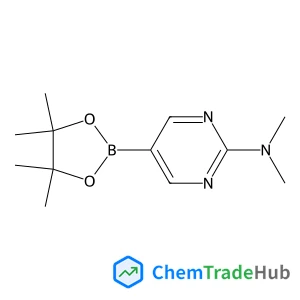
N,N-Dimethyl-5-(4,4,5,5-tetramethyl-1,3,2-dioxaborolan-2-yl)-2-pyrimidinamine
CAS番号:
1032759-30-0
分子式:
C12H20BN3O2
おすすめサプライヤー



免責事項
このページに表示される学術雑誌情報は、参考および研究目的のみを目的としています。当社は雑誌出版社とは提携しておらず、投稿の取り扱いも行っておりません。出版に関するお問い合わせは、各雑誌出版社に直接ご連絡ください。
表示されている情報に誤りがある場合は、support@chemtradehub.com までご連絡ください。迅速に確認し、対応いたします。