












![2-Methyl-2-propanyl {3-[4-(4,4,5,5-tetramethyl-1,3,2-dioxaborolan-2-yl)phenyl]-3-oxetanyl}carbamate structure](https://static.chemtradehub.com/structs/127/1279090-25-3-1b84.webp "2-Methyl-2-propanyl {3-[4-(4,4,5,5-tetramethyl-1,3,2-dioxaborolan-2-yl)phenyl]-3-oxetanyl}carbamate structure")
Tin-oxide nanoparticles deposited from a beam: what happens to the composition?
文献情報
出版日
2019-02-25
DOI
10.1039/C8CP06168H
インパクトファクター
3.676
著者
M. Tchaplyguine, C. Wright, A. Shavorskiy, S. Zhu, M.-H. Mikkelä, C. Zhang, O. Björneholm, E. Mårsell, A. Mikkelsen, S. Sorensen, C. J. D. Hetherington, L. R. Wallenberg
原文を見る
要旨
The debate around the oxidation states occurring in laboratory-prepared tin-oxide samples has been for a long time an obstacle for an unambiguous assignment of characterization studies performed on such samples. In particular the changes in the Sn core-level energies caused by oxidation – i.e. the chemical shifts – as measured by photoelectron spectroscopy (PES) have been under discussion. The assignment problem is especially pronounced for nanoscale structures, which are important for photovoltaics, electronics, catalysis, and gas sensing. The reasons for the difficulties lie both in the natural properties of tin oxides, which can have substantial deficiencies of oxygen and tin in the lattice, and in the shortcomings of the fabrication and PES-characterization procedures themselves. Our recent PES study on tin-oxide nanoparticles fabricated by vapour-aggregation gave a chemical shift two times larger than earlier reported for Sn(IV) oxide for the Sn 4d level. The implemented fabrication technique forms an in-vacuum beam of particles whose composition can be both controlled and characterized by PES. In the present work SnO and SnO2 nanoparticles fabricated this way were deposited from the beam and probed by PES directly, as well as after exposure to air. The deposited nanoparticle films were also imaged by TEM (Transmission Electron Microscopy). The effects of the deposition process and exposure to air on the chemical composition were studied. The PES study of deposited SnO2 nanoparticles in the Sn 4d and Sn 3d core-level regions revealed the same core level shift as for unsupported nanoparticles, indicating that the chemical composition is preserved in the deposition process. The TEM study demonstrated a crystalline structure of separate SnO2 particles with lattice constants close to the macroscopic Sn(IV)-oxide. The PES study on the particles exposed to air showed changes in the composition. For the film of initially SnO particles a higher intermediate oxide was created. For the SnO2 nanoparticle film a lower, but strong, intermediate oxide was observed, likely at the surface.
関連文献
Optical imaging probes for selective detection of butyrylcholinesterase
Musa Dirak, Jefferson Chan, Safacan Kolemen
2024-01-02
Review Article
DOI: 10.1039/D3TB02468G
Chemistry, biosynthesis and biology of floral volatiles: roles in pollination and other functions
Stefan Dötterl, Jonathan Gershenzon
2023-09-04
Review Article
DOI: 10.1039/D3NP00024A
Synthesis and spontaneous self-assembly of non-planar aromatic amide macrocycles
Rabban Rabban, Jinti Moni Kumar, Naiwrit Karmodak, Bappaditya Gole
2023-11-27
Communication
DOI: 10.1039/D3NJ05283D
Halogen-engineered metal–organic frameworks enable high-performance electrochemical glucose sensing
Le Wang, Yong-Shuang Li, Yu Cao
2023-12-16
Paper
DOI: 10.1039/D3NJ05053J
A low cost Zn2+/I− redox active electrolyte for a high energy and long cycle-life zinc hybrid battery–capacitor
Balamurugan Selvaraj, Balaji Sambandam, Sungjin Kim, Vinod Mathew, Sehong Seo, Moonsu Song, Jaekook Kim
2023-11-01
Paper
DOI: 10.1039/D3TA03912A
Overall control of the quality consistency of Citri Retriculatae Pericapium by combining HPLC fingerprint, terahertz time-domain spectroscopy and chemometrics
Xinyi Wang, Jiajia Fan, Yong Guo, Lili Lan, Qian Li, Guoxiang Sun
2024-01-10
Paper
DOI: 10.1039/D3NJ04725C
Defect engineering: the role of cationic vacancies in photocatalysis and electrocatalysis
Wenming Ding, Shengbo Yuan, Yang Yang, Xiaoman Li, Min Luo
2023-10-17
Review Article
DOI: 10.1039/D3TA04947G
Highlights of biosynthetic enzymes and natural products from symbiotic cyanobacteria
2023-05-26
Highlight
DOI: 10.1039/D3NP00011G
Synthesis of three-component Cu2O/ZnO/Ag nanocrystal heterogeneous photocatalysts with high reactivity and stability for dye reduction
Chih-Wu Chiang, Chieh-Yu Lai, Su-Wen Hsu
2023-10-17
Paper
DOI: 10.1039/D3TA05424A
こちらもおすすめ
化合物よくある質問
2-メトキシ-4-(メチルスルフィニル)アミンの主な用途は何ですか?
2-メトキシ-4-(メチルスルフィニル)アミンは、主に医薬品および農薬の製造に使用されます。また、合成化学の一部として研究用材料としても利用されます。
41608-73-52-Methoxy-4-(methyls...
118684-13-24-(Bromomethyl)-3-me...
化合物よくある質問
4,6-二氯-N-甲基ピラミジンアミンの代替品はありますか?
代替品としては、4,6-二クロロピラミジンアミンや他のピラミジン系化合物が考えられます。ただし、目的と用途によって最適な代替品は異なります。
10397-15-64,6-Dichloro-N-methy...
化合物よくある質問
6-氯-4-甲基-1H-吲哚を含む廃棄物はどのように処理すべきですか?
6-氯-4-甲基-1H-吲哚の廃棄物は、適切な容器に収集し、密閉して保管します。温度は常温、湿度は低く、直射日光を避けて保管することを推奨します。廃棄処理は専門...
885520-84-36-chloro-4-methyl-1H...
化合物よくある質問
2-フローユロ-4-(トリフルオロメチル)ベンゾイドについて「に適用される法規ガイドラインは何ですか」
2-フローユロ-4-(トリフルオロメチル)ベンゾイドのCAS番号は207974-08-1です。この化合物はGHS分類で毒性物質と有害な反応物質として分類されます...
207974-08-1[2-Fluoro-4-(trifluo...
化合物よくある質問
4-ニトロフェニルN-[(ベンゼルオキシルカーボンイル]グリシングリシングリシン酸はどのように保存すればよいですか?
4-ニトロフェニルN-[(ベンゼルオキシルカーボンイル]グリシングリシングリシン酸は、室温で暗所に保管し、乾燥した環境で保存することを推奨します。容器は密閉性の...
19811-64-44-Nitrophenyl N-[(be...
化合物よくある質問
イソデスロラタドリンの代替品はありますか?
イソデスロラタドリンの代替品としては、デスロラタドリンや他の抗ヒスタミン薬が挙げられます。具体的には、デスロラタドリン、ラセカミド、フェルタドリンなどが、症状や...
183198-49-4Iso Desloratadine
化合物よくある質問
5-甲氧基-1,2,3,4-四氢异喹啉盐酸盐はどのように合成されますか?
5-甲氧基-1,2,3,4-四氢异喹啉盐酸盐の一般的な合成方法は、メタノール中で5-メトキシ-1,2,3,4-四ヒュドロイソキシンを塩酸で塩化します。この反応で...
103030-69-95-Methoxy-1,2,3,4-te...
化合物よくある質問
4-アミノ-5-メトキシ-2-トルエンサルホニック酸についての法規ガイドラインは何ですか?
CAS番号6471-78-9の4-アミノ-5-メトキシ-2-トルエンサルホニック酸は、GHS分類では corrosive(腐食性)と識別されます。EUのREAC...
6471-78-94-Amino-5-Methoxy-2-...
化合物よくある質問
甲基孕酮を取り扱う際の実験室安全事項は何ですか?
甲基孕酮の取り扱いは、PPE(個人保護具)の使用が必要な重要な安全事項を伴います。防塵マスク、ゴーグル、手袋を着用することが推奨されます。ドラフトチャンバーを使...
204063-33-22-[(Diphenylmethyl)a...
掲載誌
Physical Chemistry Chemical Physics

CiteScore:
5.5
自己引用率:
10.3%
年間論文数:
3036
Physical Chemistry Chemical Physics (PCCP) is an international journal co-owned by 19 physical chemistry and physics societies from around the world. This journal publishes original, cutting-edge research in physical chemistry, chemical physics and biophysical chemistry. To be suitable for publication in PCCP, articles must include significant innovation and/or insight into physical chemistry; this is the most important criterion that reviewers and Editors will judge against when evaluating submissions. The journal has a broad scope and welcomes contributions spanning experiment, theory, computation and data science. Topical coverage includes spectroscopy, dynamics, kinetics, statistical mechanics, thermodynamics, electrochemistry, catalysis, surface science, quantum mechanics, quantum computing and machine learning. Interdisciplinary research areas such as polymers and soft matter, materials, nanoscience, energy, surfaces/interfaces, and biophysical chemistry are welcomed if they demonstrate significant innovation and/or insight into physical chemistry. Joined experimental/theoretical studies are particularly appreciated when complementary and based on up-to-date approaches.
おすすめ化合物

![4-[(2-{2-[2-(2-Aminoethoxy)ethoxy]ethoxy}ethyl)amino]-2-(2,6-dioxo-3-piperidinyl)-1H-isoindole-1,3(2H)-dione structure](https://static.chemtradehub.com/structs/209/2093416-31-8-3162.webp "4-[(2-{2-[2-(2-Aminoethoxy)ethoxy]ethoxy}ethyl)amino]-2-(2,6-dioxo-3-piperidinyl)-1H-isoindole-1,3(2H)-dione structure")

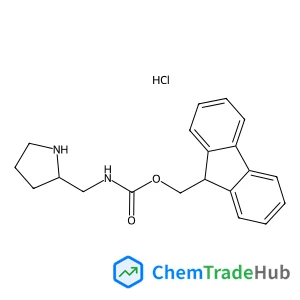
(S)-(9H-Fluoren-9-yl)methyl (pyrrolidin-2-ylmethyl)carbamate hydrochloride
CAS番号:
1217813-15-4
分子式:
C20H23ClN2O2
おすすめサプライヤー






免責事項
このページに表示される学術雑誌情報は、参考および研究目的のみを目的としています。当社は雑誌出版社とは提携しておらず、投稿の取り扱いも行っておりません。出版に関するお問い合わせは、各雑誌出版社に直接ご連絡ください。
表示されている情報に誤りがある場合は、support@chemtradehub.com までご連絡ください。迅速に確認し、対応いたします。