![tert-Butyl 6-chloro-4-oxospiro[chroman-2,4'-piperidine]-1'-carboxylate structure](https://static.chemtradehub.com/structs/101/1011482-37-3-88a5.webp "tert-Butyl 6-chloro-4-oxospiro[chroman-2,4'-piperidine]-1'-carboxylate structure")
tert-Butyl 6-chloro-4-oxospiro[chroman-2,4'-piperidine]-1'-carboxylate
CAS番号:
1011482-37-3
分子式:
C18H22ClNO4
Andreas Brinkmann, Ulrich Sternberg, Petra H. M. Bovee-Geurts, Isabelle Fernández Fernández, Johan Lugtenburg, Arno P. M. Kentgens
19F nuclei are useful labels in solid-state NMR studies, since their chemical shift and tensor elements are very sensitive to the electrostatic and space-filling properties of their local environment. In this study we have exploited a fluorine substituent, strategically placed at the C-12-position of 11-cis retinal, the chromophore of visual rhodopsins. This label was used to explore the local environment of the chromophore in the ground state of bovine rhodopsin and its active photo-intermediate Meta II. In addition, the chemical shift and tensor elements of the chromophore in the free state in a membrane environment and the bound state in the protein were determined. Upon binding of the chromophore into rhodopsin and Meta II, the isotropic chemical shift changes in the opposite direction by +9.7 and −8.4 ppm, respectively. An unusually large isotropic shift difference of 35.9 ppm was observed between rhodopsin and Meta II. This partly originates in the light-triggered 11-cis to all-trans isomerization of the chromophore. The other part reflects the local conformational rearrangements in the chromophore and the binding pocket. These NMR data were correlated with the available X-ray structures of rhodopsin and Meta II using bond polarization theory. For this purpose hydrogen atoms have to be inserted and hereto a family of structures were derived that best correlated with the well-established 13C chemical shifts. Based upon these structures, a 12-F derivative was obtained that best corresponded with the experimentally determined 19F chemical shifts and tensor elements. The combined data indicate strong changes in the local environment of the C-12 position and a substantially different interaction pattern with the protein in Meta II as compared to rhodopsin.
Kathrin Ebner, Lingmei Ni, Viktoriia A. Saveleva, Benjamin P. Le Monnier, Adam H. Clark, Frank Krumeich, Maarten Nachtegaal, Jeremy S. Luterbacher, Ulrike I. Kramm, Juan Herranz
DOI: 10.1039/D1CP00707F
C. P. E. Varsamis, N. Makris, C. Valvi, E. I. Kamitsos
DOI: 10.1039/D1CP00301A
Mick Hornum, Jacob Kongsted, Peter Reinholdt
DOI: 10.1039/D1CP00831E
Dengpan Dong, Samhitha Kancharla, Justin Hooper, Marina Tsianou, Dmitry Bedrov, Paschalis Alexandridis
DOI: 10.1039/D1CP00049G
Evgeniia S. Vikulova, Ksenya I. Karakovskaya, Igor Yu. Ilyin, Evgenia A. Kovaleva, Dmitry A. Piryazev, Ludmila N. Zelenina, Sergey V. Sysoev, Natalia B. Morozova, Kseniya V. Zherikova
DOI: 10.1039/D1CP00464F
Serge Desgreniers, Anguang Hu
DOI: 10.1039/D0CP06557A
DOI: 10.1039/D1CP90056K
Enesio Marinho, Jr, Pedro Alves da Silva Autreto
DOI: 10.1039/D0CP06684B
Suming An, Kaijun Yuan, Rex T. Skodje
DOI: 10.1039/D1CP00565K
2-メトキシ-4-(メチルスルフィニル)アミンは、主に医薬品および農薬の製造に使用されます。また、合成化学の一部として研究用材料としても利用されます。
代替品としては、4,6-二クロロピラミジンアミンや他のピラミジン系化合物が考えられます。ただし、目的と用途によって最適な代替品は異なります。
6-氯-4-甲基-1H-吲哚の廃棄物は、適切な容器に収集し、密閉して保管します。温度は常温、湿度は低く、直射日光を避けて保管することを推奨します。廃棄処理は専門...
2-フローユロ-4-(トリフルオロメチル)ベンゾイドのCAS番号は207974-08-1です。この化合物はGHS分類で毒性物質と有害な反応物質として分類されます...
4-ニトロフェニルN-[(ベンゼルオキシルカーボンイル]グリシングリシングリシン酸は、室温で暗所に保管し、乾燥した環境で保存することを推奨します。容器は密閉性の...
イソデスロラタドリンの代替品としては、デスロラタドリンや他の抗ヒスタミン薬が挙げられます。具体的には、デスロラタドリン、ラセカミド、フェルタドリンなどが、症状や...
5-甲氧基-1,2,3,4-四氢异喹啉盐酸盐の一般的な合成方法は、メタノール中で5-メトキシ-1,2,3,4-四ヒュドロイソキシンを塩酸で塩化します。この反応で...
CAS番号6471-78-9の4-アミノ-5-メトキシ-2-トルエンサルホニック酸は、GHS分類では corrosive(腐食性)と識別されます。EUのREAC...
甲基孕酮の取り扱いは、PPE(個人保護具)の使用が必要な重要な安全事項を伴います。防塵マスク、ゴーグル、手袋を着用することが推奨されます。ドラフトチャンバーを使...

Physical Chemistry Chemical Physics (PCCP) is an international journal co-owned by 19 physical chemistry and physics societies from around the world. This journal publishes original, cutting-edge research in physical chemistry, chemical physics and biophysical chemistry. To be suitable for publication in PCCP, articles must include significant innovation and/or insight into physical chemistry; this is the most important criterion that reviewers and Editors will judge against when evaluating submissions. The journal has a broad scope and welcomes contributions spanning experiment, theory, computation and data science. Topical coverage includes spectroscopy, dynamics, kinetics, statistical mechanics, thermodynamics, electrochemistry, catalysis, surface science, quantum mechanics, quantum computing and machine learning. Interdisciplinary research areas such as polymers and soft matter, materials, nanoscience, energy, surfaces/interfaces, and biophysical chemistry are welcomed if they demonstrate significant innovation and/or insight into physical chemistry. Joined experimental/theoretical studies are particularly appreciated when complementary and based on up-to-date approaches.
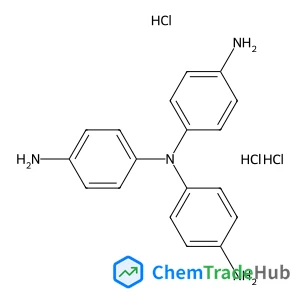
![2-Methylbenzo[h]quinoline structure](https://static.chemtradehub.com/structs/605/605-88-9-ac43.webp "2-Methylbenzo[h]quinoline structure")