


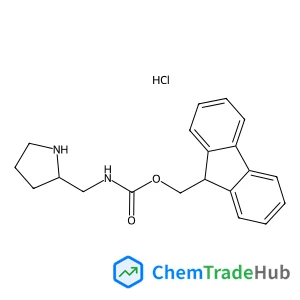
(S)-(9H-Fluoren-9-yl)methyl (pyrrolidin-2-ylmethyl)carbamate hydrochloride
CAS番号:
1217813-15-4
分子式:
C20H23ClN2O2
D. Sundholm
Magnetically induced current densities have been calculated at the second-order Møller–Plesset perturbation theory (MP2) level for seven hetero[8]circulenes and their dicationic and dianionic forms. Calculations of the magnetic dipole transition moments have also been carried out at the algebraic diagrammatic construction (ADC(2)) and the second-order approximate coupled-cluster (CC2) levels. The calculations show that the degree of aromaticity and the size of the magnetic dipole transition moment of the lowest magnetic-dipole allowed excited state are related. We show that neutral hetero[8]circulenes are weakly antiaromatic when the first excited state with a large magnetic dipole transition moment of 10–16 a.u. lies at high energies (∼2.8–3.5 eV). For the dications, this transition often lies at much lower energies. Hetero[8]circulene dications with large magnetic dipole transition moments are strongly antiaromatic. The lowest excited states of the hetero[8]circulene dianions have very small magnetic dipole transition moments implying that they are aromatic.

Journal of Peptide Science

Chemistry Education Research and Practice

Russian Journal of Bioorganic Chemistry

Current Opinion in Colloid & Interface Science

Saudi Pharmaceutical Journal

Russian Journal of Organic Chemistry

Drug Discovery Today

Nature Medicine

Current Opinion in Solid State & Materials Science

Acta Materialia
Nilimesh Das, Tanmoy Khan, Navin Subba, Pratik Sen
DOI: 10.1039/D1CP00046B
V. G. de Pina, B. G. A. Brito, G.-Q. Hai, L. Cândido
DOI: 10.1039/D0CP06499H
Chandra Chowdhury, Pranab Gain, Ayan Datta
DOI: 10.1039/D1CP00094B
Shan-Jung Wu, Min-Sian Lin, Che-Yu Chiang, Genin Gary Huang
DOI: 10.1039/D0CP06493A
Weixing Li, Imanol Usabiaga, Luca Evangelisti, Assimo Maris, Laura B. Favero, Sonia Melandri
DOI: 10.1039/D1CP00451D
Josefa Ibaceta-Jaña, Ruslan Muydinov, Pamela Rosado, Sri Hari Bharath Vinoth Kumar, Rene Gunder, Axel Hoffmann, Bernd Szyszka, Markus R. Wagner
DOI: 10.1039/D1CP00102G
Tong Sun, Dor Ben-Amotz
DOI: 10.1039/D0CP06131J
James D. Blakemore, Bruce S. Brunschwig, Harry B. Gray, Petter Persson
DOI: 10.1039/D1CP00545F
Ralph A. Wheeler, Emily E. Dalbey
DOI: 10.1039/D0CP04907G
DOI: 10.1039/D1CP00357G
2-メトキシ-4-(メチルスルフィニル)アミンは、主に医薬品および農薬の製造に使用されます。また、合成化学の一部として研究用材料としても利用されます。
代替品としては、4,6-二クロロピラミジンアミンや他のピラミジン系化合物が考えられます。ただし、目的と用途によって最適な代替品は異なります。
6-氯-4-甲基-1H-吲哚の廃棄物は、適切な容器に収集し、密閉して保管します。温度は常温、湿度は低く、直射日光を避けて保管することを推奨します。廃棄処理は専門...
2-フローユロ-4-(トリフルオロメチル)ベンゾイドのCAS番号は207974-08-1です。この化合物はGHS分類で毒性物質と有害な反応物質として分類されます...
4-ニトロフェニルN-[(ベンゼルオキシルカーボンイル]グリシングリシングリシン酸は、室温で暗所に保管し、乾燥した環境で保存することを推奨します。容器は密閉性の...
イソデスロラタドリンの代替品としては、デスロラタドリンや他の抗ヒスタミン薬が挙げられます。具体的には、デスロラタドリン、ラセカミド、フェルタドリンなどが、症状や...
5-甲氧基-1,2,3,4-四氢异喹啉盐酸盐の一般的な合成方法は、メタノール中で5-メトキシ-1,2,3,4-四ヒュドロイソキシンを塩酸で塩化します。この反応で...
CAS番号6471-78-9の4-アミノ-5-メトキシ-2-トルエンサルホニック酸は、GHS分類では corrosive(腐食性)と識別されます。EUのREAC...
甲基孕酮の取り扱いは、PPE(個人保護具)の使用が必要な重要な安全事項を伴います。防塵マスク、ゴーグル、手袋を着用することが推奨されます。ドラフトチャンバーを使...

Physical Chemistry Chemical Physics (PCCP) is an international journal co-owned by 19 physical chemistry and physics societies from around the world. This journal publishes original, cutting-edge research in physical chemistry, chemical physics and biophysical chemistry. To be suitable for publication in PCCP, articles must include significant innovation and/or insight into physical chemistry; this is the most important criterion that reviewers and Editors will judge against when evaluating submissions. The journal has a broad scope and welcomes contributions spanning experiment, theory, computation and data science. Topical coverage includes spectroscopy, dynamics, kinetics, statistical mechanics, thermodynamics, electrochemistry, catalysis, surface science, quantum mechanics, quantum computing and machine learning. Interdisciplinary research areas such as polymers and soft matter, materials, nanoscience, energy, surfaces/interfaces, and biophysical chemistry are welcomed if they demonstrate significant innovation and/or insight into physical chemistry. Joined experimental/theoretical studies are particularly appreciated when complementary and based on up-to-date approaches.


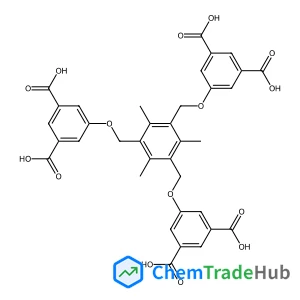
![[5-fluoro-2-(morpholine-4-carbonyl)phenyl]boronic acid structure](https://static.chemtradehub.com/structs/121/1217501-26-2-505c.webp "[5-fluoro-2-(morpholine-4-carbonyl)phenyl]boronic acid structure")




