


The impact on the ring related vibrational frequencies of pyridine of hydrogen bonds with haloforms – a topology perspective
文献情報
出版日
2018-12-19
DOI
10.1039/C8CP04789H
インパクトファクター
3.676
著者
Kamila Akhmetova, Haiyan Fan
原文を見る
要旨
Hydrogen bonds between pyridine (Py) and haloforms (CHX3, X = F, Cl, Br, I) and their impact on the ring related vibrational frequencies of pyridine were studied using a combination of solution phase FTIR and quantum mechanical DFT and ab initio calculations. With various possibilities for dimers that could potentially be formed between pyridine and haloforms, the calculations identified an intermolecular ring structure, which was established based on both the [Py–]N-involved hydrogen bond and the hydrogen bond between the alpha H on pyridine ([Py–]H) and the halogen atom on the haloform ([CHX2–]X), as the most energetically stable form. The formation of a ring between the two molecules makes the entire ring structure more rigid on one hand, and weakens the [Py–]N-involved hydrogen bond on the other hand. As a result, no significant shift was observed for ν12, and ν10 only experiences a moderate blue shift upon hydrogen bonding. The magnitude of the shift in ν10 is in the order: CHI3 > CHBr3 > CHCl3 > CHF3, according to calculations. FTIR experiments with pyridine and CHCl3/CHBr3/CHI3 in cyclohexane solution showed a consistent sequence. Strong correlation was observed between the values of ν10 and the various interatomic distances among [Py–]N, [Py–]H, [CHX2–]X and [CX3–]H, as well as other topological parameters involving the two bond critical points (BCP1 and BCP2) and the ring critical point (RCP). The percentage contributions from the internal coordinates were also estimated and were closely related to the magnitude of ν10. Moreover, the occupied frontier molecular orbitals of the hydrogen bonding complexes (from HOMO−4 to HOMO) were analyzed to explain their roles in the pyridine ring vibrations and their sensitivity to hydrogen bonding.
おすすめジャーナル

Current Medicinal Chemistry

Journal of Physical Organic Chemistry

Diamond and Related Materials

Computational Materials Science

Advanced Powder Technology

Cement and Concrete Composites

Construction and Building Materials

Journal of Computer-Aided Molecular Design

Catalysis Today

Advanced Composite Materials
関連文献
1,2-Diphosphinobenzene as a synthon for the 1,2,3-triphospha- and 2-arsa-1,3-diphosphaindenyl anions and a stable organo derivative of the P8 unit of Hittorf’s phosphorus
Craig P. Butts, Michael Green, Thomas N. Hooper, Richard J. Kilby, John E. McGrady, Dimitrios A. Pantazis, Christopher A. Russell
2008-01-15
Communication
DOI: 10.1039/B717204D
One-step coating of fluoro-containing silicananoparticles for universal generation of surface superhydrophobicity
Hongxia Wang, Jian Fang, Tong Cheng, Jie Ding, Liangti Qu, Liming Dai, Xungai Wang, Tong Lin
2007-12-18
Communication
DOI: 10.1039/B714352D
Evolved CYP102A1 (P450BM3) variants oxidise a range of non-natural substrates and offer new selectivity options
Christopher J. C. Whitehouse, Stephen G. Bell, Henry G. Tufton, Richard J. P. Kenny, Lydia C. I. Ogilvie, Luet-Lok Wong
2008-01-11
Communication
DOI: 10.1039/B718124H
Nanomechanical properties of reversed surfactant bilayers formed in micrometre-sized holes
Jian Jin, Yukihiro Sugiyama, Keita Mitsui, Hideo Arakawa, Izumi Ichinose
2008-01-14
Communication
DOI: 10.1039/B717485C
Supramolecular PhanePhos-analogous ligands through hydrogen-bonding for asymmetric hydrogenation
Andy Ch. Laungani, Bernhard Breit
2007-12-18
Communication
DOI: 10.1039/B716529C
New egg-shaped fullerenes: non-isolated pentagon structures of Tm3N@Cs(51 365)-C84 and Gd3N@Cs(51 365)-C84‡
Tianming Zuo, Kenneth Walker, Marilyn M. Olmstead, Frederic Melin, Brian C. Holloway, Luis Echegoyen, Harry C. Dorn, Manuel N. Chaur, Christopher J. Chancellor, Christine M. Beavers, Alan L. Balch, Andreas J. Athans
2008-01-31
Communication
DOI: 10.1039/B716037B
Highly active iridium(i) complexes for catalytic hydrogen isotope exchange
Jack A. Brown, Stephanie Irvine, Alan R. Kennedy, William J. Kerr, Shalini Andersson, Göran N. Nilsson
2008-01-03
Communication
DOI: 10.1039/B715938B
Studies on the direct electrochemistry of hemoglobin immobilized by yeast cells
Junhui Xu
2006-06-06
Communication
DOI: 10.1039/B606429A
Versatile and efficient functionalisation of multiallylic dendronised polymers: can dense packing be reached?
Firmin Moingeon, Patrick Masson, Françoise Arnaud, Stéphane Méry
2008-01-23
Communication
DOI: 10.1039/B718318F
こちらもおすすめ
化合物よくある質問
6- bromo-1-cyclopropyl-1H-benzimidazoleの市場動向や研究トレンドはどうですか?
6- bromo-1-cyclopropyl-1H-benzimidazoleは、抗炎症、抗ウイルス作用を持つことが報告されており、新薬開発の研究対象として注目...
1416713-53-56-Bromo-1-cyclopropy...
化合物よくある質問
環氧プロpanol-d5を取り扱う際の実験室安全事項は何ですか?
取り扱う際には、防護眼鏡と手袋を使用し、ドラフトチャンバー内で操作することを推奨します。漏洩時には適切な手順で処理し、安全データシートを常に参照してください。
1246819-20-4Glycidol-d5
化合物よくある質問
2,2’-ジメチル-3,3’-ビピリジンはどのように合成されますか?
2,2’-ジメチル-3,3’-ビピリジンは、ピリジンと2-メチルアクリルアミドを有機合成反応で合成します。この反応では、ピリジンと2-メチルアクリルアミドを含有...
86156-55-02,2’-Dimethyl-3,3’-b...
化合物よくある質問
6-甲基ピリジン-2-ボリック酸の主な用途は何ですか?
6-甲基ピリジン-2-ボリック酸は、合成化学、医薬品合成、以及研究用途などに広く使用され、特に組換えDNA技術や分子生物学の研究において重要な役割を果たします。
372963-50-3(6-Methyl-2-pyridiny...
化合物よくある質問
(R)-3-(1-甲基-2-氧環己基)プロpano酸メチルは安全ですか?
(R)-3-(1-甲基-2-氧環己基)プロpano酸メチルは一定の安全性がありますが、直接的な皮膚接触や吸入は避けるべきです。使用する際は適切な個々の安全データ...
94089-47-1methyl 3-[(1R)-1-met...
化合物よくある質問
ketorolacはどのように保存すればよいですか?
ketorolacは、密封して遮光容器に保管し、直射日光や高温を避けて保存してください。温度は常温で保存し、湿度をなるべく低く保つことが推奨されます。
74103-06-3rac Ketorolac
化合物よくある質問
L-2,3-二氨基丙酸二盐酸盐を取り扱う際の実験室安全事項は何ですか?
L-2,3-二氨基丙酸二盐酸盐は腐食性が強く、皮膚や粘膜に刺激を与える可能性があります。取り扱う際は、防塵マスク、ゴーグル、手袋を使用し、適切な排気設備を使用し...
19777-68-5(S)-2,3-Diaminopropa...
化合物よくある質問
2-(4-溴ピリジン-2-基)乙腈の物理化学的性質は何ですか?
2-(4-溴ピリジン-2-基)乙腈のCAS番号は312325-73-8です。主に結晶形態で存在し、分子量は159.01 g/molです。この化合物は水に溶けやす...
312325-73-8(4-Bromo-2-pyridinyl...
化合物よくある質問
3-フローロ-[1,1-ベンジレン]-3,4-ジカルボン酸を取り扱う際の実験室安全事項は何ですか?
この化合物は毒性は低いですが、直接的な接触や吸入に注意が必要です。PPE(個人防護具)を着用し、ドラフトチャンバーを使用して操作することを推奨します。また、漏洩...
1261915-32-53'-Fluoro-[1,1'-biph...
化合物よくある質問
3-(1-氧代-1,3-二氢-2H-2-异吲哚)丙酸の主な用途は何ですか?
3-(1-氧代-1,3-二氢-2H-2-异吲哚)丙酸は、薬理学研究や医薬品製造において広く用いられる化合物です。また、工業的な用途でも一部の化学反応の触媒や助剤...
83747-30-23-(1-Oxo-1,3-dihydro...
掲載誌
Physical Chemistry Chemical Physics

CiteScore:
5.5
自己引用率:
10.3%
年間論文数:
3036
Physical Chemistry Chemical Physics (PCCP) is an international journal co-owned by 19 physical chemistry and physics societies from around the world. This journal publishes original, cutting-edge research in physical chemistry, chemical physics and biophysical chemistry. To be suitable for publication in PCCP, articles must include significant innovation and/or insight into physical chemistry; this is the most important criterion that reviewers and Editors will judge against when evaluating submissions. The journal has a broad scope and welcomes contributions spanning experiment, theory, computation and data science. Topical coverage includes spectroscopy, dynamics, kinetics, statistical mechanics, thermodynamics, electrochemistry, catalysis, surface science, quantum mechanics, quantum computing and machine learning. Interdisciplinary research areas such as polymers and soft matter, materials, nanoscience, energy, surfaces/interfaces, and biophysical chemistry are welcomed if they demonstrate significant innovation and/or insight into physical chemistry. Joined experimental/theoretical studies are particularly appreciated when complementary and based on up-to-date approaches.
おすすめ化合物
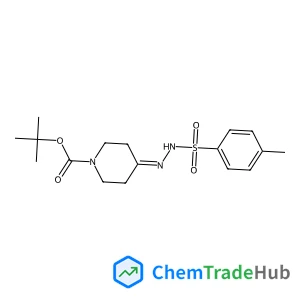
tert-Butyl 4-(2-(p-Tolylsulfonyl)hydrazono)piperidine-1-carboxylate
CAS番号:
1046478-89-0
分子式:
C17H25N3O4S
おすすめサプライヤー





免責事項
このページに表示される学術雑誌情報は、参考および研究目的のみを目的としています。当社は雑誌出版社とは提携しておらず、投稿の取り扱いも行っておりません。出版に関するお問い合わせは、各雑誌出版社に直接ご連絡ください。
表示されている情報に誤りがある場合は、support@chemtradehub.com までご連絡ください。迅速に確認し、対応いたします。