












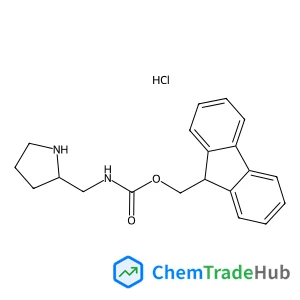
(S)-(9H-Fluoren-9-yl)methyl (pyrrolidin-2-ylmethyl)carbamate hydrochloride
CAS番号:
1217813-15-4
分子式:
C20H23ClN2O2
Jing Xu, Véronique Perraud, Barbara J. Finlayson-Pitts
The effect of water on the growth of dry nano-size acid–base particles is not yet known. In this paper, we investigate the uptake of water by nano-size particles composed of methanesulfonic acid (MSA) and methylamine (MA) using a combination of quantum chemical calculations and laboratory experiments. Calculations were performed on the (MSA–MA)4 cluster as the dry nanoparticle model, which forms a pseudo-cubic structure, to which twelve water molecules were added successively. Theoretical results show that the hydrated clusters (MSA–MA)4–(H2O)n, n = 1 to 12 are thermodynamically stable. In ab initio dynamic simulations, no loss of water or significant changes of structure are seen for at least 10 picoseconds. In all the clusters studied, most of the water molecules lie on the face of the (MSA–MA)4 initial dry unit, and water is found to be incorporated inside the initial unit for n ranging from five to twelve. Sizes of hydrated clusters exceed significantly that of the dry cluster only for n ≥ 6. These theoretical results suggest that dry MSA–MA clusters cannot dissociate in small quantities of water. Calculations of hydrated cluster distributions at steady state show that the cluster compositions studied, with up to 12 water molecules, encompass all the hydrated clusters under the experimental conditions (RH ∼ 19%, 300 K). Experiments performed in a glass flow reactor showed no changes in size or number concentration when particles formed from MSA–MA were subsequently exposed to water vapor, in contrast to increases in both size and number when water was present during particle formation. Thus, the results seem to imply for both experiment and theory that growth in size of a particle due to uptake of water requires the previous presence of some level of hydration. These results illustrate the importance for atmospheric models of understanding on a molecular basis the mechanisms of particle formation in air.
Jorge M. del Campo, Joel Ireta
DOI: 10.1039/D0CP06018F
Konstantin Schutjajew, Tim Tichter, Jonathan Schneider, Markus Antonietti, Christina Roth, Martin Oschatz
DOI: 10.1039/D1CP00610J
Renato Pereira Orenha, Vanessa Borges da Silva, Giovanni Finoto Caramori, Maurício Jeomar Piotrowski, Glaucio Regis Nagurniak, Renato Luis Tame Parreira
DOI: 10.1039/D1CP00113B
Edurne Avellanal-Zaballa, Alejandro Prieto-Castañeda, Carolina Díaz-Norambuena, Jorge Bañuelos, Antonia R. Agarrabeitia, Inmaculada García-Moreno, Santiago de la Moya, María J. Ortiz
DOI: 10.1039/D1CP00991E
Andres Jaramillo-Botero, Xue-hai Ju, William A. Goddard, III
DOI: 10.1039/D0CP05767C
Michael J. Van Stipdonk, Evan H. Perez, Luke J. Metzler, Amanda R. Bubas, Theodore Corcovilos, Arpad Somogyi
DOI: 10.1039/D1CP01520F
Qiuyan Yu, Dongjian Shi, Weifu Dong, Mingqing Chen
DOI: 10.1039/D1CP01343B
Weiwei Zhang, Adri C. T. van Duin
DOI: 10.1039/D1CP00546D
Jianchen Lu, Binbin Da, Wei Xiong, Renjun Du, Zhenliang Hao, Zilin Ruan, Yong Zhang, Shijie Sun, Lei Gao, Jinming Cai
DOI: 10.1039/D1CP01040A
Linhao Li, Joe Kler, Anthony R. West, Roger A. De Souza, Derek C. Sinclair
DOI: 10.1039/D1CP01120K
2-メトキシ-4-(メチルスルフィニル)アミンは、主に医薬品および農薬の製造に使用されます。また、合成化学の一部として研究用材料としても利用されます。
代替品としては、4,6-二クロロピラミジンアミンや他のピラミジン系化合物が考えられます。ただし、目的と用途によって最適な代替品は異なります。
6-氯-4-甲基-1H-吲哚の廃棄物は、適切な容器に収集し、密閉して保管します。温度は常温、湿度は低く、直射日光を避けて保管することを推奨します。廃棄処理は専門...
2-フローユロ-4-(トリフルオロメチル)ベンゾイドのCAS番号は207974-08-1です。この化合物はGHS分類で毒性物質と有害な反応物質として分類されます...
4-ニトロフェニルN-[(ベンゼルオキシルカーボンイル]グリシングリシングリシン酸は、室温で暗所に保管し、乾燥した環境で保存することを推奨します。容器は密閉性の...
イソデスロラタドリンの代替品としては、デスロラタドリンや他の抗ヒスタミン薬が挙げられます。具体的には、デスロラタドリン、ラセカミド、フェルタドリンなどが、症状や...
5-甲氧基-1,2,3,4-四氢异喹啉盐酸盐の一般的な合成方法は、メタノール中で5-メトキシ-1,2,3,4-四ヒュドロイソキシンを塩酸で塩化します。この反応で...
CAS番号6471-78-9の4-アミノ-5-メトキシ-2-トルエンサルホニック酸は、GHS分類では corrosive(腐食性)と識別されます。EUのREAC...
甲基孕酮の取り扱いは、PPE(個人保護具)の使用が必要な重要な安全事項を伴います。防塵マスク、ゴーグル、手袋を着用することが推奨されます。ドラフトチャンバーを使...

Physical Chemistry Chemical Physics (PCCP) is an international journal co-owned by 19 physical chemistry and physics societies from around the world. This journal publishes original, cutting-edge research in physical chemistry, chemical physics and biophysical chemistry. To be suitable for publication in PCCP, articles must include significant innovation and/or insight into physical chemistry; this is the most important criterion that reviewers and Editors will judge against when evaluating submissions. The journal has a broad scope and welcomes contributions spanning experiment, theory, computation and data science. Topical coverage includes spectroscopy, dynamics, kinetics, statistical mechanics, thermodynamics, electrochemistry, catalysis, surface science, quantum mechanics, quantum computing and machine learning. Interdisciplinary research areas such as polymers and soft matter, materials, nanoscience, energy, surfaces/interfaces, and biophysical chemistry are welcomed if they demonstrate significant innovation and/or insight into physical chemistry. Joined experimental/theoretical studies are particularly appreciated when complementary and based on up-to-date approaches.
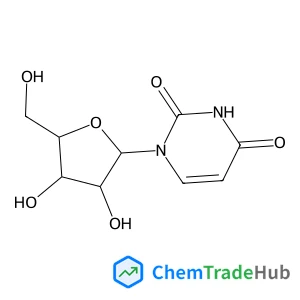
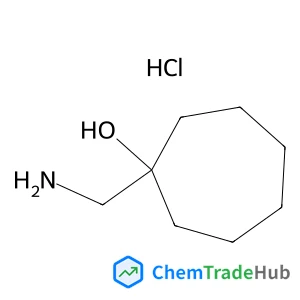
![[5-fluoro-2-(morpholine-4-carbonyl)phenyl]boronic acid structure](https://static.chemtradehub.com/structs/121/1217501-26-2-505c.webp "[5-fluoro-2-(morpholine-4-carbonyl)phenyl]boronic acid structure")
![tert-Butyl 6-chloro-4-oxospiro[chroman-2,4'-piperidine]-1'-carboxylate structure](https://static.chemtradehub.com/structs/101/1011482-37-3-88a5.webp "tert-Butyl 6-chloro-4-oxospiro[chroman-2,4'-piperidine]-1'-carboxylate structure")




