












Enhanced temperature stability in the R–T phase boundary with dominating intrinsic contribution
文献情報
出版日
2018-07-05
DOI
10.1039/C8CP02891E
インパクトファクター
3.676
著者
Xiang Lv, Jiagang Wu, Jianguo Zhu, Dingquan Xiao
原文を見る
要旨
In this study, 0.96KNNSx–0.01SZ–0.03BNZ ceramics (x = 0–0.08) were used as examples to illustrate the effects of phase boundaries on strain property and temperature stability. The addition of Sb5+ resulted in a rhombohedral–tetragonal (R–T) phase boundary at x = 0.05–0.07, as confirmed by temperature-dependent Raman spectra. In the R–T region, an improved piezoelectric constant (d33 = 390–440 pC N−1) and high unipolar strain (Suni = 0.14–0.15%) were observed due to the dominating intrinsic contribution. More importantly, a favorable temperature stability of Suni was observed in the ceramics with x = 0.05; for example, there was a slight variation of +5% to −13% when the temperature was increased from 20 °C to 180 °C. Through systematic investigations of composition and temperature-dependent strain, methods to improve Suni and consolidate its temperature stability in KNN-based ceramics were subsequently suggested. We believe that this study can promote the understanding and design of KNN-based ceramics with high strain and favorable temperature stability.
関連文献
An ionic liquid composed of purely functional sensing molecules: a colorimetrically calcium responsive ionic liquid
Yusuke Niwa, Tatsumi Mizuta, Kenji Sueyoshi, Tatsuro Endo, Hideaki Hisamoto
2019-10-21
Communication
DOI: 10.1039/C9AN01769K
An intramolecular charge transfer and excited state intramolecular proton transfer based fluorescent probe for highly selective detection and imaging of formaldehyde in living cells
Wen Chen, Mei Yang, Na Luo, Fenglin Wang, Ru-Qin Yu, Jian-Hui Jiang
2019-10-03
Paper
DOI: 10.1039/C9AN01778J
Styrylpyridine salts-based red emissive two-photon turn-on probe for imaging the plasma membrane in living cells and tissues
Lifang Guo, Ruoyao Zhang, Yuming Sun, Minggang Tian, Ge Zhang, Ruiqing Feng, Xuechen Li, Xiaoqiang Yu, Xiuquan He
2016-04-26
Communication
DOI: 10.1039/C6AN00147E
Biosensor surface functionalization by a simple photochemical immobilization of antibodies: experimental characterization by mass spectrometry and surface enhanced Raman spectroscopy
Bartolomeo Della Ventura, Martina Banchelli, Riccardo Funari, Anna Illiano, Marella De Angelis, Paola Taroni, Angela Amoresano, Paolo Matteini, Raffaele Velotta
2019-10-10
Paper
DOI: 10.1039/C9AN00443B
A wavelength-resolved electrochemiluminescence resonance energy transfer ratiometric immunosensor for detection of cardiac troponin I
Liping Zhu, Jing Ye, Qiuju Zhu
2019-09-17
Paper
DOI: 10.1039/C9AN01445D
A two-photon fluorescent probe for bio-imaging of formaldehyde in living cells and tissues
Jun-Bin Li, Qian-Qian Wang, Lin Yuan, Yong-Xiang Wu, Xiao-Xiao Hu, Xiao-Bing Zhang, Weihong Tan
2016-04-14
Paper
DOI: 10.1039/C6AN00473C
Effects of surface treatments on trapping with DC insulator-based dielectrophoresis
Claire V. Crowther, Viola Sanderlin, Mark A. Hayes, Gillian H. Gile
2019-11-05
Paper
DOI: 10.1039/C9AN01186B
Solvent-independent determination of heteroatom protonation states from NMR spectra by differential deuterium isotope shifts
Sebastian Tassoti, Martin Walenta, Alexander Pöcheim, Kathrin Buchberger, Olaf Kunert, Klaus Zangger
2019-11-11
Paper
DOI: 10.1039/C9AN01364D
こちらもおすすめ
化合物よくある質問
2-ブロモ-9,9-ジフェニル-9H-フルオレンの主な用途は何ですか?
2-溴-9,9-二苯基芴は、医薬品、工業材料、有機合成の研究分野で応用されます。特に、レーザー材料や機能性ポリマーの合成に使用されることがあります。また、蛍光色...
474918-32-62-Bromo-9,9-diphenyl...
化合物よくある質問
四氯化铱の市場動向や研究トレンドはどうですか?
四氯化铱の市場は研究開発分野で注目されており、特にナノ技術や金属有機框架(MOFs)の分野での需要が増加傾向にあります。価格は安定しており、中国や韓国での生産が...
207399-11-9Tetrachloroiridium h...
882-06-44-Nitrocinnamic acid
化合物よくある質問
1-(4-溴-3-氟苯基)-2-氯乙酮を含む廃棄物はどのように処理すべきですか?
1-(4-溴-3-氟苯基)-2-氯乙酮 (CAS番号: 1260857-14-4) の廃棄物は専門的な廃棄処理が必要です。まず、廃棄物は密閉された容器に収集し、...
1260857-14-41-(4-Bromo-3-fluorop...
化合物よくある質問
苦参酚Kとは何ですか?
苦参酚Kは、CAS番号101236-49-1を持つ化合物で、主に天然由来の生薬から抽出されます。この化合物は、抗炎症作用や抗癌作用を持つことが報告されています。
101236-49-1Kushenol K
化合物よくある質問
POTASSIUM (1-(TERTBUTOXYCARBONYL)AZETIDIN-3-YL)TRIFLUOROBORATE を含む廃棄物はどのように処理すべきですか?
POTASSIUM (1-(TERTBUTOXYCARBONYL)AZETIDIN-3-YL)TRIFLUOROBORATE を含む廃棄物は、まず安全なエント...
1430219-73-0Potassium (1-(tert-b...
化合物よくある質問
4-庚基-4’-联苯羧酸の市場動向や研究トレンドはどうですか?
4-庚基-4’-聯苯羧酸は、特殊化学品や合成化学の分野で用いられる化学物質ですが、市場動向としては、研究開発の進展とともに需要が増加しています。また、環境配慮型...
58573-94-74'-Heptyl-4-biphenyl...
化合物よくある質問
6-ブロモ-3-メトキシ-1-フェニル-1H-インドゾールを含む廃棄物はどのように処理すべきですか?
6-ブロモ-3-メトキシ-1-フェニル-1H-インドゾールを含む廃棄物は、適切な化学廃棄処理が必要です。通常、廃棄物は密閉容器に収集され、専門の廃棄処理業者に引...
1332527-03-36-Bromo-3-methoxy-1-...
化合物よくある質問
4,4-二甲基-2-吡咯烷酮はどの業界で使用されていますか?
4,4-二甲基-2-吡咯烷酮は医薬、ポリマー、センサー、半導体などの業界で広く使用されています。特に溶媒としての性能が高く評価されています。
66899-02-34,4-dimethylpyrrolid...
51312-42-6Sodium Phosphotungst...
掲載誌
Physical Chemistry Chemical Physics

CiteScore:
5.5
自己引用率:
10.3%
年間論文数:
3036
Physical Chemistry Chemical Physics (PCCP) is an international journal co-owned by 19 physical chemistry and physics societies from around the world. This journal publishes original, cutting-edge research in physical chemistry, chemical physics and biophysical chemistry. To be suitable for publication in PCCP, articles must include significant innovation and/or insight into physical chemistry; this is the most important criterion that reviewers and Editors will judge against when evaluating submissions. The journal has a broad scope and welcomes contributions spanning experiment, theory, computation and data science. Topical coverage includes spectroscopy, dynamics, kinetics, statistical mechanics, thermodynamics, electrochemistry, catalysis, surface science, quantum mechanics, quantum computing and machine learning. Interdisciplinary research areas such as polymers and soft matter, materials, nanoscience, energy, surfaces/interfaces, and biophysical chemistry are welcomed if they demonstrate significant innovation and/or insight into physical chemistry. Joined experimental/theoretical studies are particularly appreciated when complementary and based on up-to-date approaches.
おすすめ化合物
![4-{2-[4-(2-Methyl-2-propanyl)phenyl]ethoxy}quinazoline structure](https://static.chemtradehub.com/structs/120/120928-09-8-d3db.webp "4-{2-[4-(2-Methyl-2-propanyl)phenyl]ethoxy}quinazoline structure")
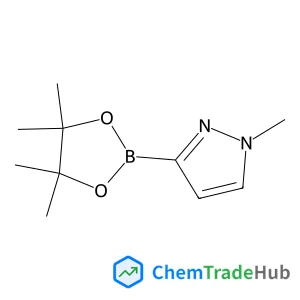
1-Methyl-3-(4,4,5,5-tetramethyl-1,3,2-dioxaborolan-2-yl)-1H-pyrazole
CAS番号:
1020174-04-2
分子式:
C10H17BN2O2
おすすめサプライヤー





免責事項
このページに表示される学術雑誌情報は、参考および研究目的のみを目的としています。当社は雑誌出版社とは提携しておらず、投稿の取り扱いも行っておりません。出版に関するお問い合わせは、各雑誌出版社に直接ご連絡ください。
表示されている情報に誤りがある場合は、support@chemtradehub.com までご連絡ください。迅速に確認し、対応いたします。