












Electrocatalytic studies on imidazolium based ionic liquids: defining experimental conditions
文献情報
出版日
2018-06-22
DOI
10.1039/C8CP02662A
インパクトファクター
3.676
著者
Miguel A. Montiel, José Solla-Gullón, Vicente Montiel, Carlos M. Sánchez-Sánchez
原文を見る
要旨
The number of publications devoted to studying electrochemical reactions in room temperature ionic liquids (RTILs) is constantly growing, but very few of them have been devoted to defining proper experimental conditions to obtain reproducible electrochemical results. In this work, we demonstrate that the combination of a proper RTIL purification treatment and a filtered Ar gas stream allow us to obtain featureless voltammograms in [C4mim][BF4], [C4mim][NTf2], and [C4m2im][NTf2], which otherwise present signals associated with different types of impurities such as water and some minor electroactive impurities acquired during the RTIL synthesis process. Moreover, we demonstrate that bubbling Ar, or another inert gas, through the electrolyte in order to purge O2 dissolved in RTILs is one of the major sources of water and O2 impurities incorporated in RTILs within the electrochemical cell. To overcome this source of water uptake, we have incorporated a gas stream purification filter before the gas reaches the RTIL in the electrochemical cell. To illustrate the effect of these impurities in relevant electrocatalytic studies, we study the electrocatalytic reduction of CO2 on Pt nanoparticles and the key role of an appropiate filter when the CO2 gas stream is bubbled within imidazolium based RTILs. Our cyclic voltammetric studies point out that CO2 electroreduction on Pt nanoparticles only presents activity in [C4mim][NTf2] and [C4m2im][NTf2], thus suggesting that the C-2 position on the imidazolium ring is not the key position in CO2 electrochemical reduction. In contrast, the same Pt nanoparticles are inactive towards CO2 electroreduction in [C4mim][BF4], which is a more hydrophilic RTIL.
関連文献
A quantitative prediction of the viscosity of ionic liquids using Sσ-profile molecular descriptors
Xiangping Zhang, Suojiang Zhang
2014-12-17
Paper
DOI: 10.1039/C4CP04712E
Stabilities and electronic properties of monolayer MoS2 with one or two sulfur line vacancy defects
Yang Han, Ting Hu, Rui Li, Jian Zhou, Jinming Dong
2014-12-12
Paper
DOI: 10.1039/C4CP04319G
Fullerene-like boron clusters stabilized by an endohedrally doped iron atom: BnFe with n = 14, 16, 18 and 20
Hung Tan Pham, Long Van Duong, My Phuong Pham-Ho, Minh Tho Nguyen
2014-12-16
Communication
DOI: 10.1039/C4CP04279D
Splitting and joining in carbon nanotube/nanoribbon/nanotetrahedron growth
Takayuki Hasegawa, Hideo Kohno
2014-12-22
Communication
DOI: 10.1039/C4CP05139D
Moderate band-gap-broadening induced high separation of electron–hole pairs in Br substituted BiOI: a combined experimental and theoretical investigation
Hongwei Huang, Xiaowei Li, Xu Han, Na Tian, Yihe Zhang, Tierui Zhang
2014-12-15
Paper
DOI: 10.1039/C4CP04842C
Pressure-induced molten globule state of human acetylcholinesterase: structural and dynamical changes monitored by neutron scattering
R. Schweins
2014-12-11
Paper
DOI: 10.1039/C4CP02992E
Photocatalytic enhancement of hybrid C3N4/TiO2 prepared via ball milling method
Mo Zhang, Yongfa Zhu
2014-12-09
Paper
DOI: 10.1039/C4CP05173D
Phenolic resin-grafted reduced graphene oxide as a highly stable anode material for lithium ion batteries
Mochen Li, Huaihe Song, Xiaohong Chen, Jisheng Zhou, Zhaokun Ma
2014-12-18
Paper
DOI: 10.1039/C4CP04556D
Pnicogen and hydrogen bonds: complexes between PH3X+ and PH2X systems
Ibon Alkorta, José Elguero
2014-12-11
Paper
DOI: 10.1039/C4CP04840G
Thermodynamic insights into the self-assembly of capped nanoparticles using molecular dynamic simulations
André F. de Moura, Kalil Bernardino, Cleocir J. Dalmaschio, Edson R. Leite, Nicholas A. Kotov
2014-12-16
Paper
DOI: 10.1039/C4CP03519D
こちらもおすすめ
化合物よくある質問
2-ブロモ-9,9-ジフェニル-9H-フルオレンの主な用途は何ですか?
2-溴-9,9-二苯基芴は、医薬品、工業材料、有機合成の研究分野で応用されます。特に、レーザー材料や機能性ポリマーの合成に使用されることがあります。また、蛍光色...
474918-32-62-Bromo-9,9-diphenyl...
化合物よくある質問
四氯化铱の市場動向や研究トレンドはどうですか?
四氯化铱の市場は研究開発分野で注目されており、特にナノ技術や金属有機框架(MOFs)の分野での需要が増加傾向にあります。価格は安定しており、中国や韓国での生産が...
207399-11-9Tetrachloroiridium h...
882-06-44-Nitrocinnamic acid
化合物よくある質問
1-(4-溴-3-氟苯基)-2-氯乙酮を含む廃棄物はどのように処理すべきですか?
1-(4-溴-3-氟苯基)-2-氯乙酮 (CAS番号: 1260857-14-4) の廃棄物は専門的な廃棄処理が必要です。まず、廃棄物は密閉された容器に収集し、...
1260857-14-41-(4-Bromo-3-fluorop...
化合物よくある質問
苦参酚Kとは何ですか?
苦参酚Kは、CAS番号101236-49-1を持つ化合物で、主に天然由来の生薬から抽出されます。この化合物は、抗炎症作用や抗癌作用を持つことが報告されています。
101236-49-1Kushenol K
化合物よくある質問
POTASSIUM (1-(TERTBUTOXYCARBONYL)AZETIDIN-3-YL)TRIFLUOROBORATE を含む廃棄物はどのように処理すべきですか?
POTASSIUM (1-(TERTBUTOXYCARBONYL)AZETIDIN-3-YL)TRIFLUOROBORATE を含む廃棄物は、まず安全なエント...
1430219-73-0Potassium (1-(tert-b...
化合物よくある質問
4-庚基-4’-联苯羧酸の市場動向や研究トレンドはどうですか?
4-庚基-4’-聯苯羧酸は、特殊化学品や合成化学の分野で用いられる化学物質ですが、市場動向としては、研究開発の進展とともに需要が増加しています。また、環境配慮型...
58573-94-74'-Heptyl-4-biphenyl...
化合物よくある質問
6-ブロモ-3-メトキシ-1-フェニル-1H-インドゾールを含む廃棄物はどのように処理すべきですか?
6-ブロモ-3-メトキシ-1-フェニル-1H-インドゾールを含む廃棄物は、適切な化学廃棄処理が必要です。通常、廃棄物は密閉容器に収集され、専門の廃棄処理業者に引...
1332527-03-36-Bromo-3-methoxy-1-...
化合物よくある質問
4,4-二甲基-2-吡咯烷酮はどの業界で使用されていますか?
4,4-二甲基-2-吡咯烷酮は医薬、ポリマー、センサー、半導体などの業界で広く使用されています。特に溶媒としての性能が高く評価されています。
66899-02-34,4-dimethylpyrrolid...
51312-42-6Sodium Phosphotungst...
掲載誌
Physical Chemistry Chemical Physics

CiteScore:
5.5
自己引用率:
10.3%
年間論文数:
3036
Physical Chemistry Chemical Physics (PCCP) is an international journal co-owned by 19 physical chemistry and physics societies from around the world. This journal publishes original, cutting-edge research in physical chemistry, chemical physics and biophysical chemistry. To be suitable for publication in PCCP, articles must include significant innovation and/or insight into physical chemistry; this is the most important criterion that reviewers and Editors will judge against when evaluating submissions. The journal has a broad scope and welcomes contributions spanning experiment, theory, computation and data science. Topical coverage includes spectroscopy, dynamics, kinetics, statistical mechanics, thermodynamics, electrochemistry, catalysis, surface science, quantum mechanics, quantum computing and machine learning. Interdisciplinary research areas such as polymers and soft matter, materials, nanoscience, energy, surfaces/interfaces, and biophysical chemistry are welcomed if they demonstrate significant innovation and/or insight into physical chemistry. Joined experimental/theoretical studies are particularly appreciated when complementary and based on up-to-date approaches.
おすすめ化合物

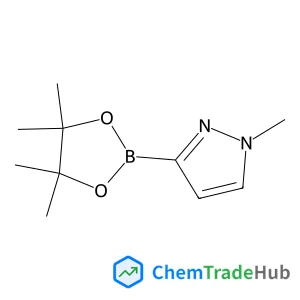
1-Methyl-3-(4,4,5,5-tetramethyl-1,3,2-dioxaborolan-2-yl)-1H-pyrazole
CAS番号:
1020174-04-2
分子式:
C10H17BN2O2
おすすめサプライヤー



免責事項
このページに表示される学術雑誌情報は、参考および研究目的のみを目的としています。当社は雑誌出版社とは提携しておらず、投稿の取り扱いも行っておりません。出版に関するお問い合わせは、各雑誌出版社に直接ご連絡ください。
表示されている情報に誤りがある場合は、support@chemtradehub.com までご連絡ください。迅速に確認し、対応いたします。