












A thermodynamically consistent phase diagram of a trimorphic pharmaceutical, l-tyrosine ethyl ester, based on limited experimental data
文献情報
出版日
2018-08-29
DOI
10.1039/C8CP01813H
インパクトファクター
3.676
著者
Maria Barrio, Pol Lloveras, Alain Polian, Jean-Paul Itié, Josep-Lluis Tamarit
原文を見る
要旨
Crystalline polymorphs possess different physical properties, and phase changes between those polymorphs may affect the properties of engineered materials such as drugs. This is very well illustrated by the large effort that is put into the capability to predict phase behaviour of pharmaceuticals to avoid the unexpected appearance of different crystal forms. Much progress has been made, but one of the remaining challenges is (the accuracy in) the prediction of phase behaviour as a function of temperature. Obviously, predictions should at a certain point be verified against experimental data; however, it may not always be easy to elucidate the phase behaviour of a given compound experimentally, because thermodynamically and kinetically controlled phenomena occur in a convoluted fashion in experimental data. The present paper discusses the trimorphism of L-tyrosine ethyl ester as an example case of how experimental data in combination with the thermodynamic tenets lead to a consistent phase diagram, which can be used as the basis for pharmaceutical formulations and for comparison with polymorph predictions by computer. The positions of the two-phase equilibria I–II, I–III, and I–L have been obtained experimentally. Using the Clapeyron equation and the alternation rule, it has been shown how the positions of the other equilibria II–L, III–L, and II–III can be deduced in combination with the stability rankings of the phases and the phase equilibria. The experimental data have been obtained by synchrotron X-ray diffraction, Raman spectroscopy, and thermal analysis as a function of pressure and temperature. Furthermore, laboratory X-ray diffraction as a function of temperature and differential scanning calorimetry have been used. At room temperature, form II is the most stable phase, which remains stable with increasing pressure, as it possesses the smallest specific volume. Form I becomes stable above 33 °C (306 K), but with increasing pressure it turns into form III. On thermodynamic grounds, form III is expected to have a stable domain at very low temperatures.
関連文献
An in vivo quantitative Raman-pH sensor of arterial blood based on laser trapping of erythrocytes
Manman Lin, Bin Xu, Huilu Yao, Aiguo Shen, Jiming Hu
2016-03-23
Paper
DOI: 10.1039/C5AN02315G
A fluorescent turn-on probe for visualizing lysosomes in hypoxic tumor cells
Yingchao Liu, Feiyi Wang, Qiang Fei, Ben Shi, Jiancai An, Chunchang Zhao, Chen-Ho Tung
2016-04-15
Communication
DOI: 10.1039/C6AN00369A
Voltammetric detection of glutathione: an adsorptive stripping voltammetry approach
Madalena C. C. Areias, Kenichi Shimizu, Richard G. Compton
2016-04-01
Paper
DOI: 10.1039/C6AN00550K
A two-photon fluorescent probe for bio-imaging of formaldehyde in living cells and tissues
Jun-Bin Li, Qian-Qian Wang, Lin Yuan, Yong-Xiang Wu, Xiao-Xiao Hu, Xiao-Bing Zhang, Weihong Tan
2016-04-14
Paper
DOI: 10.1039/C6AN00473C
Emerging paper microfluidic devices
Bingbing Gao, Xin Li, Yaqiong Yang, Jianlin Chu, Bingfang He
2019-09-18
Critical Review
DOI: 10.1039/C9AN01275C
Exonuclease III-assisted signal amplification strategy for sensitive fluorescence detection of polynucleotide kinase based on poly(thymine)-templated copper nanoparticles
Han Zhao, Ying Yan, Mingjian Chen, Tingting Hu, Kefeng Wu, Haisheng Liu, Changbei Ma
2019-10-07
Paper
DOI: 10.1039/C9AN01659G
Tunicamycin induced endoplasmic reticulum changes in endothelial cells investigated in vitro by confocal Raman imaging
Nikola Mielniczek, Magdalena Jarosz, Joanna Denbigh, Renata Budzynska
2019-08-27
Paper
DOI: 10.1039/C9AN01456J
Aluminium foil as a single-use substrate for MALDI-MS fingerprinting of different melanoma cell lines
A. Bondarenko, Y. Zhu, L. Qiao, F. Cortés Salazar, H. Pick, H. H. Girault
2016-04-20
Paper
DOI: 10.1039/C6AN00126B
Establishment of an immunofiltration strip for the detection of 17β-estradiol based on the photothermal effect of black phosphorescence
Lixia Lu, Minglu Wang, Dan Zhang, Hongyan Zhang
2019-09-27
Paper
DOI: 10.1039/C9AN01495K
こちらもおすすめ
化合物よくある質問
2-ブロモ-9,9-ジフェニル-9H-フルオレンの主な用途は何ですか?
2-溴-9,9-二苯基芴は、医薬品、工業材料、有機合成の研究分野で応用されます。特に、レーザー材料や機能性ポリマーの合成に使用されることがあります。また、蛍光色...
474918-32-62-Bromo-9,9-diphenyl...
化合物よくある質問
四氯化铱の市場動向や研究トレンドはどうですか?
四氯化铱の市場は研究開発分野で注目されており、特にナノ技術や金属有機框架(MOFs)の分野での需要が増加傾向にあります。価格は安定しており、中国や韓国での生産が...
207399-11-9Tetrachloroiridium h...
882-06-44-Nitrocinnamic acid
化合物よくある質問
1-(4-溴-3-氟苯基)-2-氯乙酮を含む廃棄物はどのように処理すべきですか?
1-(4-溴-3-氟苯基)-2-氯乙酮 (CAS番号: 1260857-14-4) の廃棄物は専門的な廃棄処理が必要です。まず、廃棄物は密閉された容器に収集し、...
1260857-14-41-(4-Bromo-3-fluorop...
化合物よくある質問
苦参酚Kとは何ですか?
苦参酚Kは、CAS番号101236-49-1を持つ化合物で、主に天然由来の生薬から抽出されます。この化合物は、抗炎症作用や抗癌作用を持つことが報告されています。
101236-49-1Kushenol K
化合物よくある質問
POTASSIUM (1-(TERTBUTOXYCARBONYL)AZETIDIN-3-YL)TRIFLUOROBORATE を含む廃棄物はどのように処理すべきですか?
POTASSIUM (1-(TERTBUTOXYCARBONYL)AZETIDIN-3-YL)TRIFLUOROBORATE を含む廃棄物は、まず安全なエント...
1430219-73-0Potassium (1-(tert-b...
化合物よくある質問
4-庚基-4’-联苯羧酸の市場動向や研究トレンドはどうですか?
4-庚基-4’-聯苯羧酸は、特殊化学品や合成化学の分野で用いられる化学物質ですが、市場動向としては、研究開発の進展とともに需要が増加しています。また、環境配慮型...
58573-94-74'-Heptyl-4-biphenyl...
化合物よくある質問
6-ブロモ-3-メトキシ-1-フェニル-1H-インドゾールを含む廃棄物はどのように処理すべきですか?
6-ブロモ-3-メトキシ-1-フェニル-1H-インドゾールを含む廃棄物は、適切な化学廃棄処理が必要です。通常、廃棄物は密閉容器に収集され、専門の廃棄処理業者に引...
1332527-03-36-Bromo-3-methoxy-1-...
化合物よくある質問
4,4-二甲基-2-吡咯烷酮はどの業界で使用されていますか?
4,4-二甲基-2-吡咯烷酮は医薬、ポリマー、センサー、半導体などの業界で広く使用されています。特に溶媒としての性能が高く評価されています。
66899-02-34,4-dimethylpyrrolid...
51312-42-6Sodium Phosphotungst...
掲載誌
Physical Chemistry Chemical Physics

CiteScore:
5.5
自己引用率:
10.3%
年間論文数:
3036
Physical Chemistry Chemical Physics (PCCP) is an international journal co-owned by 19 physical chemistry and physics societies from around the world. This journal publishes original, cutting-edge research in physical chemistry, chemical physics and biophysical chemistry. To be suitable for publication in PCCP, articles must include significant innovation and/or insight into physical chemistry; this is the most important criterion that reviewers and Editors will judge against when evaluating submissions. The journal has a broad scope and welcomes contributions spanning experiment, theory, computation and data science. Topical coverage includes spectroscopy, dynamics, kinetics, statistical mechanics, thermodynamics, electrochemistry, catalysis, surface science, quantum mechanics, quantum computing and machine learning. Interdisciplinary research areas such as polymers and soft matter, materials, nanoscience, energy, surfaces/interfaces, and biophysical chemistry are welcomed if they demonstrate significant innovation and/or insight into physical chemistry. Joined experimental/theoretical studies are particularly appreciated when complementary and based on up-to-date approaches.
おすすめ化合物

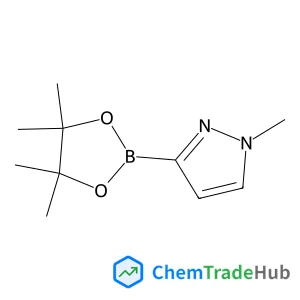
1-Methyl-3-(4,4,5,5-tetramethyl-1,3,2-dioxaborolan-2-yl)-1H-pyrazole
CAS番号:
1020174-04-2
分子式:
C10H17BN2O2
おすすめサプライヤー





免責事項
このページに表示される学術雑誌情報は、参考および研究目的のみを目的としています。当社は雑誌出版社とは提携しておらず、投稿の取り扱いも行っておりません。出版に関するお問い合わせは、各雑誌出版社に直接ご連絡ください。
表示されている情報に誤りがある場合は、support@chemtradehub.com までご連絡ください。迅速に確認し、対応いたします。