


Crystallization of silica promoted by residual hydrogen bonding interactions at high temperature
文献情報
出版日
2018-04-09
DOI
10.1039/C8CP00642C
インパクトファクター
3.676
著者
Xiaojiao Zhang, Yang Liu, Wenchuan Lai, Zaoming Wang, Wang Xu, Xiangyang Liu
原文を見る
要旨
A novel approach to prepare crystalline silica through calcination of the composite of silica and highly fluorinated graphene at a relatively low temperature is demonstrated. Silica and its composites with graphene and its derivatives (graphene, graphene oxide and graphene with various degrees of fluorination) were synthesized and then calcined at 900 °C in an air atmosphere. The results of X-ray-diffraction (XRD) and Fourier transform infrared (FTIR) spectroscopy reveal that cristobalite was produced through calcining composites of silica and highly fluorinated graphene under ambient air at a relatively low temperature (900 °C), while for the composites of silica and graphene and its derivatives, the calcined products are all amorphous. Thermal gravimetric analysis results indicate that the maximum decomposition temperature of functional groups in highly fluorinated graphene at air temperature is 457 °C, which is higher than that in medium fluorinated graphene, lower fluorinated graphene and graphene oxide (411.3 °C, 313.4 °C and 238.9 °C). A high degradation temperature of highly fluorinated graphene contributes to strong residual hydrogen bonding interactions at high temperature. FTIR results further illustrate that many residual hydrogen bonding interactions in composites of silica and highly fluorinated graphene at higher temperature result in enough linear structures. As a consequence, stronger residual hydrogen bonding interactions at high temperature in composites of silica and highly fluorinated graphene restrain the self-condensation of Si–OH groups and promote the formation of crystalline structures.
おすすめジャーナル

Journal of the American Chemical Society

Chemistry of Natural Compounds

Chemistry of Heterocyclic Compounds

Biopolymers

Cement and Concrete Research

Doklady Chemistry

Journal of the Chinese Chemical Society

Accounts of Chemical Research

Australian Journal of Chemistry

Bulletin of the Chemical Society of Japan
関連文献
A rapid construction of the ABC tricyclic skeleton of malabanone A
Tao Li, Guangmiao Wu, Shangbiao Feng, Zemin Wang, Xingang Xie, Xuegong She
2018-10-25
Communication
DOI: 10.1039/C8OB02495B
Regioselectivity of aryl radical attack onto isocyanates and isothiocyanates
Geethika K. Weragoda, Rowan L. Pilkington, Richard A. J. O'Hair
2018-11-14
Paper
DOI: 10.1039/C8OB02209G
Catalytic enantioselective one-pot approach to cis- and trans-2,3-diaryl substituted 1,5-benzothiazepines
Sara Meninno, Ilaria Quaratesi, Chiara Volpe, Andrea Mazzanti, Alessandra Lattanzi
2018-09-12
Paper
DOI: 10.1039/C8OB01988F
Synthesis of comb-shaped DNA using a non-nucleosidic branching phosphoramidite
Satheesh Ellipilli, John D. Phillips, Jennifer M. Heemstra
2018-06-05
Paper
DOI: 10.1039/C8OB00626A
Copper-catalyzed synthesis of 2-aminophenyl benzothiazoles: a novel approach
Chandra Mohan Kurmarayuni, Baby Ramana Mutchu, Ramana Tamminana, Hari Babu Bollikolla
2018-09-06
Communication
DOI: 10.1039/C8OB02018C
Porphyrin–ferrocene conjugates for photodynamic and chemodynamic therapy
Xiaoyu Zhang, Shi Liu, Zhigang Xie
2018-10-25
Paper
DOI: 10.1039/C8OB02391C
Tripodal cyanurates as selective transmembrane Cl− transporters
Debashis Mondal, Anjana Sathyan, Sopan V. Shinde, Kamal K. Mishra, Pinaki Talukdar
2018-10-22
Communication
DOI: 10.1039/C8OB01345D
RNA-based boronate internucleosidic linkages: an entry into reversible templated ligation and loop formation
Alejandro Gimenez Molina, Ivan Barvik, Sabine Müller, Jean-Jacques Vasseur, Michael Smietana
2018-11-01
Paper
DOI: 10.1039/C8OB02182A
Metal-free oxidative radical cascade addition/oxobutylation of unactivated alkenes with acetone towards 3-(3-oxobutyl)indolines
Changduo Pan, Zhenkun Yang, Du Gao, Jin-Tao Yu
2018-08-03
Paper
DOI: 10.1039/C8OB01329B
こちらもおすすめ
化合物よくある質問
2-ヒドロキシ-5-ニトロベンジンブロモイドの代替品はありますか?
2-ヒドロキシ-5-ニトロベンジンブロモイドは特定の化学反応に適しているため、代替品は限られています。しかし、同様の構造を持つ2-ヒドロキシ-4-ニトロベンジン...
772-33-82-(Bromomethyl)-4-ni...
化合物よくある質問
N-(2-ブロモフェニル)-1-チロール-3-オキソ-3-(ピペリジニル)プロペン-2-イル)ベンゼンアミドを取り扱う際の実験室安全事項は何ですか?
N-(2-ブロモフェニル)-1-チロール-3-オキソ-3-(ピペリジニル)プロペン-2-イル)ベンゼンアミドは有毒で、皮膚や粘膜に刺激を与える可能性があります。...
1800044-77-2N-[(1Z)-1-(2-Bromoph...
化合物よくある質問
1,3プロパンジオール,2-[2-(2アミノ-6クロロ-9Hピリミジン-9-イル)エチル-1,1,2,2-D4]-2,3-ジアセタートの市場動向や研究トレンドはどうですか?
この化合物は、新規治療薬の開発に注目されています。市場では、その有効性と安全性が評価され、研究分野では、分子生物学と医薬化学の新たな発見が期待されています。
1020718-81-31,3-Propanediol, 2-[...
579-44-2Ethanone, 2-hydroxy-...
化合物よくある質問
Succinimidyl-alanyl-phenylalanyl-prolyl-phenylalanine 4-nitroanilide はどの業界で使用されていますか?
Succinimidyl-alanyl-phenylalanyl-prolyl-phenylalanine 4-nitroanilide は主に医薬品開発やポ...
128802-73-3succinimidyl-alanyl-...
化合物よくある質問
メチル6-アミノ-5-クロロピリジン-2-カーボイル酸について、適用される法規ガイドラインは何ですか?
メチル6-アミノ-5-クロロピリジン-2-カーボイル酸(CAS番号: 1256794-05-4)の使用には、GHS( Globally Harmonized S...
1256794-05-4Methyl 6-amino-5-chl...
化合物よくある質問
エチル4-(シクロ Pentagonyl)アミノ-2-メチル硫化基ピリミジン-5-カルボキシレートを取り扱う際の実験室安全事項は何ですか?
取り扱いには、耐薬品性の容器を使用し、通気性の良い場所で操作することを推奨します。漏れ時は、SDS(安全データシート)を参照して適切な措置を取ること。手洗いと洗...
211245-62-4ethyl 4-(cyclopentyl...
化合物よくある質問
(S)-3-ベンZYルピペリジン塩酸塩とは何ですか?
(S)-3-ベンZYルピペリジン塩酸塩は、CAS番号1258940-00-9で表される化合物です。これは、(S)-3-苯基哌啶的盐酸盐であり、主に医薬品の原料と...
1258940-00-9(S)-3-Phenylpiperidi...
化合物よくある質問
3,5-二甲基金剛胺の主な用途は何ですか?
3,5-二甲基金剛胺は、主に医薬品の原料として使用され、また抗うつ薬や抗アルツハイマー薬の開発に利用されます。さらに、化粧品や食品添加物の製造でも重要な役割を果...
19988-45-52-(2,3-Dihydroxyphen...
化合物よくある質問
ビス(4-メチル-2-ペンチル)フェニルカルボン酸エステルの代替品はありますか?
ビス(4-メチル-2-ペンチル)フェニルカルボン酸エステル (CAS番号: 1398066-13-1) の代替品には、ビス(2-エチルヘキシル)フェノールカルボ...
1398066-13-1Bis(4-methyl-2-penty...
掲載誌
Physical Chemistry Chemical Physics

CiteScore:
5.5
自己引用率:
10.3%
年間論文数:
3036
Physical Chemistry Chemical Physics (PCCP) is an international journal co-owned by 19 physical chemistry and physics societies from around the world. This journal publishes original, cutting-edge research in physical chemistry, chemical physics and biophysical chemistry. To be suitable for publication in PCCP, articles must include significant innovation and/or insight into physical chemistry; this is the most important criterion that reviewers and Editors will judge against when evaluating submissions. The journal has a broad scope and welcomes contributions spanning experiment, theory, computation and data science. Topical coverage includes spectroscopy, dynamics, kinetics, statistical mechanics, thermodynamics, electrochemistry, catalysis, surface science, quantum mechanics, quantum computing and machine learning. Interdisciplinary research areas such as polymers and soft matter, materials, nanoscience, energy, surfaces/interfaces, and biophysical chemistry are welcomed if they demonstrate significant innovation and/or insight into physical chemistry. Joined experimental/theoretical studies are particularly appreciated when complementary and based on up-to-date approaches.
おすすめ化合物
![Methyl 4-({[(2-methyl-2-propanyl)oxy]carbonyl}amino)bicyclo[2.2.2]octane-1-carboxylate structure](https://static.chemtradehub.com/structs/943/943845-74-7-b7e5.webp "Methyl 4-({[(2-methyl-2-propanyl)oxy]carbonyl}amino)bicyclo[2.2.2]octane-1-carboxylate structure")
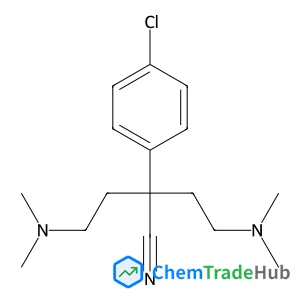
2-(4-Chlorophenyl)-4-(dimethylamino)-2-(2-(dimethylamino)ethyl)butanenitrile
CAS番号:
1246816-57-8
分子式:
C16H24ClN3
おすすめサプライヤー





免責事項
このページに表示される学術雑誌情報は、参考および研究目的のみを目的としています。当社は雑誌出版社とは提携しておらず、投稿の取り扱いも行っておりません。出版に関するお問い合わせは、各雑誌出版社に直接ご連絡ください。
表示されている情報に誤りがある場合は、support@chemtradehub.com までご連絡ください。迅速に確認し、対応いたします。