












![N-[(Benzyloxy)carbonyl]serine structure](https://static.chemtradehub.com/structs/276/2768-56-1-77f7.webp "N-[(Benzyloxy)carbonyl]serine structure")
Stimulating intra- and intermolecular charge transfer and nonlinear optical response for biphenalenyl biradicaloid dimer under an external electric field
文献情報
出版日
2018-06-19
DOI
10.1039/C8CP00416A
インパクトファクター
3.676
著者
Feng-Wei Gao, Hong-Liang Xu, Shabbir Muhammad, Zhong-Min Su
原文を見る
要旨
An interesting biphenalenyl biradicaloid (IDPL) dimer consisting of both-middle superimposed phenalenyls and both-end nonsuperimposed phenalenyls has been synthesized, and has attracted intensive research interest due to its intra- and intermolecular interactions and semiconductive characteristics. It is significant that under regulation of the external electric field the directional charge transfer (CT) can produce attractive properties. In the present work, the structure and electronic properties of the IDPL dimer under an external electric field (along the horizontal Fx or the vertical Fz directions) are explored, and the following properties determined: (i) as the horizontal Fx increases, the intramolecular CT becomes larger, which induces the intermolecular CT of the IDPL dimer. (ii) In contrast, as the vertical Fz increases, the large intermolecular CT gives rise to the intramolecular CT of the IDPL dimer. (iii) More importantly, the external electric field effectively regulates and controls the first hyperpolarizability (βtot) of the IDPL dimer. Compared with the vertical Fz, the horizontal Fx induces a larger first hyperpolarizability (βtot = 5.48 × 10⁵ a.u.). Furthermore, the application of a uniform external electric field (Fx,y,z) to the IDPL dimer was investigated to define the external electric field direction of the material application. The βtot values were increased with increasing of the uniform Fx,y,z. Our study provides an effective strategy for developing high-performance NLO materials by tuning the external electric field, and could be of significance for application in switch devices.
関連文献
Nano-analytical characterization of endogenous minerals in healthy placental tissue: mineral distribution, composition and ultrastructure
Elena Tsolaki, Louis Didierlaurent, Samuel Staubli, Robert Zboray, Antonia Neels, Dörthe Dietrich, Pius Manser, Lotus May Desbiolles, Sebastian Leschka, Simon Wildermuth, Sandro Lehner, Pascale Chavatte-Palmer, Wolfram Jochum, Peter Wick, Tina Bürki-Turnherr, Tina Fischer, René Hornung, Sergio Bertazzo
2019-10-02
Communication
DOI: 10.1039/C9AN01312A
Cooperative hydrogen-bonding of the adenine–thymine pair as a strategy for lowering the limit of detection of thymine by surface-enhanced Raman spectroscopy
Mónica B. Mamián-López, Paola Corio, Marcia L. A. Temperini
2016-04-20
Paper
DOI: 10.1039/C6AN00222F
A one-step colorimetric acid–base titration sensor using a complementary color changing coordination system
Hui Hun Cho, Si Hyun Kim, Jun Hyuk Heo, Young Eel Moon, Young Hun Choi, Dong Cheol Lim, Kwon-Hoon Han
2016-04-21
Paper
DOI: 10.1039/C6AN00744A
Ultrasensitive enrichment of phosphopeptides with Ti4+ immobilized SiO2 graphene-like multilayer nanosheets
Dongpo Xu, Mingxia Gao, Chunhui Deng, Xiangmin Zhang
2016-04-18
Paper
DOI: 10.1039/C6AN00361C
Ambient electrospray deposition Raman spectroscopy (AESD RS) using soft landed preformed silver nanoparticles for rapid and sensitive analysis
Tripti Ahuja, Atanu Ghosh, Sandip Mondal, Pallab Basuri, Shantha Kumar Jenifer, Pillalamarri Srikrishnarka, Jyoti Sarita Mohanty, Sandeep Bose, Thalappil Pradeep
2019-10-15
Paper
DOI: 10.1039/C9AN01700C
Aluminium foil as a single-use substrate for MALDI-MS fingerprinting of different melanoma cell lines
A. Bondarenko, Y. Zhu, L. Qiao, F. Cortés Salazar, H. Pick, H. H. Girault
2016-04-20
Paper
DOI: 10.1039/C6AN00126B
Surface-enhanced Raman spectroscopy (SERS) characterisation of abasic sites in DNA duplexes
Luca Guerrini
2019-11-05
Communication
DOI: 10.1039/C9AN02040C
Addressing the practicalities of anodic stripping voltammetry for heavy metal detection: a tutorial review
Julie V. Macpherson
2019-10-15
Tutorial Review
DOI: 10.1039/C9AN01437C
A single-bead telomere sensor based on fluorescence resonance energy transfer
Xiao Fan, Qiaoli Yue, Yanyan Li, Yingya Liu, Lu-Lu Qu, Yingnan Cao
2016-03-14
Paper
DOI: 10.1039/C5AN02543E
Attenuated total reflection Fourier-transform infrared spectral discrimination in human bodily fluids of oesophageal transformation to adenocarcinoma
Ishaan Maitra, Camilo L. M. Morais, Katherine M. Ashton, Ravindra S. Date, Francis L. Martin
2019-10-31
Paper
DOI: 10.1039/C9AN01749F
こちらもおすすめ
化合物よくある質問
2-ブロモ-9,9-ジフェニル-9H-フルオレンの主な用途は何ですか?
2-溴-9,9-二苯基芴は、医薬品、工業材料、有機合成の研究分野で応用されます。特に、レーザー材料や機能性ポリマーの合成に使用されることがあります。また、蛍光色...
474918-32-62-Bromo-9,9-diphenyl...
化合物よくある質問
四氯化铱の市場動向や研究トレンドはどうですか?
四氯化铱の市場は研究開発分野で注目されており、特にナノ技術や金属有機框架(MOFs)の分野での需要が増加傾向にあります。価格は安定しており、中国や韓国での生産が...
207399-11-9Tetrachloroiridium h...
882-06-44-Nitrocinnamic acid
化合物よくある質問
1-(4-溴-3-氟苯基)-2-氯乙酮を含む廃棄物はどのように処理すべきですか?
1-(4-溴-3-氟苯基)-2-氯乙酮 (CAS番号: 1260857-14-4) の廃棄物は専門的な廃棄処理が必要です。まず、廃棄物は密閉された容器に収集し、...
1260857-14-41-(4-Bromo-3-fluorop...
化合物よくある質問
苦参酚Kとは何ですか?
苦参酚Kは、CAS番号101236-49-1を持つ化合物で、主に天然由来の生薬から抽出されます。この化合物は、抗炎症作用や抗癌作用を持つことが報告されています。
101236-49-1Kushenol K
化合物よくある質問
POTASSIUM (1-(TERTBUTOXYCARBONYL)AZETIDIN-3-YL)TRIFLUOROBORATE を含む廃棄物はどのように処理すべきですか?
POTASSIUM (1-(TERTBUTOXYCARBONYL)AZETIDIN-3-YL)TRIFLUOROBORATE を含む廃棄物は、まず安全なエント...
1430219-73-0Potassium (1-(tert-b...
化合物よくある質問
4-庚基-4’-联苯羧酸の市場動向や研究トレンドはどうですか?
4-庚基-4’-聯苯羧酸は、特殊化学品や合成化学の分野で用いられる化学物質ですが、市場動向としては、研究開発の進展とともに需要が増加しています。また、環境配慮型...
58573-94-74'-Heptyl-4-biphenyl...
化合物よくある質問
6-ブロモ-3-メトキシ-1-フェニル-1H-インドゾールを含む廃棄物はどのように処理すべきですか?
6-ブロモ-3-メトキシ-1-フェニル-1H-インドゾールを含む廃棄物は、適切な化学廃棄処理が必要です。通常、廃棄物は密閉容器に収集され、専門の廃棄処理業者に引...
1332527-03-36-Bromo-3-methoxy-1-...
化合物よくある質問
4,4-二甲基-2-吡咯烷酮はどの業界で使用されていますか?
4,4-二甲基-2-吡咯烷酮は医薬、ポリマー、センサー、半導体などの業界で広く使用されています。特に溶媒としての性能が高く評価されています。
66899-02-34,4-dimethylpyrrolid...
51312-42-6Sodium Phosphotungst...
掲載誌
Physical Chemistry Chemical Physics

CiteScore:
5.5
自己引用率:
10.3%
年間論文数:
3036
Physical Chemistry Chemical Physics (PCCP) is an international journal co-owned by 19 physical chemistry and physics societies from around the world. This journal publishes original, cutting-edge research in physical chemistry, chemical physics and biophysical chemistry. To be suitable for publication in PCCP, articles must include significant innovation and/or insight into physical chemistry; this is the most important criterion that reviewers and Editors will judge against when evaluating submissions. The journal has a broad scope and welcomes contributions spanning experiment, theory, computation and data science. Topical coverage includes spectroscopy, dynamics, kinetics, statistical mechanics, thermodynamics, electrochemistry, catalysis, surface science, quantum mechanics, quantum computing and machine learning. Interdisciplinary research areas such as polymers and soft matter, materials, nanoscience, energy, surfaces/interfaces, and biophysical chemistry are welcomed if they demonstrate significant innovation and/or insight into physical chemistry. Joined experimental/theoretical studies are particularly appreciated when complementary and based on up-to-date approaches.
おすすめ化合物
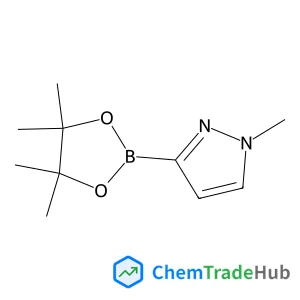
1-Methyl-3-(4,4,5,5-tetramethyl-1,3,2-dioxaborolan-2-yl)-1H-pyrazole
CAS番号:
1020174-04-2
分子式:
C10H17BN2O2

おすすめサプライヤー




免責事項
このページに表示される学術雑誌情報は、参考および研究目的のみを目的としています。当社は雑誌出版社とは提携しておらず、投稿の取り扱いも行っておりません。出版に関するお問い合わせは、各雑誌出版社に直接ご連絡ください。
表示されている情報に誤りがある場合は、support@chemtradehub.com までご連絡ください。迅速に確認し、対応いたします。