(S)-(9H-Fluoren-9-yl)methyl (pyrrolidin-2-ylmethyl)carbamate hydrochloride
CAS番号:
1217813-15-4
分子式:
C20H23ClN2O2
Jiafang Xu, Liwen Li, Jinxiang Liu, Xiaopu Wang, Youguo Yan, Jun Zhang
The inhibition properties of kinetic hydrate inhibitor (KHI) molecules on the dynamic growth of a hydrate/water interface are investigated by using molecular dynamics simulations. The shape of the hydrate interface is transformed from laminar to funnel by PVCaps. Results indicate that the inhibition effects not only depend on the adsorption capacity which was believed to determine inhibition, but also on the fact that PVCaps must have some non-binding-hydrate sites that don’t tend to combine with hydrate. By observing the time evolution of the distance between each component of PVCaps and hydrate, the heterocyclic ring of PVCaps mainly contributes to adsorption and can preferentially adjust itself to come into contact with a hydrate semi-large-cage. The distance between the amide of PVCaps and hydrate is about 4 Å and exceeds the range of a general hydrogen bond (3.5 Å), which proves that the non-binding-hydrate sites of PVCaps exist. On the other hand, the amide of PVCaps is at the intersection of the solid–liquid interface but has no adsorption affinity for hydrate, so this adsorption pattern indicates that the PVCaps at the hydrate interface are not stable. Due to this unstable adsorption, a repeated hydrate destruction phenomenon was revealed by the identification algorithm of hydrate and the calculation of the local number density of methane. The statistical evolution of water rings further proved the existence of non-binding-hydrate sites in PVCaps and the inhibition mechanism to destroy the hydrate cages by PVCaps. This unstable adsorption mechanism may shed light on the development of novel efficient KHIs.
Rizcky Tamarany, Dong Yun Shin, Sukho Kang, Hyangsoo Jeong, Jun Kim, Dong-Hee Lim
DOI: 10.1039/D1CP00236H
M. Pietrow, R. Zaleski, A. Wagner, P. Słomski, E. Hirschmann, R. Krause-Rehberg, M. O. Liedke, M. Butterling, D. Weinberger
DOI: 10.1039/D1CP00755F
Sandrine Denis-Quanquin, Alessio Bartocci, Florence Szczepaniak, Francois Riobé, Olivier Maury, Nicolas Giraud
DOI: 10.1039/D0CP06570F
Nikoleta Kotsina
DOI: 10.1039/D1CP00933H
Jing Xu
DOI: 10.1039/D1CP01351C
Niladri Sekhar Mondal, Subhadip Nath, Debnarayan Jana, Nanda Kumar Ghosh
DOI: 10.1039/D1CP01466H
Liang Song, Feng-Qi Zhao, Si-Yu Xu, Xue-Hai Ju
DOI: 10.1039/D1CP01135A
Xia Xu, Jianxiong Dai, Xing Guo, Cheng Qian, Pei Zhang, Yixiang Duan, Yonghui Tian
DOI: 10.1039/D1CP00903F
Aleksandr Bashkatov, Xuegeng Yang, Gerd Mutschke, Syed Sahil Hossain
DOI: 10.1039/D1CP00978H
Inga Kolling, Christoph Hölzl, Sho Imoto, Serena R. Alfarano, Hendrik Vondracek, Lukas Knake, Fabio Novelli, Claudius Hoberg, Jean-Blaise Brubach, Pascale Roy, Harald Forbert, Gerhard Schwaab, Dominik Marx, Martina Havenith
DOI: 10.1039/D1CP00703C
2-メトキシ-4-(メチルスルフィニル)アミンは、主に医薬品および農薬の製造に使用されます。また、合成化学の一部として研究用材料としても利用されます。
代替品としては、4,6-二クロロピラミジンアミンや他のピラミジン系化合物が考えられます。ただし、目的と用途によって最適な代替品は異なります。
6-氯-4-甲基-1H-吲哚の廃棄物は、適切な容器に収集し、密閉して保管します。温度は常温、湿度は低く、直射日光を避けて保管することを推奨します。廃棄処理は専門...
2-フローユロ-4-(トリフルオロメチル)ベンゾイドのCAS番号は207974-08-1です。この化合物はGHS分類で毒性物質と有害な反応物質として分類されます...
4-ニトロフェニルN-[(ベンゼルオキシルカーボンイル]グリシングリシングリシン酸は、室温で暗所に保管し、乾燥した環境で保存することを推奨します。容器は密閉性の...
イソデスロラタドリンの代替品としては、デスロラタドリンや他の抗ヒスタミン薬が挙げられます。具体的には、デスロラタドリン、ラセカミド、フェルタドリンなどが、症状や...
5-甲氧基-1,2,3,4-四氢异喹啉盐酸盐の一般的な合成方法は、メタノール中で5-メトキシ-1,2,3,4-四ヒュドロイソキシンを塩酸で塩化します。この反応で...
CAS番号6471-78-9の4-アミノ-5-メトキシ-2-トルエンサルホニック酸は、GHS分類では corrosive(腐食性)と識別されます。EUのREAC...
甲基孕酮の取り扱いは、PPE(個人保護具)の使用が必要な重要な安全事項を伴います。防塵マスク、ゴーグル、手袋を着用することが推奨されます。ドラフトチャンバーを使...

Physical Chemistry Chemical Physics (PCCP) is an international journal co-owned by 19 physical chemistry and physics societies from around the world. This journal publishes original, cutting-edge research in physical chemistry, chemical physics and biophysical chemistry. To be suitable for publication in PCCP, articles must include significant innovation and/or insight into physical chemistry; this is the most important criterion that reviewers and Editors will judge against when evaluating submissions. The journal has a broad scope and welcomes contributions spanning experiment, theory, computation and data science. Topical coverage includes spectroscopy, dynamics, kinetics, statistical mechanics, thermodynamics, electrochemistry, catalysis, surface science, quantum mechanics, quantum computing and machine learning. Interdisciplinary research areas such as polymers and soft matter, materials, nanoscience, energy, surfaces/interfaces, and biophysical chemistry are welcomed if they demonstrate significant innovation and/or insight into physical chemistry. Joined experimental/theoretical studies are particularly appreciated when complementary and based on up-to-date approaches.
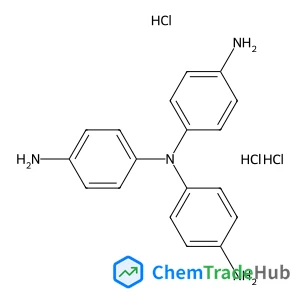
![[(5-Methyl-1,3,4-thiadiazol-2-yl)sulfanyl]acetic acid structure](https://static.chemtradehub.com/structs/509/50918-26-8-4ce8.webp "[(5-Methyl-1,3,4-thiadiazol-2-yl)sulfanyl]acetic acid structure")
![2-Methyl-2-propanyl {3-[4-(4,4,5,5-tetramethyl-1,3,2-dioxaborolan-2-yl)phenyl]-3-oxetanyl}carbamate structure](https://static.chemtradehub.com/structs/127/1279090-25-3-1b84.webp "2-Methyl-2-propanyl {3-[4-(4,4,5,5-tetramethyl-1,3,2-dioxaborolan-2-yl)phenyl]-3-oxetanyl}carbamate structure")