











Molecularly imprinted electrospun nanofibers for adsorption of 2,4-dinitrotoluene in water
文献情報
出版日
2018-05-31
DOI
10.1039/C8AN00734A
インパクトファクター
4.616
著者
Xiaoting Xue, Rui Lu, Yi Li, Qing Wang, Jiansheng Li, Lianjun Wang
原文を見る
要旨
The detection and adsorption of nitroaromatic compounds such as 2,4-dinitrotoluene (DNT) is of great importance, but the selective detection of trace DNT in water remains a challenge. Here, we report molecularly imprinted polymer (MIP) nanofibers fabricated by electrospinning using DNT as a template molecule and poly(allylamine) as a functional macromer. The physical and chemical properties of the nanofibers were characterized by Fourier transform infrared (FTIR) spectroscopy, X-ray photoelectron spectroscopy (XPS), and scanning electron microscopy (SEM), and the DNT adsorption and selectivity properties were also studied by high performance liquid chromatography (HPLC). The results show that the nanofibers prepared using 20 wt% poly(ethylene terephthalate) (PET) in solvent had a good morphology and an optimal ratio of poly(allylamine) and DNT, and the imprinted nanofibers showed specific adsorption of DNT, in accordance with the Freundlich isotherm model and Scatchard analysis. Furthermore, the imprinted nanofibers showed remarkable stability and reusability, losing only 3% of their performance after eight cycles. Thus, the imprinted nanofibers fabricated by this strategy could be used for trace DNT extraction, separation, and further construction of sensors in the near future.
関連文献
Single-molecule binding characterization of primosomal protein PriA involved in replication restart
Tzu-Yu Lee, Yi-Ching Li, Min-Guan Lin, Chwan-Deng Hsiao, Hung-Wen Li
2021-05-25
Paper
DOI: 10.1039/D1CP00638J
Computational prediction of the supramolecular self-assembling properties of organic molecules: the role of conformational flexibility of amide moieties
Laura Le Bras, Yves L. Dory, Benoît Champagne
2021-08-31
Paper
DOI: 10.1039/D1CP02675E
Characterization of cisplatin/membrane interactions by QM/MM energy decomposition analysis
Gustavo Cárdenas, Álvaro Pérez-Barcia, Marcos Mandado
2021-09-03
Paper
DOI: 10.1039/D1CP03382D
Infrared spectroscopy of CeO2 nanoparticles using Bergman's spectral representation: effects of phonon confinement and lattice strain
Leire del Campo, Domingos De Sousa Meneses
2021-05-25
Paper
DOI: 10.1039/D1CP01259B
Imaging intramolecular hydrogen migration with time- and momentum-resolved photoelectron diffraction
Fukiko Ota, Shigeru Abe, Keisuke Hatada, Kiyoshi Ueda
2021-07-30
Paper
DOI: 10.1039/D1CP02055B
Mass spectrometric and theoretical study on the formation of uranyl hydride from uranyl carboxylate
Xiuting Chen, Yu Gong
2021-08-16
Paper
DOI: 10.1039/D1CP03092B
Perspective of structural flexibility on selective inhibition towards CYP1B1 over CYP1A1 by α-naphthoflavone analogs
Ying Wang, Yupeng Zhang, Dong Wang, Zhaohu Luo, Fengjiao Zhang
2021-09-02
Paper
DOI: 10.1039/D1CP02541D
Accounting for the instantaneous disorder in the enzyme–substrate Michaelis complex to calculate the Gibbs free energy barrier of an enzyme reaction
Alejandro Cruz
2021-05-13
Paper
DOI: 10.1039/D1CP01338F
CNT/Al2O3 core–shell nanostructures for the electrochemical detection of dihydroxybenzene isomers
Muhammad Hamid Raza, Nicola Pinna, Nicola Donato, Giovanni Neri
2021-05-26
Paper
DOI: 10.1039/D1CP00315A
Glass transition and dynamics of semiflexible polymer brushes
Jian-Hua Huang, Dan-Dan Sun, Rong-Xing Lu
2021-05-28
Paper
DOI: 10.1039/D1CP00089F
こちらもおすすめ
化合物よくある質問
3-イチチルビフェニルはどのように合成されますか?
3-イチチルビフェニルは、ビフェニルとイチプロピオニトリルを回収率約90%で反応させて合成されます。触媒は通常、亜リチウムホウ素を用います。
5668-93-93-Ethylbiphenyl
化合物よくある質問
8-溴-5-三氟甲基喹啉はどのように合成されますか?
8-溴-5-三氟甲基喹啉は、5-トリフルオロメチル-2-メチル-1,3-ベンゼンジオールをブロモエタノールと反応させて生成します。この反応は塩基性条件下で行われ...
917251-92-48-Bromo-5-(trifluoro...
化合物よくある質問
ジメチル4-(4,4,5,5-テトラメチル-1,3,2-ドioxaborolan-2-基)-2,6-ピリジンジカルボイル酸フェニルアミニドの代替品はありますか?
ジメチル4-(4,4,5,5-テトラメチル-1,3,2-ドioxaborolan-2-基)-2,6-ピリジンジカルボイル酸フェニルアミニドの代替品としては、4-...
741709-66-0Dimethyl 4-(4,4,5,5-...
化合物よくある質問
N-(3,5-ヘキサクロロ-4-ピリドインイル)-8-メチオキシ-5-キノリンカーボン酸の市場動向や研究トレンドはどのようなものでしょうか?
N-(3,5-ヘキサクロロ-4-ピリドインイル)-8-メチオキシ-5-キノリンカーボン酸の市場動向は、主に産業用途での需要により影響を受けます。研究トレンドとし...
199871-63-1N-(3,5-Dichloro-4-py...
化合物よくある質問
イソステアロイルグリセリルは安全ですか?
イソステアロイルグリセリルは一般的に安全性が高いとされていますが、過度な使用や個人差により皮�owsん炎などの反応が起こる可能性があります。使用前に医師に相談す...
222723-55-92-[(5Z,8Z,11Z,14Z)-5...
化合物よくある質問
1-(二苯甲基)-3,3-二氟-氮杂环丁烷の市場動向や研究トレンドはどうですか?
1-(二苯甲基)-3,3-二氟-氮杂环丁烷の市場動向は、医薬品や合成化学の研究分野で注目を集めています。新興研究は、該当化合物の合成改良と生体内での作用メカニズ...
288315-02-61-Benzhydryl-3,3-dif...
化合物よくある質問
3-チオフェンスチオールの物理化学的性質は何ですか?
3-チオフェンスチオールのCAS番号は7774-73-4です。結晶性の白色粉末で、分子量は122.17です。この化合物は水に微溶解し、エタノールやジクロロメタン...
7774-73-43-Thiophenethiol
化合物よくある質問
2-Methyl-2-propanyl (2S)-2-(aminomethyl)-1-piperidinecarboxylateは安全ですか?
2-Methyl-2-propanyl (2S)-2-(aminomethyl)-1-piperidinecarboxylateは一定の安全性基準を満たしていま...
475105-35-22-Methyl-2-propanyl ...
化合物よくある質問
CAS番号1316822-90-8の化合物は安全ですか?
CAS番号1316822-90-8の化合物は安全性に関しては評価が不足していますが、一般的には生物学的に活性な物質であり、取り扱いには適切な安全防護措置が必要で...
1316822-90-8Gal beta(1-3)[Neu5Ac...
化合物よくある質問
Tert-butyl 2-(2-羟基乙基)哌嗪-1-羧酸はどのように保存すればよいですか?
Tert-butyl 2-(2-羟基乙基)哌嗪-1-羧酸は、冷暗所で保存し、直射日光から遠ざけてください。容器は密閉し、高湿度や高温を避けて保管してください。
517866-79-4Tert-butyl 2-(2-hydr...
掲載誌
Analyst

CiteScore:
7.8
自己引用率:
5.6%
年間論文数:
653
Analyst publishes analytical and bioanalytical research that reports premier fundamental discoveries and inventions, and the applications of those discoveries, unconfined by traditional discipline barriers.
おすすめ化合物
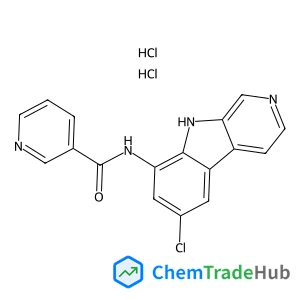
![N-{[(2-Methyl-2-propanyl)oxy]carbonyl}-L-methionylglycine structure](https://static.chemtradehub.com/structs/234/23446-03-9-e1e5.webp "N-{[(2-Methyl-2-propanyl)oxy]carbonyl}-L-methionylglycine structure")
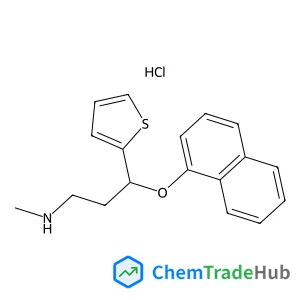
N-Methyl-3-(1-naphthyloxy)-3-(2-thienyl)-1-propanamine hydrochloride (1:1)
CAS番号:
1188266-11-6
分子式:
C18H20ClNOS
おすすめサプライヤー




免責事項
このページに表示される学術雑誌情報は、参考および研究目的のみを目的としています。当社は雑誌出版社とは提携しておらず、投稿の取り扱いも行っておりません。出版に関するお問い合わせは、各雑誌出版社に直接ご連絡ください。
表示されている情報に誤りがある場合は、support@chemtradehub.com までご連絡ください。迅速に確認し、対応いたします。