











The role of ionic liquids in the biocatalytic evaluation of bisphenol levels as contaminant: an automatic approach
文献情報
出版日
2018-04-17
DOI
10.1039/C8AN00154E
インパクトファクター
4.616
著者
Ana Raquel Costa, Marieta L. C. Passos, Sarah A. P. Pereira, M. Lúcia M. F. S. Saraiva
原文を見る
要旨
An automatic assay was developed that is intended to be a generic tool for evaluation of a horseradish peroxidase activity in different ionic liquids (ILs). Ionic liquids with different characteristics were used and their effects on the enzymatic reaction, were compared with those obtained with conventional organic solvents. In addition, ILs were tested as solvents for the enzyme substrate (bisphenol A (BPA)). ILs were shown to be a good alternative to conventional organic solvents from either the effect on enzymatic activity or the solubilization of bisphenol. Since bisphenol A is an endocrine disruptor frequently used in plastic industries, it was also applied the developed enzymatic methodology for quantification of this compound in real beverage samples. To increase the sensitivity (already increased by the use of an IL) and the selectivity of the methodology, a sample pre-treatment using a molecular recognition solid phase extraction was applied. Finally, the methodology presented detection and quantification limits of 7.73 × 10⁻⁴ and 1.29 × 10⁻³ mmol L−1 and a linear range up to 1.00 mmol L−1, allowing accurate and reliable quantifications of bisphenol in beer and cola drink samples. This work confirmed the potential of a sequential injection analysis (SIA) system as a simple, versatile, robust, and rapid analytical tool for automating enzymatic assays in ILs medium and, at the same time, showed it to be a relevant automatic alternative for routine determinations of bisphenol A in food samples.
関連文献
Raman and ROA analyses of twisted anthracenes: connecting vibrational and electronic/photonic structures
Luis Palomo, Fernando Gordillo Gámez, Ori Gidron, Juan Casado, Francisco J. Ramírez
2021-05-31
Paper
DOI: 10.1039/D1CP01505B
First principles characterisation of bio–nano interface
Ian Rouse, David Power, Erik G. Brandt, Matthew Schneemilch, Konstantinos Kotsis, Nick Quirke, Alexander P. Lyubartsev, Vladimir Lobaskin
2021-06-10
Paper
DOI: 10.1039/D1CP01116B
Unravelling the structures of sodiated β-cyclodextrin and its fragments
Jordan M. Rabus, Robert P. Pellegrinelli, Ali Hassan Abi Khodr, Benjamin J. Bythell, Thomas R. Rizzo, Eduardo Carrascosa
2021-06-07
Paper
DOI: 10.1039/D1CP01058A
Quantitative analysis of ACE2 binding to coronavirus spike proteins: SARS-CoV-2 vs. SARS-CoV and RaTG13
Zhendong Li
2021-05-28
Paper
DOI: 10.1039/D1CP01075A
Glass transition and dynamics of semiflexible polymer brushes
Jian-Hua Huang, Dan-Dan Sun, Rong-Xing Lu
2021-05-28
Paper
DOI: 10.1039/D1CP00089F
Biliverdin chiral derivatives as chiroptical switches for pH and metal cation sensing
Simone Ghidinelli, Giuseppe Mazzeo, Stefan E. Boiadjiev, David A. Lightner
2021-08-26
Paper
DOI: 10.1039/D1CP02571F
Origin of asynchronicity in Diels–Alder reactions
Pascal Vermeeren, Trevor A. Hamlin
2021-09-03
Paper
DOI: 10.1039/D1CP02456F
The impact of insufficient time resolution on dye regeneration lifetime determined using transient absorption spectroscopy
Inseong Cho, Pawel Wagner, Peter C. Innis, Attila J. Mozer
2021-05-29
Paper
DOI: 10.1039/D1CP01217G
Correction: Thermoelectric properties of CZTS thin films: effect of Cu–Zn disorder
E. Isotta, N. Ataollahi, A. Chiappini, C. Malerba, S. Luong, V. Trifiletti, O. Fenwick, P. Scardi
2021-06-21
Correction
DOI: 10.1039/D1CP90124A
Photophysical properties of N-methyl and N-acetyl substituted alloxazines: a theoretical investigation
Huimin Guo, Xiaolin Ma, Zhiwen Lei, Yang Qiu, Jianzhang Zhao, Bernhard Dick
2021-05-25
Paper
DOI: 10.1039/D1CP01201K
こちらもおすすめ
化合物よくある質問
3-イチチルビフェニルはどのように合成されますか?
3-イチチルビフェニルは、ビフェニルとイチプロピオニトリルを回収率約90%で反応させて合成されます。触媒は通常、亜リチウムホウ素を用います。
5668-93-93-Ethylbiphenyl
化合物よくある質問
8-溴-5-三氟甲基喹啉はどのように合成されますか?
8-溴-5-三氟甲基喹啉は、5-トリフルオロメチル-2-メチル-1,3-ベンゼンジオールをブロモエタノールと反応させて生成します。この反応は塩基性条件下で行われ...
917251-92-48-Bromo-5-(trifluoro...
化合物よくある質問
ジメチル4-(4,4,5,5-テトラメチル-1,3,2-ドioxaborolan-2-基)-2,6-ピリジンジカルボイル酸フェニルアミニドの代替品はありますか?
ジメチル4-(4,4,5,5-テトラメチル-1,3,2-ドioxaborolan-2-基)-2,6-ピリジンジカルボイル酸フェニルアミニドの代替品としては、4-...
741709-66-0Dimethyl 4-(4,4,5,5-...
化合物よくある質問
N-(3,5-ヘキサクロロ-4-ピリドインイル)-8-メチオキシ-5-キノリンカーボン酸の市場動向や研究トレンドはどのようなものでしょうか?
N-(3,5-ヘキサクロロ-4-ピリドインイル)-8-メチオキシ-5-キノリンカーボン酸の市場動向は、主に産業用途での需要により影響を受けます。研究トレンドとし...
199871-63-1N-(3,5-Dichloro-4-py...
化合物よくある質問
イソステアロイルグリセリルは安全ですか?
イソステアロイルグリセリルは一般的に安全性が高いとされていますが、過度な使用や個人差により皮�owsん炎などの反応が起こる可能性があります。使用前に医師に相談す...
222723-55-92-[(5Z,8Z,11Z,14Z)-5...
化合物よくある質問
1-(二苯甲基)-3,3-二氟-氮杂环丁烷の市場動向や研究トレンドはどうですか?
1-(二苯甲基)-3,3-二氟-氮杂环丁烷の市場動向は、医薬品や合成化学の研究分野で注目を集めています。新興研究は、該当化合物の合成改良と生体内での作用メカニズ...
288315-02-61-Benzhydryl-3,3-dif...
化合物よくある質問
3-チオフェンスチオールの物理化学的性質は何ですか?
3-チオフェンスチオールのCAS番号は7774-73-4です。結晶性の白色粉末で、分子量は122.17です。この化合物は水に微溶解し、エタノールやジクロロメタン...
7774-73-43-Thiophenethiol
化合物よくある質問
2-Methyl-2-propanyl (2S)-2-(aminomethyl)-1-piperidinecarboxylateは安全ですか?
2-Methyl-2-propanyl (2S)-2-(aminomethyl)-1-piperidinecarboxylateは一定の安全性基準を満たしていま...
475105-35-22-Methyl-2-propanyl ...
化合物よくある質問
CAS番号1316822-90-8の化合物は安全ですか?
CAS番号1316822-90-8の化合物は安全性に関しては評価が不足していますが、一般的には生物学的に活性な物質であり、取り扱いには適切な安全防護措置が必要で...
1316822-90-8Gal beta(1-3)[Neu5Ac...
化合物よくある質問
Tert-butyl 2-(2-羟基乙基)哌嗪-1-羧酸はどのように保存すればよいですか?
Tert-butyl 2-(2-羟基乙基)哌嗪-1-羧酸は、冷暗所で保存し、直射日光から遠ざけてください。容器は密閉し、高湿度や高温を避けて保管してください。
517866-79-4Tert-butyl 2-(2-hydr...
掲載誌
Analyst

CiteScore:
7.8
自己引用率:
5.6%
年間論文数:
653
Analyst publishes analytical and bioanalytical research that reports premier fundamental discoveries and inventions, and the applications of those discoveries, unconfined by traditional discipline barriers.
おすすめ化合物
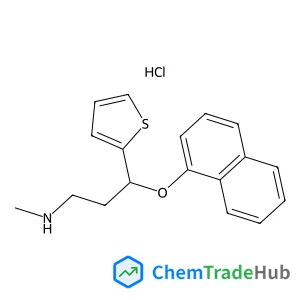
N-Methyl-3-(1-naphthyloxy)-3-(2-thienyl)-1-propanamine hydrochloride (1:1)
CAS番号:
1188266-11-6
分子式:
C18H20ClNOS
おすすめサプライヤー




免責事項
このページに表示される学術雑誌情報は、参考および研究目的のみを目的としています。当社は雑誌出版社とは提携しておらず、投稿の取り扱いも行っておりません。出版に関するお問い合わせは、各雑誌出版社に直接ご連絡ください。
表示されている情報に誤りがある場合は、support@chemtradehub.com までご連絡ください。迅速に確認し、対応いたします。