












![[4-(Heptyloxy)phenyl]boronic acid structure](https://static.chemtradehub.com/structs/136/136370-19-9-ad33.webp "[4-(Heptyloxy)phenyl]boronic acid structure")
Cleavage of macromolecular RAFT chain transfer agents by sodium azide during characterization by aqueous GPC
文献情報
出版日
2017-06-01
DOI
10.1039/C7PY00682A
インパクトファクター
5.582
著者
Reece W. Lewis, Richard A. Evans, Nino Malic, Kei Saito
原文を見る
要旨
Accurate and reliable analysis of polymers by GPC is vital in the field of controlled radical polymerisation. Often, water-soluble polymers are analysed by aqueous gel permeation chromatography (GPC) in a solvent containing dilute sodium azide as an anti-microbial agent. Previous reports have shown that sodium azide at high concentration is able to remove terminal CTA groups from polymer chains, producing thiol-terminated polymers. This study demonstrates that GPC sample preparation of RAFT polymers in aqueous solvents containing dilute (200 ppm) sodium azide can cause significant changes in the measured molecular weight distribution. These changes occur within hours of dissolving the polymer sample and are shown to be due to cleavage of the CTA in the polymer chain together with disulfide coupling of the resulting polymeric thiols. The extent to which this occurs is strongly dependent on the CTA attached to the polymer; an almost 10-fold difference in the rate of CTA removal is observed between different RAFT agents. The by-product of the reaction between sodium azide and RAFT polymers is also investigated and shown to be an unstable thiatriazole-functionalised Z group. The thiatriazole then degrades further to form a nitrile-functionalised Z group, N2 and elemental sulfur.
関連文献
A highly sensitive and selective fluorescent molecular sensor for Pb(ii) based on a calix[4]arene bearing four dansyl groups
Rémi Métivier, Isabelle Leray, Bernard Valeur
2003-03-26
Communication
DOI: 10.1039/B301323E
Kumada–Corriu coupling of Grignard reagents, probed with a chiral Grignard reagent
Bettina Hölzer, Reinhard W. Hoffmann
2003-02-19
Communication
DOI: 10.1039/B300033H
Formal radical cyclization onto benzene rings—a general method proceeding via cross-conjugated dienones
Derrick L. J. Clive, Stephen P. Fletcher, (in part) Mingzhao Zhu
2003-01-20
Communication
DOI: 10.1039/B212223E
Renaissance of immobilized catalysts. New types of polymer-supported catalysts, ‘microencapsulated catalysts’, which enable environmentally benign and powerful high-throughput organic synthesis
Shū Kobayashi, Ryo Akiyama
2002-12-12
Feature Article
DOI: 10.1039/B207445A
Opal gel templated synthesis of oblate titania opal materials
Lijun Ji, Jianhua Rong, Zhenzhong Yang
2003-04-02
Communication
DOI: 10.1039/B300825H
Formation and destruction of the guanine quartet in solution observed by cold-spray ionization mass spectrometry
Shigeru Sakamoto, Isao Saito
2003-02-17
Communication
DOI: 10.1039/B212432G
Ion-exchange synthesis and magneto-optical spectra of colored magnetic thin films composed of metal(ii) hexacyanochromate(iii)
Masanori Tozawa, Norimichi Kojima, Kazuhito Hashimoto
2003-04-22
Communication
DOI: 10.1039/B212861F
Polyoxometalate-catalysed epoxidation of 1-octene with hydrogen peroxide in microemulsions coupled with ultrafiltration
Arnold Lambert, Pawel Plucinski, Ivan V. Kozhevnikov
2003-02-17
Communication
DOI: 10.1039/B300494P
Pyridine–sugar conjugates as potent inhibitors of enzyme-catalysed glycosidehydrolysis
Peter A. Nkansah, Alan H. Haines, N. Patrick J. Stamford
2003-02-20
Communication
DOI: 10.1039/B211399F
Understanding the building-up process of three dimensional open-framework metal phosphates: Acid degradation of the 3D structures to lower dimensional structures
Amitava Choudhury
2003-01-06
Communication
DOI: 10.1039/B210037C
こちらもおすすめ
化合物よくある質問
2-ブロモ-9,9-ジフェニル-9H-フルオレンの主な用途は何ですか?
2-溴-9,9-二苯基芴は、医薬品、工業材料、有機合成の研究分野で応用されます。特に、レーザー材料や機能性ポリマーの合成に使用されることがあります。また、蛍光色...
474918-32-62-Bromo-9,9-diphenyl...
化合物よくある質問
四氯化铱の市場動向や研究トレンドはどうですか?
四氯化铱の市場は研究開発分野で注目されており、特にナノ技術や金属有機框架(MOFs)の分野での需要が増加傾向にあります。価格は安定しており、中国や韓国での生産が...
207399-11-9Tetrachloroiridium h...
882-06-44-Nitrocinnamic acid
化合物よくある質問
1-(4-溴-3-氟苯基)-2-氯乙酮を含む廃棄物はどのように処理すべきですか?
1-(4-溴-3-氟苯基)-2-氯乙酮 (CAS番号: 1260857-14-4) の廃棄物は専門的な廃棄処理が必要です。まず、廃棄物は密閉された容器に収集し、...
1260857-14-41-(4-Bromo-3-fluorop...
化合物よくある質問
苦参酚Kとは何ですか?
苦参酚Kは、CAS番号101236-49-1を持つ化合物で、主に天然由来の生薬から抽出されます。この化合物は、抗炎症作用や抗癌作用を持つことが報告されています。
101236-49-1Kushenol K
化合物よくある質問
POTASSIUM (1-(TERTBUTOXYCARBONYL)AZETIDIN-3-YL)TRIFLUOROBORATE を含む廃棄物はどのように処理すべきですか?
POTASSIUM (1-(TERTBUTOXYCARBONYL)AZETIDIN-3-YL)TRIFLUOROBORATE を含む廃棄物は、まず安全なエント...
1430219-73-0Potassium (1-(tert-b...
化合物よくある質問
4-庚基-4’-联苯羧酸の市場動向や研究トレンドはどうですか?
4-庚基-4’-聯苯羧酸は、特殊化学品や合成化学の分野で用いられる化学物質ですが、市場動向としては、研究開発の進展とともに需要が増加しています。また、環境配慮型...
58573-94-74'-Heptyl-4-biphenyl...
化合物よくある質問
6-ブロモ-3-メトキシ-1-フェニル-1H-インドゾールを含む廃棄物はどのように処理すべきですか?
6-ブロモ-3-メトキシ-1-フェニル-1H-インドゾールを含む廃棄物は、適切な化学廃棄処理が必要です。通常、廃棄物は密閉容器に収集され、専門の廃棄処理業者に引...
1332527-03-36-Bromo-3-methoxy-1-...
化合物よくある質問
4,4-二甲基-2-吡咯烷酮はどの業界で使用されていますか?
4,4-二甲基-2-吡咯烷酮は医薬、ポリマー、センサー、半導体などの業界で広く使用されています。特に溶媒としての性能が高く評価されています。
66899-02-34,4-dimethylpyrrolid...
51312-42-6Sodium Phosphotungst...
掲載誌
Polymer Chemistry

CiteScore:
8.6
自己引用率:
7.3%
年間論文数:
457
Polymer Chemistry welcomes submissions in all areas of polymer science that have a strong focus on macromolecular chemistry. Manuscripts may cover a broad range of fields, yet no direct application focus is required.
おすすめ化合物
![N-[(Benzyloxy)carbonyl]serine structure](https://static.chemtradehub.com/structs/276/2768-56-1-77f7.webp "N-[(Benzyloxy)carbonyl]serine structure")
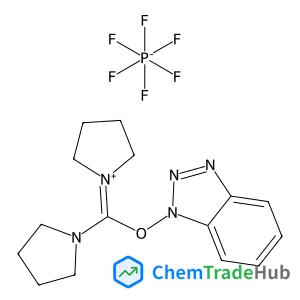
(1H-Benzotriazol-1-yloxy)(di-1-pyrrolidinyl)methylium hexafluorophosphate
CAS番号:
105379-24-6
分子式:
C15H21F6N5OP
![4-{2-[4-(2-Methyl-2-propanyl)phenyl]ethoxy}quinazoline structure](https://static.chemtradehub.com/structs/120/120928-09-8-d3db.webp "4-{2-[4-(2-Methyl-2-propanyl)phenyl]ethoxy}quinazoline structure")
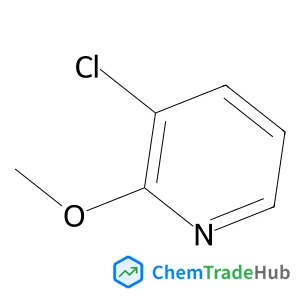
おすすめサプライヤー





免責事項
このページに表示される学術雑誌情報は、参考および研究目的のみを目的としています。当社は雑誌出版社とは提携しておらず、投稿の取り扱いも行っておりません。出版に関するお問い合わせは、各雑誌出版社に直接ご連絡ください。
表示されている情報に誤りがある場合は、support@chemtradehub.com までご連絡ください。迅速に確認し、対応いたします。