












“Protrusions” or “holes” in graphene: which is the better choice for sodium ion storage?‡
文献情報
出版日
2017-03-15
DOI
10.1039/C7EE00329C
インパクトファクター
38.532
著者
Yijun Yang, Dai-Ming Tang, Chao Zhang, Yihui Zhang, Qifeng Liang, Shimou Chen, Qunhong Weng, Min Zhou, Yanming Xue, Jiangwei Liu, Jinghua Wu, Qiu Hong Cui, Chao Lian, Guolin Hou, Fangli Yuan, Xi Wang
原文を見る
要旨
The main challenge associated with sodium-ion battery (SIB) anodes is a search for novel candidate materials with high capacity and excellent rate capability. The most commonly used and effective route for graphene-based anode design is the introduction of in-plane “hole” defects via nitrogen-doping; this creates a spacious reservoir for storing more energy. Inspired by mountains in nature, herein, we propose another way – the introduction of blistering in graphene instead of making “holes”; this facilitates adsorbing/inserting more Na+ ions. In order to properly answer the key question: ““protrusions” or “holes” in graphene, which is better for sodium ion storage?”, two types of anode materials with a similar doping level were designed: a phosphorus-doped graphene (GP, with protrusions) and a nitrogen-doped graphene (GN, with holes). As compared with GN, the GP anode perfectly satisfies all the desired criteria: it reveals an ultrahigh capacity (374 mA h g−1 after 120 cycles at 25 mA g−1) comparable to the best graphite anodes in a standard Li-ion battery (∼372 mA h g−1), and exhibits an excellent rate capability (210 mA h g−1 at 500 mA g−1). In situ transmission electron microscopy (TEM) experiments and density functional theory (DFT) calculations were utilized to uncover the origin of the enhanced electrochemical activity of “protrusions” compared to “holes” in SIBs, down to the atomic scale. The introduction of protrusions through P-doping into graphene is envisaged to be a novel effective way to enhance the capacity and rate performance of SIBs.
関連文献
First-principles investigation of novel polymorphs of Mg2C
Changzeng Fan, Jian Li
2015-04-10
Paper
DOI: 10.1039/C5CP00001G
Theoretical study of electronic and tribological properties of h-BNC2/graphene, h-BNC2/h-BN and h-BNC2/h-BNC2 bilayers
Narjes Ansari, Francesc Illas
2015-03-20
Paper
DOI: 10.1039/C5CP00381D
Equilibration processes during gas uptake inside narrow pores
Joshua M. Vann, Samantha L. Molnar, M. Mercedes Calbi
2015-04-16
Paper
DOI: 10.1039/C5CP00502G
Structural phase transformation and microwave dielectric studies of SmNb1−x(Si1/2Mo1/2)xO4 compounds with fergusonite structure
S. D. Ramarao, V. R. K. Murthy
2015-04-10
Paper
DOI: 10.1039/C5CP00569H
Improving As(iii) adsorption on graphene based surfaces: impact of chemical doping
Diego Cortés-Arriagada, Alejandro Toro-Labbé
2015-04-02
Paper
DOI: 10.1039/C5CP01313E
Genericity of confined chemical garden patterns with regard to changes in the reactants
Florence Haudin, V. Brasiliense, Julyan H. E. Cartwright, Fabian Brau, A. De Wit
2015-04-15
Paper
DOI: 10.1039/C5CP00068H
Atomic structure of biodegradable Mg-based bulk metallic glass
2015-04-15
Paper
DOI: 10.1039/C4CP03714F
Evidence of monolayer formation via diazonium grafting with a radical scavenger: electrochemical, AFM and XPS monitoring
T. Menanteau, E. Levillain, A. J. Downard, T. Breton
2015-04-14
Paper
DOI: 10.1039/C5CP01401H
Tunable electronic properties in the van der Waals heterostructure of germanene/germanane
Run-wu Zhang, Chang-wen Zhang, Wei-xiao Ji, Feng Li, Miao-juan Ren, Ping Li, Min Yuan, Pei-ji Wang
2015-03-31
Paper
DOI: 10.1039/C5CP00875A
こちらもおすすめ
化合物よくある質問
オステニ二甲磺酸塩に適用される法規ガイドラインは何ですか?
オステニ二甲磺酸塩は、GHS分類に基づき corrosive 物質として分類されます。REACH規則では、該当物質の登録が要求される可能性があります。また、FD...
2070014-82-1N-(2-{[2-(Dimethylam...
化合物よくある質問
環丁基肼盐酸盐は安全ですか?
環丁基肼盐酸盐は毒性があり、吸入や皮膚接触は有害です。使用時の安全対策として、密閉システムを使用し、適切な排気設備を備えた場所で作業することが推奨されます。
1156980-49-2Cyclobutylhydrazine ...
化合物よくある質問
N-(4-パリドン基ソニルフェニル)硫代イソシアネートを取り扱う際の実験室安全事項は何ですか?
N-(4-パリドン基ソニルフェニル)硫代イソシアネートは高毒性で、皮膚や吸入による毒性があります。取り扱う際は防毒マスク、保護用手袋、保護眼鏡などのPPEを着用...
7356-55-01-[(4-Isothiocyanato...
化合物よくある質問
5-ヒドロキシ-1,3-ジヒドロ-2H-インドン-2-酮の物理化学的性質は何ですか?
CAS番号3416-18-0の5-ヒドロキシ-1,3-ジヒドロ-2H-インドン-2-酮は、結晶性の白色粉末です。分子量は228.25であり、 aqueous m...
3416-18-05-Hydroxy-1,3-dihydr...
化合物よくある質問
O-苄基-D-丝氨醇はどのように合成されますか?
O-苄基-D-丝氨醇は、D-アミノ酸とベンゼン環の経由で合成されます。触媒としてジメチルアミノピリジンが使用され、選択性は高いです。一般的な収率は約90%です。
58577-88-1(s)-2-Amino-3-benzyl...
化合物よくある質問
ナトリウム3-ヒドロキシbutano酸とは何ですか?
ナトリウム3-ヒドロキシbutano酸は、CAS番号13613-65-5で登録されている化合物です。この化合物は、(3R)-3-ヒドロキシbutano酸とナトリ...
13613-65-5sodium;(3R)-3-hydrox...
化合物よくある質問
1-(二苯甲基)-4-甲基ベンゼンの物理化学的性質は何ですか?
CAS番号603-37-2の1-(二苯甲基)-4-甲基ベンゼンは、結晶性の固体で、分子量は244.28であり、水中的には微溶です。この化合物は有機反応において中...
603-37-21-(Diphenylmethyl)-4...
化合物よくある質問
ネアミン塩酸塩の物理化学的性質は何ですか?
ネアミン塩酸塩の分子量は321.19であり、結晶性の白色粉末です。この化合物は水に溶けやすく、pHが低くなると不溶性になります。反応活性は高く、水溶液中の酸化還...
15446-43-2NEAMINE HYDROCHLORID...
化合物よくある質問
偶氮二甲酰二哌啶の主な用途は何ですか?
偶氮二甲酰二哌啶は、医薬品、染料、高 Então 剤、触媒、溶媒、量論試薬など、様々な分野で使用されています。特に、高 Enough 反応において、グリコール酸...
10465-81-3(E)-1,2-Diazenediylb...
664969-54-44-[(2E)-3-Phenyl-2-p...
掲載誌
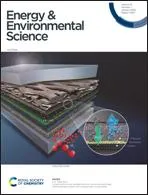
Energy & Environmental Science
CiteScore:
32.34
自己引用率:
3.4%
年間論文数:
481
Energy & Environmental Science is an international journal dedicated to publishing exceptionally important and high quality, agenda-setting research tackling the key global and societal challenges of ensuring the provision of energy and protecting our environment for the future. The scope is intentionally broad and the journal recognises the complexity of issues and challenges relating to energy conversion and storage, alternative fuel technologies and environmental science. For work to be published it must be linked to the energy-environment nexus and be of significant general interest to our community-spanning readership. All scales of studies and analysis, from impactful fundamental advances, to interdisciplinary research across the (bio)chemical, (bio/geo)physical sciences and chemical engineering disciplines are welcomed. Topics include, but are not limited to, the following: Solar energy conversion and photovoltaics Solar fuels and artificial photosynthesis Fuel cells Hydrogen storage and (bio) hydrogen production Materials for energy systems Capture, storage and fate of CO2, including chemicals and fuels from CO2 Catalysis for a variety of feedstocks (for example, oil, gas, coal, biomass and synthesis gas) Biofuels and biorefineries Materials in extreme environments Environmental impacts of energy technologies Global atmospheric chemistry and climate change as related to energy systems Water-energy nexus Energy systems and networks Globally applicable principles of energy policy and techno-economics
おすすめ化合物
![2-Azaspiro[4.5]decane-3,8-dione structure](https://static.chemtradehub.com/structs/914/914780-96-4-e94b.webp "2-Azaspiro[4.5]decane-3,8-dione structure")
![N-[2,6-Di(9-anthryl)-4-oxido-8,9,10,11,12,13,14,15-octahydrodinaphtho[2,1-d:1',2'-f][1,3,2]dioxaphosphepin-4-yl]-1,1,1-trifluoromethanesulfonamide structure](https://static.chemtradehub.com/structs/122/1227374-64-2-cdb5.webp "N-[2,6-Di(9-anthryl)-4-oxido-8,9,10,11,12,13,14,15-octahydrodinaphtho[2,1-d:1',2'-f][1,3,2]dioxaphosphepin-4-yl]-1,1,1-trifluoromethanesulfonamide structure")
おすすめサプライヤー




免責事項
このページに表示される学術雑誌情報は、参考および研究目的のみを目的としています。当社は雑誌出版社とは提携しておらず、投稿の取り扱いも行っておりません。出版に関するお問い合わせは、各雑誌出版社に直接ご連絡ください。
表示されている情報に誤りがある場合は、support@chemtradehub.com までご連絡ください。迅速に確認し、対応いたします。