











![[5-fluoro-2-(morpholine-4-carbonyl)phenyl]boronic acid structure](https://static.chemtradehub.com/structs/121/1217501-26-2-505c.webp "[5-fluoro-2-(morpholine-4-carbonyl)phenyl]boronic acid structure")
Clarifying the role of cryo- and lyo-protectants in the biopreservation of proteins
文献情報
出版日
2018-03-05
DOI
10.1039/C7CP08029H
インパクトファクター
3.676
著者
Andrea Arsiccio, Roberto Pisano
原文を見る
要旨
Biopharmaceuticals are frequently stored in the frozen state to avoid rapid degradation. Moreover, therapeutic proteins are frequently made into a dried form to provide long-term storage. However, both freezing and drying stresses can result in protein unfolding and aggregation. Thus, a proper formulation, containing suitable excipients, must be used to avoid loss of activity. Here, the conformational stability of a model protein, human growth hormone, is studied during freezing, and in the dried state as well, using molecular dynamics. The impact of the ice–water interface and of water removal is deeply investigated, and the role of protectants in preventing denaturation phenomena is addressed. We found that good cryo-protectants not always are equally effective as lyo-protectants, and experimental data confirmed simulation results. From this analysis, we also discovered that the interaction of stabilizers with specific amino acid sequences of the protein, rather than with the molecule as a whole, seems to be a crucial issue in the preservation of protein structure. This finding was confirmed for another protein, i.e., lactate dehydrogenase, thus suggesting that it is a generally applicable result. Remarkably, those sequences which unfolded during freezing and drying, generally coincided with the aggregation prone regions of the protein.
関連文献
The O K−2V spectrum of CO: the influence of the second core-hole
S. Carniato, R. Püttner, J. B. Martins, D. Céolin, R. Feifel
2021-04-22
Paper
DOI: 10.1039/D1CP00607J
In situ electrochemical Raman investigation of charge storage in rGO and N-doped rGO
Rohit Yadav, Prerna Joshi, Masanori Hara, Masamichi Yoshimura
2021-05-06
Paper
DOI: 10.1039/D1CP00248A
Dopants and grain boundary effects in monolayer MoS2: a first-principles study
Xiaoqian Qiu, Yiren Wang, Yong Jiang
2021-05-06
Paper
DOI: 10.1039/D1CP00156F
Photon-induced deactivations of multiple traps in CH3NH3PbI3 perovskite films by different photon energies
Asmida Herawati, Hui-Ching Lin, Shun-Hsiang Chan, Tsong-Shin Lim, Forest Shih-Sen Chien
2021-04-26
Paper
DOI: 10.1039/D1CP00974E
Observation and mechanism of cryo N2 cleavage by a tantalum cluster
Daniela V. Fries, Matthias P. Klein, Annika Steiner, Marc H. Prosenc, Gereon Niedner-Schatteburg
2021-05-07
Paper
DOI: 10.1039/D0CP06208A
Interaction topologies of the S⋯O chalcogen bond: the conformational equilibrium of the cyclohexanol⋯SO2 cluster
Rizalina T. Saragi, Marcos Juanes, Gang Feng, Alberto Lesarri
2021-04-14
Paper
DOI: 10.1039/D1CP00997D
Challenges in the synthesis of corannulene-based non-planar nanographenes on Au(111) surfaces
Roberto Robles, Jesus Castro-Esteban, Dulce Rey, Dolores Pérez, Diego Peña
2021-04-13
Paper
DOI: 10.1039/D1CP01212F
An ultra-sensitive gas sensor based on a two-dimensional manganese porphyrin monolayer
Ze-Wen Hao, Mi-Mi Dong, Rui-Qin Zhang, Chuan-Kui Wang, Xiao-Xiao Fu
2021-04-22
Paper
DOI: 10.1039/D1CP00747E
Insights into the sodiation mechanism of hard carbon-like materials from electrochemical impedance spectroscopy
Konstantin Schutjajew, Tim Tichter, Jonathan Schneider, Markus Antonietti, Christina Roth, Martin Oschatz
2021-04-29
Paper
DOI: 10.1039/D1CP00610J
Ligand-to-metal charge transfer of a pyridine surface complex on TiO2 for selective dehydrogenative cross-coupling with benzene
Shimpei Naniwa, Shinichiro Hishitani
2021-04-15
Paper
DOI: 10.1039/D1CP00496D
こちらもおすすめ
化合物よくある質問
2-メトキシ-4-(メチルスルフィニル)アミンの主な用途は何ですか?
2-メトキシ-4-(メチルスルフィニル)アミンは、主に医薬品および農薬の製造に使用されます。また、合成化学の一部として研究用材料としても利用されます。
41608-73-52-Methoxy-4-(methyls...
118684-13-24-(Bromomethyl)-3-me...
化合物よくある質問
4,6-二氯-N-甲基ピラミジンアミンの代替品はありますか?
代替品としては、4,6-二クロロピラミジンアミンや他のピラミジン系化合物が考えられます。ただし、目的と用途によって最適な代替品は異なります。
10397-15-64,6-Dichloro-N-methy...
化合物よくある質問
6-氯-4-甲基-1H-吲哚を含む廃棄物はどのように処理すべきですか?
6-氯-4-甲基-1H-吲哚の廃棄物は、適切な容器に収集し、密閉して保管します。温度は常温、湿度は低く、直射日光を避けて保管することを推奨します。廃棄処理は専門...
885520-84-36-chloro-4-methyl-1H...
化合物よくある質問
2-フローユロ-4-(トリフルオロメチル)ベンゾイドについて「に適用される法規ガイドラインは何ですか」
2-フローユロ-4-(トリフルオロメチル)ベンゾイドのCAS番号は207974-08-1です。この化合物はGHS分類で毒性物質と有害な反応物質として分類されます...
207974-08-1[2-Fluoro-4-(trifluo...
化合物よくある質問
4-ニトロフェニルN-[(ベンゼルオキシルカーボンイル]グリシングリシングリシン酸はどのように保存すればよいですか?
4-ニトロフェニルN-[(ベンゼルオキシルカーボンイル]グリシングリシングリシン酸は、室温で暗所に保管し、乾燥した環境で保存することを推奨します。容器は密閉性の...
19811-64-44-Nitrophenyl N-[(be...
化合物よくある質問
イソデスロラタドリンの代替品はありますか?
イソデスロラタドリンの代替品としては、デスロラタドリンや他の抗ヒスタミン薬が挙げられます。具体的には、デスロラタドリン、ラセカミド、フェルタドリンなどが、症状や...
183198-49-4Iso Desloratadine
化合物よくある質問
5-甲氧基-1,2,3,4-四氢异喹啉盐酸盐はどのように合成されますか?
5-甲氧基-1,2,3,4-四氢异喹啉盐酸盐の一般的な合成方法は、メタノール中で5-メトキシ-1,2,3,4-四ヒュドロイソキシンを塩酸で塩化します。この反応で...
103030-69-95-Methoxy-1,2,3,4-te...
化合物よくある質問
4-アミノ-5-メトキシ-2-トルエンサルホニック酸についての法規ガイドラインは何ですか?
CAS番号6471-78-9の4-アミノ-5-メトキシ-2-トルエンサルホニック酸は、GHS分類では corrosive(腐食性)と識別されます。EUのREAC...
6471-78-94-Amino-5-Methoxy-2-...
化合物よくある質問
甲基孕酮を取り扱う際の実験室安全事項は何ですか?
甲基孕酮の取り扱いは、PPE(個人保護具)の使用が必要な重要な安全事項を伴います。防塵マスク、ゴーグル、手袋を着用することが推奨されます。ドラフトチャンバーを使...
204063-33-22-[(Diphenylmethyl)a...
掲載誌
Physical Chemistry Chemical Physics

CiteScore:
5.5
自己引用率:
10.3%
年間論文数:
3036
Physical Chemistry Chemical Physics (PCCP) is an international journal co-owned by 19 physical chemistry and physics societies from around the world. This journal publishes original, cutting-edge research in physical chemistry, chemical physics and biophysical chemistry. To be suitable for publication in PCCP, articles must include significant innovation and/or insight into physical chemistry; this is the most important criterion that reviewers and Editors will judge against when evaluating submissions. The journal has a broad scope and welcomes contributions spanning experiment, theory, computation and data science. Topical coverage includes spectroscopy, dynamics, kinetics, statistical mechanics, thermodynamics, electrochemistry, catalysis, surface science, quantum mechanics, quantum computing and machine learning. Interdisciplinary research areas such as polymers and soft matter, materials, nanoscience, energy, surfaces/interfaces, and biophysical chemistry are welcomed if they demonstrate significant innovation and/or insight into physical chemistry. Joined experimental/theoretical studies are particularly appreciated when complementary and based on up-to-date approaches.
おすすめ化合物

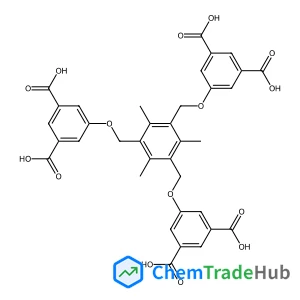
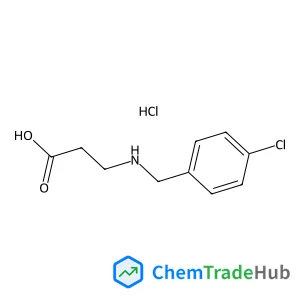
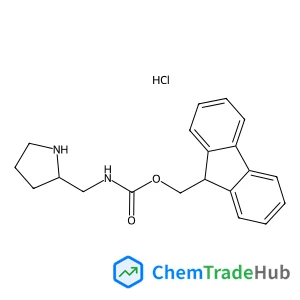
(S)-(9H-Fluoren-9-yl)methyl (pyrrolidin-2-ylmethyl)carbamate hydrochloride
CAS番号:
1217813-15-4
分子式:
C20H23ClN2O2
おすすめサプライヤー







免責事項
このページに表示される学術雑誌情報は、参考および研究目的のみを目的としています。当社は雑誌出版社とは提携しておらず、投稿の取り扱いも行っておりません。出版に関するお問い合わせは、各雑誌出版社に直接ご連絡ください。
表示されている情報に誤りがある場合は、support@chemtradehub.com までご連絡ください。迅速に確認し、対応いたします。