












![5-Methyl-4,5,6,7-tetrahydropyrazolo[1,5-a]pyrazin-2-amine structure](https://static.chemtradehub.com/structs/122/1227210-33-4-8d64.webp "5-Methyl-4,5,6,7-tetrahydropyrazolo[1,5-a]pyrazin-2-amine structure")
The gelation influence on diffusion and conductivity enhancement effect in renewable ionic gels based on a LMWG
文献情報
出版日
2018-01-24
DOI
10.1039/C7CP07740H
インパクトファクター
3.676
著者
M. Bielejewski, A. Rachocki, J. Kaszyńska, J. Tritt-Goc
原文を見る
要旨
This paper reports the interdisciplinary study on molecular dynamics, ionic interactions and electrical conductivity in a quaternary ammonium salt (TMABr) ionogel based on a low molecular weight gelator (LMWG) in a wide range of electrolyte molar concentrations. The thermal scanning conductometry (TSC) was used to investigate the electric properties of the ionogels. The prepared TMABr/H2O/LMWG ionogel exhibits better ion transport properties than the dissociated TMA+ cation in solution. The enhanced ionic conductivity effect (EICE) was observed in the concentration range of the TMABr salt up to 1 M. To investigate the transport properties of the TMA+ cation and solvent molecules in the gel and sol phase, the NMR diffusiometry method was used. The field-cycling relaxometry method (FFC NMR) was applied to study the local motions of the electrolyte at the surface of the gelator matrix. On the basis of the obtained data, the higher ionic conductivity observed in the gel phase has been related to the microstructure of the gel matrix. The possible explanation for the origin of this effect has been given. The investigated system is a thermally reversible physical gel, all registered data were reproducible upon transforming the sample from gel to sol and back to the gel state, confirming the enhancement effect as a permanent property of the investigated ionogels. Therefore, the EICE has been proposed to be used as an internal sensor to monitor the condition of the ionogel phase, thus making them smart materials.
関連文献
Tandem radical cyclization of N-methacryloyl benzamides with CBr4 to construct brominated isoquinolinediones
Songhai Huang, Pengfei Niu, Yingpeng Su, Dongcheng Hu, Congde Huo
2018-10-02
Paper
DOI: 10.1039/C8OB01964A
Disassembly-driven signal turn-on probes for bimodal detection of DNA with 19F NMR and fluorescence
Takashi Sakamoto, Daisaku Hasegawa, Kenzo Fujimoto
2018-09-14
Paper
DOI: 10.1039/C8OB02218F
Nazarov cyclisations initiated by DDQ-oxidised pentadienyl ether: a mechanistic investigation from the DFT perspective
Ali Gouranourimi, Antony Chipman, Rasool Babaahmadi, Angus Olding, Brian F. Yates, Alireza Ariafard
2018-11-08
Paper
DOI: 10.1039/C8OB02590H
A DFT/PCM-based methodology for predicting solvolytic reactivities of organic carbonates
Mirela Matić, Bernard Denegri
2018-06-11
Paper
DOI: 10.1039/C8OB00917A
Regioselective [3 + 2]-annulation of hydrazonyl chlorides with 1,3-dicarbonyl compounds for assembling of polysubstituted pyrazoles
Kun Liu, Xinye Shang, Yuyu Cheng, Xiaoyong Chang, Pengfei Li, Wenjun Li
2018-10-11
Communication
DOI: 10.1039/C8OB02352B
Correction: A facile and high-yield formation of dipyrrin-boronic acid dyads and triads: a light-harvesting system in the visible region based on the efficient energy transfer
Masaki Yamamura, Shinya Yazaki, Motofumi Seki, Yasunori Matsui, Hiroshi Ikeda, Tatsuya Nabeshima
2018-07-20
Correction
DOI: 10.1039/C8OB90102C
Regulating glutathione-responsiveness of naphthalimide-based fluorescent probes by an oxidation strategy
Guotao Liu, Weijie Chen, Zhiqiang Xu, Fengying Ye, Yingle Pan, Xiaoqiang Chen, Sheng Hua Liu, Lintao Zeng, Jun Yin
2018-07-13
Paper
DOI: 10.1039/C8OB01258J
Umpolung cyclization reaction of N-cinnamoylthioureas in the presence of DBU
Rei Saito, Naohiro Uemura, Hiroki Ishikawa, Akina Magara, Yoshio Kasashima
2018-10-04
Paper
DOI: 10.1039/C8OB02066C
こちらもおすすめ
化合物よくある質問
2-ヒドロキシ-5-ニトロベンジンブロモイドの代替品はありますか?
2-ヒドロキシ-5-ニトロベンジンブロモイドは特定の化学反応に適しているため、代替品は限られています。しかし、同様の構造を持つ2-ヒドロキシ-4-ニトロベンジン...
772-33-82-(Bromomethyl)-4-ni...
化合物よくある質問
N-(2-ブロモフェニル)-1-チロール-3-オキソ-3-(ピペリジニル)プロペン-2-イル)ベンゼンアミドを取り扱う際の実験室安全事項は何ですか?
N-(2-ブロモフェニル)-1-チロール-3-オキソ-3-(ピペリジニル)プロペン-2-イル)ベンゼンアミドは有毒で、皮膚や粘膜に刺激を与える可能性があります。...
1800044-77-2N-[(1Z)-1-(2-Bromoph...
化合物よくある質問
1,3プロパンジオール,2-[2-(2アミノ-6クロロ-9Hピリミジン-9-イル)エチル-1,1,2,2-D4]-2,3-ジアセタートの市場動向や研究トレンドはどうですか?
この化合物は、新規治療薬の開発に注目されています。市場では、その有効性と安全性が評価され、研究分野では、分子生物学と医薬化学の新たな発見が期待されています。
1020718-81-31,3-Propanediol, 2-[...
579-44-2Ethanone, 2-hydroxy-...
化合物よくある質問
Succinimidyl-alanyl-phenylalanyl-prolyl-phenylalanine 4-nitroanilide はどの業界で使用されていますか?
Succinimidyl-alanyl-phenylalanyl-prolyl-phenylalanine 4-nitroanilide は主に医薬品開発やポ...
128802-73-3succinimidyl-alanyl-...
化合物よくある質問
メチル6-アミノ-5-クロロピリジン-2-カーボイル酸について、適用される法規ガイドラインは何ですか?
メチル6-アミノ-5-クロロピリジン-2-カーボイル酸(CAS番号: 1256794-05-4)の使用には、GHS( Globally Harmonized S...
1256794-05-4Methyl 6-amino-5-chl...
化合物よくある質問
エチル4-(シクロ Pentagonyl)アミノ-2-メチル硫化基ピリミジン-5-カルボキシレートを取り扱う際の実験室安全事項は何ですか?
取り扱いには、耐薬品性の容器を使用し、通気性の良い場所で操作することを推奨します。漏れ時は、SDS(安全データシート)を参照して適切な措置を取ること。手洗いと洗...
211245-62-4ethyl 4-(cyclopentyl...
化合物よくある質問
(S)-3-ベンZYルピペリジン塩酸塩とは何ですか?
(S)-3-ベンZYルピペリジン塩酸塩は、CAS番号1258940-00-9で表される化合物です。これは、(S)-3-苯基哌啶的盐酸盐であり、主に医薬品の原料と...
1258940-00-9(S)-3-Phenylpiperidi...
化合物よくある質問
3,5-二甲基金剛胺の主な用途は何ですか?
3,5-二甲基金剛胺は、主に医薬品の原料として使用され、また抗うつ薬や抗アルツハイマー薬の開発に利用されます。さらに、化粧品や食品添加物の製造でも重要な役割を果...
19988-45-52-(2,3-Dihydroxyphen...
化合物よくある質問
ビス(4-メチル-2-ペンチル)フェニルカルボン酸エステルの代替品はありますか?
ビス(4-メチル-2-ペンチル)フェニルカルボン酸エステル (CAS番号: 1398066-13-1) の代替品には、ビス(2-エチルヘキシル)フェノールカルボ...
1398066-13-1Bis(4-methyl-2-penty...
掲載誌
Physical Chemistry Chemical Physics

CiteScore:
5.5
自己引用率:
10.3%
年間論文数:
3036
Physical Chemistry Chemical Physics (PCCP) is an international journal co-owned by 19 physical chemistry and physics societies from around the world. This journal publishes original, cutting-edge research in physical chemistry, chemical physics and biophysical chemistry. To be suitable for publication in PCCP, articles must include significant innovation and/or insight into physical chemistry; this is the most important criterion that reviewers and Editors will judge against when evaluating submissions. The journal has a broad scope and welcomes contributions spanning experiment, theory, computation and data science. Topical coverage includes spectroscopy, dynamics, kinetics, statistical mechanics, thermodynamics, electrochemistry, catalysis, surface science, quantum mechanics, quantum computing and machine learning. Interdisciplinary research areas such as polymers and soft matter, materials, nanoscience, energy, surfaces/interfaces, and biophysical chemistry are welcomed if they demonstrate significant innovation and/or insight into physical chemistry. Joined experimental/theoretical studies are particularly appreciated when complementary and based on up-to-date approaches.
おすすめ化合物
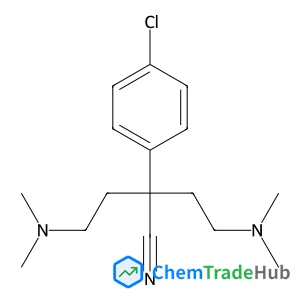
2-(4-Chlorophenyl)-4-(dimethylamino)-2-(2-(dimethylamino)ethyl)butanenitrile
CAS番号:
1246816-57-8
分子式:
C16H24ClN3
おすすめサプライヤー






免責事項
このページに表示される学術雑誌情報は、参考および研究目的のみを目的としています。当社は雑誌出版社とは提携しておらず、投稿の取り扱いも行っておりません。出版に関するお問い合わせは、各雑誌出版社に直接ご連絡ください。
表示されている情報に誤りがある場合は、support@chemtradehub.com までご連絡ください。迅速に確認し、対応いたします。