












Catechol–cation adhesion on silica surfaces: molecular dynamics simulations
文献情報
出版日
2017-10-05
DOI
10.1039/C7CP05284G
インパクトファクター
3.676
著者
Yingtu Li, Mingrui Liao, Jian Zhou
原文を見る
要旨
Understanding the interaction mechanism between catechol−cation and inorganic surfaces is vital for controlling the interfacial adhesion behavior. In this work, molecular dynamics simulations are employed to study the adhesion of siderophore analogues (Tren-Lys-Cam, Tren-Arg-Cam and Tren-His-Cam) on silica surfaces with different degrees of ionization and the effects of cationic amino acids and ionic strength on adhesion are discussed. Simulation results indicate that adhesion of catechol–cation onto the ionized silica surface is dominated by electrostatic interactions. At different degrees of ionization, the rank of the adhesions of three siderophore analogues on silica is different. Further analysis shows that the amino acid terminus has a large influence on the adhesion process, especially histidine adhesion on negatively charged surfaces. Tren-Lys-Cam (TLC) has a larger adhesion free energy than Tren-Arg-Cam (TAC) at a higher degree of ionization (18%); both the bulkier structure and delocalized charge of Arg decreased the cation's electrostatic interaction with the charged silica. In addition, the adhesion free energy on ionized silica surfaces decreased with increasing ionic strength of aqueous solutions. A linear correlation between the potential of mean force obtained from umbrella sampling and the rupture force via steered molecular dynamics simulations for siderophore analogue adhesion on silica surfaces is also found. This work may provide some guidance for developing the next generation underwater adhesives.
関連文献
Alkaline-earth (Be, Mg and Ca) bonds at the origin of huge acidity enhancements
M. Merced Montero-Campillo, Pablo Sanz, Otilia Mó, Manuel Yáñez, Ibon Alkorta, José Elguero
2017-12-19
Paper
DOI: 10.1039/C7CP07891A
Effect of transition-metal-ion dopants on the oxygen evolution reaction on NiOOH(0001)
Alexander J. Tkalych, John Mark P. Martirez, Emily A. Carter
2018-07-03
Paper
DOI: 10.1039/C8CP02849D
Lead (Pb) interfacing with epitaxial graphene
Mikhail Vagin, Ivan G. Ivanov, Tihomir Iakimov, G. Reza Yazdi, Rositsa Yakimova
2018-05-29
Paper
DOI: 10.1039/C8CP01814F
On the methodology of the determination of charge concentration dependent mobility from organic field-effect transistor characteristics
Miroslav Menšík, Petr Toman, Urszula Bielecka, Wojciech Bartkowiak, Jiří Pfleger, Bartosz Paruzel
2017-12-12
Paper
DOI: 10.1039/C7CP06423C
Field-, strain- and light-induced superconductivity in organic strongly correlated electron systems
2017-11-02
Perspective
DOI: 10.1039/C7CP06716J
Abnormal separation of the silicon–oxygen bond in the liquid layering transition of silicon dioxide in a nanoslit
Zhichao Wang, Tao Li, Yunrui Duan, Weikang Wu, Zhenyang Zhao, Yao Liu, Hui Li
2018-01-02
Paper
DOI: 10.1039/C7CP06843C
A computational study on a multimode spin conductance switching by coordination isomerization in organometallic single-molecule junctions
Yingjie Jiang, Xiaodong Xu, Yangyang Hu, Zhewen Liang, Weiqi Li, Yongyuan Jiang
2018-07-13
Paper
DOI: 10.1039/C8CP02914H
Theoretical evidence for the direct 3MLCT-HS deactivation in the light-induced spin crossover of Fe(ii)–polypyridyl complexes
Carmen Sousa, Miquel Llunell, Alex Domingo
2018-01-05
Paper
DOI: 10.1039/C7CP08098K
Multiscale simulations of ligand adsorption and exchange on gold nanoparticles
Hui-Min Gao, Hong Liu, Hu-Jun Qian, Gui-Sheng Jiao, Zhong-Yuan Lu
2017-12-11
Paper
DOI: 10.1039/C7CP07039J
こちらもおすすめ
化合物よくある質問
環戊烷-1,3-二甲酸甲酯はどのように合成されますか?
環戊烷-1,3-二甲酸甲酯は、環戊烷と塩酸によるヒンデンブルク反応を経由して合成されます。この反応では、環戊烷が塩酸と作用し、1,3-ジカルボキシ基が導入されま...
2435-36-1Dimethyl 1,3-cyclope...
化合物よくある質問
4-メトキシ-1,2,3-スチアゼ-3,5-ジオンとは何ですか?
4-メトキシ-1,2,3-スチアゼ-3,5-ジオンは、CAS番号107843-77-6の化合物で、(E)-ベンジル3-(3,4-ジヒドロキシフェニル) acry...
107843-77-6(E)-Benzyl 3-(3,4-di...
化合物よくある質問
プロスタグランジンA2について「に適用される法規ガイドラインは何ですか?'
プロスタグランジンA2 (CAS番号: 41691-92-3) は、化学物質の安全管理に関する規制として、GHS (危険物質の国際的ハザード分類・ラベル付けシス...
41691-92-316,16-DIMETHYL PROST...
化合物よくある質問
4-アミノ-1-ナフタレン sulfonic 酸についての物理化学的性質は何ですか?
4-アミノ-1-ナフタレン sulfonic 酸のCAS番号は84-86-6です。この化合物は結晶性で、分子量は212.15 g/molです。アルコールや水など...
84-86-64-Amino-1-naphthalen...
化合物よくある質問
N-GlcNAc-生物素を取り扱う際の実験室安全事項は何ですか?
N-GlcNAc-生物素は吸収性があり、皮膚や目への接触を避けることが重要です。PPE(個体保護具)は使用し、ドラフトチャンバーは必要に応じて使用します。漏洩時...
1272755-69-72-Acetamido-2-deoxy-...
化合物よくある質問
3-アミノメチルフローラノピペリジン-1-カルボニル酸テルブチルエステルとは何ですか?
CAS番号1209781-11-2の3-アミノメチルフローラノピペリジン-1-カルボニル酸テルブチルエステルは、有機化合物の一種で、化学式はC10H17FNO3...
1209781-11-22-Methyl-2-propanyl ...
化合物よくある質問
6-溴-1-甲基-1H-ベンゾ[d][1,2,3]三氮唑はどのように合成されますか?
6- bromo-1-methyl-1H-benzotriazoleは、ブロモフリオリンと1-メチル-1H-ベンゾ[d][1,2,3]三氮唑の反応により合成され...
944718-32-56-Bromo-1-methyl-1H-...
化合物よくある質問
4-硫代尿苷はどのように合成されますか?
4-硫代尿苷は、尿素とD-リボシルヒドロキシアルデヒドを用いてスルホン化反応を経て合成されます。通常は塩酸ヒドロキシチオニルスルホン酸などの触媒を使用し、選択性...
6741-73-71-(4-thio-beta-D-rib...
化合物よくある質問
ブレインナトリユリックペプチド32ラットとは何ですか?
ブレインナトリユリックペプチド32ラット(CAS番号: 133448-20-1)は、心臓で作られるホルモンの一つで、心不全の診断や予後評価に使用されます。
133448-20-1Brain Natriuretic Pe...
化合物よくある質問
1-(3-氮杂啶)-4-羟基哌啶双盐酸盐の物理化学的性質は何ですか?
CAS番号810680-60-5の1-(3-氮杂啶)-4-羟基哌啶双盐酸盐は、白色の結晶性粉末である。分子量は360.84 g/molで、水に溶けやすい。反応活...
810680-60-51-(3-Azetidinyl)-4-p...
掲載誌
Physical Chemistry Chemical Physics

CiteScore:
5.5
自己引用率:
10.3%
年間論文数:
3036
Physical Chemistry Chemical Physics (PCCP) is an international journal co-owned by 19 physical chemistry and physics societies from around the world. This journal publishes original, cutting-edge research in physical chemistry, chemical physics and biophysical chemistry. To be suitable for publication in PCCP, articles must include significant innovation and/or insight into physical chemistry; this is the most important criterion that reviewers and Editors will judge against when evaluating submissions. The journal has a broad scope and welcomes contributions spanning experiment, theory, computation and data science. Topical coverage includes spectroscopy, dynamics, kinetics, statistical mechanics, thermodynamics, electrochemistry, catalysis, surface science, quantum mechanics, quantum computing and machine learning. Interdisciplinary research areas such as polymers and soft matter, materials, nanoscience, energy, surfaces/interfaces, and biophysical chemistry are welcomed if they demonstrate significant innovation and/or insight into physical chemistry. Joined experimental/theoretical studies are particularly appreciated when complementary and based on up-to-date approaches.
おすすめ化合物
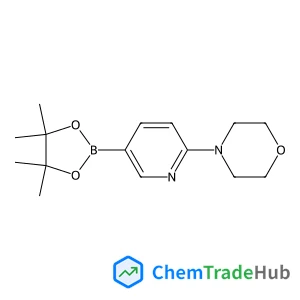
4-(5-(4,4,5,5-tetramethyl-1,3,2-dioxaborolan-2-yl)pyridin-2-yl)morpholine
CAS番号:
485799-04-0
分子式:
C15H23BN2O3
![N-[(9H-Fluoren-9-ylmethoxy)carbonyl]-beta-phenyl-L-phenylalanine structure](https://static.chemtradehub.com/structs/201/201484-50-6-c2fc.webp "N-[(9H-Fluoren-9-ylmethoxy)carbonyl]-beta-phenyl-L-phenylalanine structure")
おすすめサプライヤー




免責事項
このページに表示される学術雑誌情報は、参考および研究目的のみを目的としています。当社は雑誌出版社とは提携しておらず、投稿の取り扱いも行っておりません。出版に関するお問い合わせは、各雑誌出版社に直接ご連絡ください。
表示されている情報に誤りがある場合は、support@chemtradehub.com までご連絡ください。迅速に確認し、対応いたします。