












The effect of anions on the electrochemical properties of polyaniline for supercapacitors
文献情報
出版日
2017-04-28
DOI
10.1039/C7CP02016C
インパクトファクター
3.676
著者
Ji Xing, Maoying Liao, Min Yin, Dongdong Li, Ye Song
原文を見る
要旨
To investigate the effect of anions on the electrochemical properties of polyaniline (PANI) for supercapacitors, electrochemical performance tests of PANI with different dopant anions were carried out in the corresponding acid solutions by cyclic voltammetry (CV) and galvanostatic charge–discharge (GCD) methods. In particular, ionic fluxes and solvent molecules involved in redox processes can be analyzed by the electrochemical quartz crystal microbalance (EQCM) technique and discriminated by simultaneously recording cyclic voltammograms and mass changes during redox switching. The emeraldine base (EB) form of PANI prepared in a protonic acid with bigger anions can be easily doped by a protonic acid with smaller anions, and conversely, PANI-EB is hard to be doped. The anodic reversal potential of potentiodynamic cycling heavily influences the electrochemical stability of PANI. High anodic potentials result in PANI degradation. Its supercapacitive properties including specific capacitance, power density and cycling stability are strongly dependent upon the type of dopant anion. PANI with the dopant anions of oxalic acid has the highest specific capacitance and the best cycling stability among the used acids. The diffusion coefficient of anions plays a key role in determining power density. PANI films with organic dopant anions exhibit better cycling stability than their inorganic counterparts. It is believed that the hydrolysis of PANI facilitated by the additional water molecules accompanied by dopant anions into and out of the PANI matrix is a key factor responsible for the cycling instability.
おすすめジャーナル
関連文献
Temperature dependence of the hydrogen bond network in trimethylamine N-oxide and guanidine hydrochloride–water solutions
Yury Forov, Mirko Elbers, Christoph J. Sahle, Christopher Weis, Naruki Tsuji, Masayoshi Itou, Yoshiharu Sakurai, Agnieszka Poulain, Christian Sternemann
2017-10-03
Paper
DOI: 10.1039/C7CP04958G
Prediction of superconducting ternary hydride MgGeH6: from divergent high-pressure formation routes
Yanbin Ma, Defang Duan, Ziji Shao, Da Li, Liyuan Wang, Hongyu Yu, Fubo Tian, Hui Xie, Bingbing Liu, Tian Cui
2017-09-18
Paper
DOI: 10.1039/C7CP05267G
Noble gas bond and the behaviour of XeO3 under pressure
Xianlong Wang
2017-09-21
Paper
DOI: 10.1039/C7CP05385A
Theoretical illumination of highly original photoreactive 3MC states and the mechanism of the photochemistry of Ru(ii) tris(bidentate) complexes
Isabelle M. Dixon, Jean-Louis Heully, Fabienne Alary, Paul I. P. Elliott
2017-09-25
Paper
DOI: 10.1039/C7CP05532C
Monitoring thermally induced structural deformation and framework decomposition of ZIF-8 through in situ temperature dependent measurements
Ben Xu, Yingjie Mei, Zhenyu Xiao, Zixi Kang, Rongming Wang, Daofeng Sun
2017-08-08
Paper
DOI: 10.1039/C7CP04694D
A novel explanation for the increased conductivity in annealed Al-doped ZnO: an insight into migration of aluminum and displacement of zinc
A. Momot, M. N. Amini, G. Reekmans, D. Lamoen, B. Partoens, D. R. Slocombe, K. Elen, P. Adriaensens, A. Hardy, M. K. Van Bael
2017-10-09
Paper
DOI: 10.1039/C7CP02936E
Vibrational spectra and physico-chemical properties of astrophysical analogs
Pedro C. Gómez, Rafael Escribano
2017-09-06
Paper
DOI: 10.1039/C7CP04695B
Semi-conducting single-walled carbon nanotubes are detrimental when compared to metallic single-walled carbon nanotubes for electrochemical applications
Qi Dong, Muhammad Zafir Mohamad Nasir, Martin Pumera
2017-10-03
Paper
DOI: 10.1039/C7CP04897A
Exploring the working mechanism of graphene patterning by magnetic-assisted UV ozonation
Huan Yue, Yixuan Wu, Shubin Su, Hao Li, Zhenhua Ni, Xianfeng Chen
2017-09-18
Paper
DOI: 10.1039/C7CP03523C
こちらもおすすめ
化合物よくある質問
環戊烷-1,3-二甲酸甲酯はどのように合成されますか?
環戊烷-1,3-二甲酸甲酯は、環戊烷と塩酸によるヒンデンブルク反応を経由して合成されます。この反応では、環戊烷が塩酸と作用し、1,3-ジカルボキシ基が導入されま...
2435-36-1Dimethyl 1,3-cyclope...
化合物よくある質問
4-メトキシ-1,2,3-スチアゼ-3,5-ジオンとは何ですか?
4-メトキシ-1,2,3-スチアゼ-3,5-ジオンは、CAS番号107843-77-6の化合物で、(E)-ベンジル3-(3,4-ジヒドロキシフェニル) acry...
107843-77-6(E)-Benzyl 3-(3,4-di...
化合物よくある質問
プロスタグランジンA2について「に適用される法規ガイドラインは何ですか?'
プロスタグランジンA2 (CAS番号: 41691-92-3) は、化学物質の安全管理に関する規制として、GHS (危険物質の国際的ハザード分類・ラベル付けシス...
41691-92-316,16-DIMETHYL PROST...
化合物よくある質問
4-アミノ-1-ナフタレン sulfonic 酸についての物理化学的性質は何ですか?
4-アミノ-1-ナフタレン sulfonic 酸のCAS番号は84-86-6です。この化合物は結晶性で、分子量は212.15 g/molです。アルコールや水など...
84-86-64-Amino-1-naphthalen...
化合物よくある質問
N-GlcNAc-生物素を取り扱う際の実験室安全事項は何ですか?
N-GlcNAc-生物素は吸収性があり、皮膚や目への接触を避けることが重要です。PPE(個体保護具)は使用し、ドラフトチャンバーは必要に応じて使用します。漏洩時...
1272755-69-72-Acetamido-2-deoxy-...
化合物よくある質問
3-アミノメチルフローラノピペリジン-1-カルボニル酸テルブチルエステルとは何ですか?
CAS番号1209781-11-2の3-アミノメチルフローラノピペリジン-1-カルボニル酸テルブチルエステルは、有機化合物の一種で、化学式はC10H17FNO3...
1209781-11-22-Methyl-2-propanyl ...
化合物よくある質問
6-溴-1-甲基-1H-ベンゾ[d][1,2,3]三氮唑はどのように合成されますか?
6- bromo-1-methyl-1H-benzotriazoleは、ブロモフリオリンと1-メチル-1H-ベンゾ[d][1,2,3]三氮唑の反応により合成され...
944718-32-56-Bromo-1-methyl-1H-...
化合物よくある質問
4-硫代尿苷はどのように合成されますか?
4-硫代尿苷は、尿素とD-リボシルヒドロキシアルデヒドを用いてスルホン化反応を経て合成されます。通常は塩酸ヒドロキシチオニルスルホン酸などの触媒を使用し、選択性...
6741-73-71-(4-thio-beta-D-rib...
化合物よくある質問
ブレインナトリユリックペプチド32ラットとは何ですか?
ブレインナトリユリックペプチド32ラット(CAS番号: 133448-20-1)は、心臓で作られるホルモンの一つで、心不全の診断や予後評価に使用されます。
133448-20-1Brain Natriuretic Pe...
化合物よくある質問
1-(3-氮杂啶)-4-羟基哌啶双盐酸盐の物理化学的性質は何ですか?
CAS番号810680-60-5の1-(3-氮杂啶)-4-羟基哌啶双盐酸盐は、白色の結晶性粉末である。分子量は360.84 g/molで、水に溶けやすい。反応活...
810680-60-51-(3-Azetidinyl)-4-p...
掲載誌
Physical Chemistry Chemical Physics

CiteScore:
5.5
自己引用率:
10.3%
年間論文数:
3036
Physical Chemistry Chemical Physics (PCCP) is an international journal co-owned by 19 physical chemistry and physics societies from around the world. This journal publishes original, cutting-edge research in physical chemistry, chemical physics and biophysical chemistry. To be suitable for publication in PCCP, articles must include significant innovation and/or insight into physical chemistry; this is the most important criterion that reviewers and Editors will judge against when evaluating submissions. The journal has a broad scope and welcomes contributions spanning experiment, theory, computation and data science. Topical coverage includes spectroscopy, dynamics, kinetics, statistical mechanics, thermodynamics, electrochemistry, catalysis, surface science, quantum mechanics, quantum computing and machine learning. Interdisciplinary research areas such as polymers and soft matter, materials, nanoscience, energy, surfaces/interfaces, and biophysical chemistry are welcomed if they demonstrate significant innovation and/or insight into physical chemistry. Joined experimental/theoretical studies are particularly appreciated when complementary and based on up-to-date approaches.
おすすめ化合物
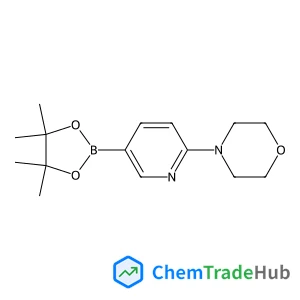
4-(5-(4,4,5,5-tetramethyl-1,3,2-dioxaborolan-2-yl)pyridin-2-yl)morpholine
CAS番号:
485799-04-0
分子式:
C15H23BN2O3
![Ethyl 3-((6-(4,5-dihydro-1H-benzo[d]azepin-3(2H)-yl)-2-(pyridin-2-yl)pyrimidin-4-yl)amino)propanoate structure](https://static.chemtradehub.com/structs/137/1373423-53-0-496a.webp "Ethyl 3-((6-(4,5-dihydro-1H-benzo[d]azepin-3(2H)-yl)-2-(pyridin-2-yl)pyrimidin-4-yl)amino)propanoate structure")
おすすめサプライヤー





免責事項
このページに表示される学術雑誌情報は、参考および研究目的のみを目的としています。当社は雑誌出版社とは提携しておらず、投稿の取り扱いも行っておりません。出版に関するお問い合わせは、各雑誌出版社に直接ご連絡ください。
表示されている情報に誤りがある場合は、support@chemtradehub.com までご連絡ください。迅速に確認し、対応いたします。