












Back-exchange: a novel approach to quantifying oxygen diffusion and surface exchange in ambient atmospheres
文献情報
出版日
2017-04-27
DOI
10.1039/C7CP01317E
インパクトファクター
3.676
著者
Samuel J. Cooper, Mathew Niania, Franca Hoffmann, John A. Kilner
原文を見る
要旨
A novel two-step Isotopic Exchange (IE) technique has been developed to investigate the influence of oxygen containing components of ambient air (such as H2O and CO2) on the effective surface exchange coefficient (k*) of a common mixed ionic electronic conductor material. The two step ‘back-exchange’ technique was used to introduce a tracer diffusion profile, which was subsequently measured using Time-of-Flight Secondary Ion Mass Spectrometry (ToF-SIMS). The isotopic fraction of oxygen in a dense sample as a function of distance from the surface, before and after the second exchange step, could then be used to determine the surface exchange coefficient in each atmosphere. A new analytical solution was found to the diffusion equation in a semi-infinite domain with a variable surface exchange boundary, for the special case where D* and k* are constant for all exchange steps. This solution validated the results of a numerical, Crank-Nicolson type finite-difference simulation, which was used to extract the parameters from the experimental data. When modelling electrodes, D* and k* are important input parameters, which significantly impact performance. In this study La0.6Sr0.4Co0.2Fe0.8O3−δ (LSCF6428) was investigated and it was found that the rate of exchange was increased by around 250% in ambient air compared to high purity oxygen at the same pO2. The three experiments performed in this study were used to validate the back-exchange approach and show its utility.
関連文献
Thermal unfolding and refolding of lysozyme in deep eutectic solvents and their aqueous dilutions
Rocio Esquembre, Jesus M. Sanz, J. Gerard Wall, Francisco del Monte, C. Reyes Mateo, M. Luisa Ferrer
2013-05-08
Paper
DOI: 10.1039/C3CP44299C
Ionothermal synthesis of mesoporous SnO2 nanomaterials and their gas sensitivity depending on the reducing ability of toxic gases
Wei Guo, Xiaochuan Duan, Yan Shen, Kezhen Qi, Caiying Wei, Wenjun Zheng
2013-05-14
Communication
DOI: 10.1039/C3CP51663F
Superior power density solid oxidefuel cells by enlarging the three-phase boundary region of a NiO–Ce0.8Gd0.2O1.9 composite anode through optimized surface structure
Daeil Yoon, Qing Su, Haiyan Wang, Arumugam Manthiram
2013-07-09
Paper
DOI: 10.1039/C3CP52679H
Plant protein interactions studied using AFM force spectroscopy: nanomechanical and adhesion properties
Ahmad Fahs, Guy Louarn
2013-06-04
Paper
DOI: 10.1039/C3CP51007G
Photoinduced charge transport over branched conjugation pathways: donor–acceptor substituted 1,1-diphenylethene and 2,3-diphenylbutadiene
Bas C. van der Wiel, René M. Williams
2013-08-09
Paper
DOI: 10.1039/C3CP52148F
Shape-dependent two-photon absorption in two-dimensionally extended benzoporphyrin arrays
Pyosang Kim, Sujin Ham, Juwon Oh, Hiroki Uoyama, Hajime Watanabe, Kazunari Tagawa, Hidemitsu Uno, Dongho Kim
2013-04-04
Communication
DOI: 10.1039/C3CP50166C
Temperature dependence of high field 13C dynamic nuclear polarization processes with trityl radicals below 35 Kelvin
Shamon A. Walker, Devin T. Edwards, Ting Ann Siaw, Brandon D. Armstrong
2013-07-24
Paper
DOI: 10.1039/C3CP51628H
Assemblies of polyvinylpyrrolidone-capped tetrahedral and spherical Pt nanoparticles in polyelectrolytes: hydrogen underpotential deposition and electrochemical characterization
Sarah Jaber, Pamela Nasr, Yan Xin, Fatima Sleem, Lara I. Halaoui
2013-08-09
Paper
DOI: 10.1039/C3CP51061A
Stability of Si epoxide defects in Si nanowires: a mixed reactive force field/DFT study
Erik C. Neyts, Umedjon Khalilov, Bart Partoens
2013-07-16
Paper
DOI: 10.1039/C3CP51621K
Charge transport characteristics of a high-mobility diketopyrrolopyrrole-based polymer
Dae Sung Chung, Il Kang, Yun-Hi Kim, Soon-Ki Kwon
2013-07-08
Paper
DOI: 10.1039/C3CP52422A
こちらもおすすめ
化合物よくある質問
2-メトキシ-4-(メチルスルフィニル)アミンの主な用途は何ですか?
2-メトキシ-4-(メチルスルフィニル)アミンは、主に医薬品および農薬の製造に使用されます。また、合成化学の一部として研究用材料としても利用されます。
41608-73-52-Methoxy-4-(methyls...
118684-13-24-(Bromomethyl)-3-me...
化合物よくある質問
4,6-二氯-N-甲基ピラミジンアミンの代替品はありますか?
代替品としては、4,6-二クロロピラミジンアミンや他のピラミジン系化合物が考えられます。ただし、目的と用途によって最適な代替品は異なります。
10397-15-64,6-Dichloro-N-methy...
化合物よくある質問
6-氯-4-甲基-1H-吲哚を含む廃棄物はどのように処理すべきですか?
6-氯-4-甲基-1H-吲哚の廃棄物は、適切な容器に収集し、密閉して保管します。温度は常温、湿度は低く、直射日光を避けて保管することを推奨します。廃棄処理は専門...
885520-84-36-chloro-4-methyl-1H...
化合物よくある質問
2-フローユロ-4-(トリフルオロメチル)ベンゾイドについて「に適用される法規ガイドラインは何ですか」
2-フローユロ-4-(トリフルオロメチル)ベンゾイドのCAS番号は207974-08-1です。この化合物はGHS分類で毒性物質と有害な反応物質として分類されます...
207974-08-1[2-Fluoro-4-(trifluo...
化合物よくある質問
4-ニトロフェニルN-[(ベンゼルオキシルカーボンイル]グリシングリシングリシン酸はどのように保存すればよいですか?
4-ニトロフェニルN-[(ベンゼルオキシルカーボンイル]グリシングリシングリシン酸は、室温で暗所に保管し、乾燥した環境で保存することを推奨します。容器は密閉性の...
19811-64-44-Nitrophenyl N-[(be...
化合物よくある質問
イソデスロラタドリンの代替品はありますか?
イソデスロラタドリンの代替品としては、デスロラタドリンや他の抗ヒスタミン薬が挙げられます。具体的には、デスロラタドリン、ラセカミド、フェルタドリンなどが、症状や...
183198-49-4Iso Desloratadine
化合物よくある質問
5-甲氧基-1,2,3,4-四氢异喹啉盐酸盐はどのように合成されますか?
5-甲氧基-1,2,3,4-四氢异喹啉盐酸盐の一般的な合成方法は、メタノール中で5-メトキシ-1,2,3,4-四ヒュドロイソキシンを塩酸で塩化します。この反応で...
103030-69-95-Methoxy-1,2,3,4-te...
化合物よくある質問
4-アミノ-5-メトキシ-2-トルエンサルホニック酸についての法規ガイドラインは何ですか?
CAS番号6471-78-9の4-アミノ-5-メトキシ-2-トルエンサルホニック酸は、GHS分類では corrosive(腐食性)と識別されます。EUのREAC...
6471-78-94-Amino-5-Methoxy-2-...
化合物よくある質問
甲基孕酮を取り扱う際の実験室安全事項は何ですか?
甲基孕酮の取り扱いは、PPE(個人保護具)の使用が必要な重要な安全事項を伴います。防塵マスク、ゴーグル、手袋を着用することが推奨されます。ドラフトチャンバーを使...
204063-33-22-[(Diphenylmethyl)a...
掲載誌
Physical Chemistry Chemical Physics

CiteScore:
5.5
自己引用率:
10.3%
年間論文数:
3036
Physical Chemistry Chemical Physics (PCCP) is an international journal co-owned by 19 physical chemistry and physics societies from around the world. This journal publishes original, cutting-edge research in physical chemistry, chemical physics and biophysical chemistry. To be suitable for publication in PCCP, articles must include significant innovation and/or insight into physical chemistry; this is the most important criterion that reviewers and Editors will judge against when evaluating submissions. The journal has a broad scope and welcomes contributions spanning experiment, theory, computation and data science. Topical coverage includes spectroscopy, dynamics, kinetics, statistical mechanics, thermodynamics, electrochemistry, catalysis, surface science, quantum mechanics, quantum computing and machine learning. Interdisciplinary research areas such as polymers and soft matter, materials, nanoscience, energy, surfaces/interfaces, and biophysical chemistry are welcomed if they demonstrate significant innovation and/or insight into physical chemistry. Joined experimental/theoretical studies are particularly appreciated when complementary and based on up-to-date approaches.
おすすめ化合物
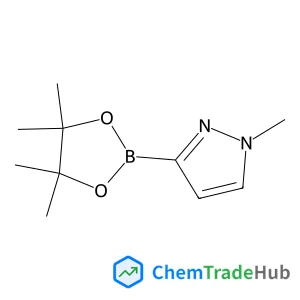
1-Methyl-3-(4,4,5,5-tetramethyl-1,3,2-dioxaborolan-2-yl)-1H-pyrazole
CAS番号:
1020174-04-2
分子式:
C10H17BN2O2
おすすめサプライヤー




免責事項
このページに表示される学術雑誌情報は、参考および研究目的のみを目的としています。当社は雑誌出版社とは提携しておらず、投稿の取り扱いも行っておりません。出版に関するお問い合わせは、各雑誌出版社に直接ご連絡ください。
表示されている情報に誤りがある場合は、support@chemtradehub.com までご連絡ください。迅速に確認し、対応いたします。