












Binary twinned-icosahedral [B21H18]− interacts with cyclodextrins as a precedent for its complexation with other organic motifs
文献情報
出版日
2017-04-19
DOI
10.1039/C7CP01074E
インパクトファクター
3.676
著者
Eduard Bernhardt, Juan Z. Dávalos, Martin Lepšík, Khaleel I. Assaf, Werner M. Nau, Josef Holub, Josep M. Oliva-Enrich, Jindřich Fanfrlík, Drahomír Hnyk
原文を見る
要旨
The weakly coordinating binary macropolyhedral anion closo,closo-[B21H18]− (B21; D3h symmetry) has been synthesized using a simplified strategy compared to that in the literature. While gas-phase complexes of B21 with β- and γ-cyclodextrin (CD) were detected using ESI FT-ICR spectrometric measurements, α-CD did not bind to the B21 guest. This spectroscopic evidence has been interpreted using quantum-chemical computations, showing that β- and γ-CD are able to interact with B21 due to their larger cavities, in contrast to the smaller α-CD. The hydridic B–H vectors of the B21 anion interact with K+ counterions and, via dihydrogen bonding, also with the partially positively charged hydrogens of the CD sugar units in the modeled β- and γ-CD complexes. In summary, it has been shown by combined spectrometric/computational analysis that macropolyhedral boron hydride anions with two counterions can form stable complexes with β- and γ-CD in the gas phase, offering a new perspective for the future investigation of this remarkable anion in the areas of supramolecular and medicinal chemistries.
関連文献
A hexameric resorcinarene capsule as a hydrogen bonding catalyst in the conjugate addition of pyrroles and indoles to nitroalkenes
Stefania Gambaro, Margherita De Rosa, Annunziata Soriente, Carmen Talotta, Giuseppe Floresta, Antonio Rescifina, Carmine Gaeta, Placido Neri
2019-05-01
Research Article
DOI: 10.1039/C9QO00224C
[Ag(bpy)(PPhtBu2)(OCF3)]: a stable nucleophilic reagent for chemoselective and stereospecific trifluoromethoxylation of secondary alkyl nosylates
Daoqian Chen, Long Lu, Qilong Shen
2019-04-11
Research Article
DOI: 10.1039/C9QO00278B
A pore-expanded supramolecular organic framework and its enrichment of photosensitizers and catalysts for visible-light-induced hydrogen production
Meng Yan, Xu-Bo Liu, Zhong-Zheng Gao, Yi-Peng Wu, Jun-Li Hou, Hui Wang, Dan-Wei Zhang, Yi Liu, Zhan-Ting Li
2019-04-16
Research Article
DOI: 10.1039/C9QO00382G
A facile approach to ketones via Pd-catalyzed sequential carbonylation of olefins with formic acid
Wenju Chang, Jie Dai, Jingfu Li, Yuan Shi, Wenlong Ren
2017-02-22
Research Article
DOI: 10.1039/C7QO00111H
Visible light driven, nickel-catalyzed aryl esterification using a triplet photosensitiser thioxanthen-9-one
Da-Liang Zhu, Hong-Xi Li, Ze-Ming Xu, Hai-Yan Li, David J. Young, Jian-Ping Lang
2019-05-16
Research Article
DOI: 10.1039/C9QO00536F
Carboxylate phosphabetaine as a bifunctional organocatalyst for the intramolecular ring opening of oxetane
Dongyang Xu, Hongbo Wei, Yanxia Zhen, Yu-Qi Gao, Ruoxin Li, Xingzhou Li, Yupeng He, Zhong Zhang
2019-04-02
Research Article
DOI: 10.1039/C9QO00304E
Aerobic conversion of benzylic sp3 C–H in diphenylmethanes and benzyl ethers to CO bonds under catalyst-, additive- and light-free conditions
Xinqiang Cheng, Xinzheng Yang, Yun-Lai Ren, Kaisheng Yao, Huiyong Wang, Jianji Wang
2019-02-15
Research Article
DOI: 10.1039/C9QO00004F
Chemoselective N-arylation of aminobenzene sulfonamides via copper catalysed Chan–Evans–Lam reactions
Weisai Zu, Shuai Liu, Xin Jia, Liang Xu
2019-01-17
Research Article
DOI: 10.1039/C8QO01313F
Facile synthesis of 2-(2-aminobenzoyl)benzoic acids via a base-promoted aerobic cascade reaction
Yangxin Chen, Ting Chen, Zhongai Zou, Yadong Feng, Qihua You
2019-03-05
Research Article
DOI: 10.1039/C9QO00101H
こちらもおすすめ
化合物よくある質問
6- bromo-1-cyclopropyl-1H-benzimidazoleの市場動向や研究トレンドはどうですか?
6- bromo-1-cyclopropyl-1H-benzimidazoleは、抗炎症、抗ウイルス作用を持つことが報告されており、新薬開発の研究対象として注目...
1416713-53-56-Bromo-1-cyclopropy...
化合物よくある質問
環氧プロpanol-d5を取り扱う際の実験室安全事項は何ですか?
取り扱う際には、防護眼鏡と手袋を使用し、ドラフトチャンバー内で操作することを推奨します。漏洩時には適切な手順で処理し、安全データシートを常に参照してください。
1246819-20-4Glycidol-d5
化合物よくある質問
2,2’-ジメチル-3,3’-ビピリジンはどのように合成されますか?
2,2’-ジメチル-3,3’-ビピリジンは、ピリジンと2-メチルアクリルアミドを有機合成反応で合成します。この反応では、ピリジンと2-メチルアクリルアミドを含有...
86156-55-02,2’-Dimethyl-3,3’-b...
化合物よくある質問
6-甲基ピリジン-2-ボリック酸の主な用途は何ですか?
6-甲基ピリジン-2-ボリック酸は、合成化学、医薬品合成、以及研究用途などに広く使用され、特に組換えDNA技術や分子生物学の研究において重要な役割を果たします。
372963-50-3(6-Methyl-2-pyridiny...
化合物よくある質問
(R)-3-(1-甲基-2-氧環己基)プロpano酸メチルは安全ですか?
(R)-3-(1-甲基-2-氧環己基)プロpano酸メチルは一定の安全性がありますが、直接的な皮膚接触や吸入は避けるべきです。使用する際は適切な個々の安全データ...
94089-47-1methyl 3-[(1R)-1-met...
化合物よくある質問
ketorolacはどのように保存すればよいですか?
ketorolacは、密封して遮光容器に保管し、直射日光や高温を避けて保存してください。温度は常温で保存し、湿度をなるべく低く保つことが推奨されます。
74103-06-3rac Ketorolac
化合物よくある質問
L-2,3-二氨基丙酸二盐酸盐を取り扱う際の実験室安全事項は何ですか?
L-2,3-二氨基丙酸二盐酸盐は腐食性が強く、皮膚や粘膜に刺激を与える可能性があります。取り扱う際は、防塵マスク、ゴーグル、手袋を使用し、適切な排気設備を使用し...
19777-68-5(S)-2,3-Diaminopropa...
化合物よくある質問
2-(4-溴ピリジン-2-基)乙腈の物理化学的性質は何ですか?
2-(4-溴ピリジン-2-基)乙腈のCAS番号は312325-73-8です。主に結晶形態で存在し、分子量は159.01 g/molです。この化合物は水に溶けやす...
312325-73-8(4-Bromo-2-pyridinyl...
化合物よくある質問
3-フローロ-[1,1-ベンジレン]-3,4-ジカルボン酸を取り扱う際の実験室安全事項は何ですか?
この化合物は毒性は低いですが、直接的な接触や吸入に注意が必要です。PPE(個人防護具)を着用し、ドラフトチャンバーを使用して操作することを推奨します。また、漏洩...
1261915-32-53'-Fluoro-[1,1'-biph...
化合物よくある質問
3-(1-氧代-1,3-二氢-2H-2-异吲哚)丙酸の主な用途は何ですか?
3-(1-氧代-1,3-二氢-2H-2-异吲哚)丙酸は、薬理学研究や医薬品製造において広く用いられる化合物です。また、工業的な用途でも一部の化学反応の触媒や助剤...
83747-30-23-(1-Oxo-1,3-dihydro...
掲載誌
Physical Chemistry Chemical Physics

CiteScore:
5.5
自己引用率:
10.3%
年間論文数:
3036
Physical Chemistry Chemical Physics (PCCP) is an international journal co-owned by 19 physical chemistry and physics societies from around the world. This journal publishes original, cutting-edge research in physical chemistry, chemical physics and biophysical chemistry. To be suitable for publication in PCCP, articles must include significant innovation and/or insight into physical chemistry; this is the most important criterion that reviewers and Editors will judge against when evaluating submissions. The journal has a broad scope and welcomes contributions spanning experiment, theory, computation and data science. Topical coverage includes spectroscopy, dynamics, kinetics, statistical mechanics, thermodynamics, electrochemistry, catalysis, surface science, quantum mechanics, quantum computing and machine learning. Interdisciplinary research areas such as polymers and soft matter, materials, nanoscience, energy, surfaces/interfaces, and biophysical chemistry are welcomed if they demonstrate significant innovation and/or insight into physical chemistry. Joined experimental/theoretical studies are particularly appreciated when complementary and based on up-to-date approaches.
おすすめ化合物
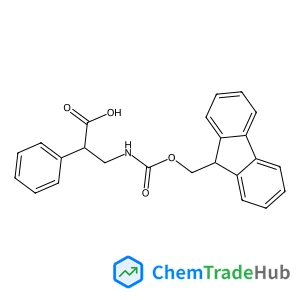
(S)-3-((((9H-Fluoren-9-yl)methoxy)carbonyl)amino)-2-phenylpropanoic acid
CAS番号:
1217663-60-9
分子式:
C24H21NO4
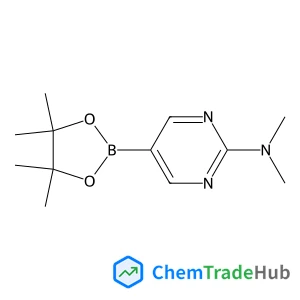
N,N-Dimethyl-5-(4,4,5,5-tetramethyl-1,3,2-dioxaborolan-2-yl)-2-pyrimidinamine
CAS番号:
1032759-30-0
分子式:
C12H20BN3O2
おすすめサプライヤー




免責事項
このページに表示される学術雑誌情報は、参考および研究目的のみを目的としています。当社は雑誌出版社とは提携しておらず、投稿の取り扱いも行っておりません。出版に関するお問い合わせは、各雑誌出版社に直接ご連絡ください。
表示されている情報に誤りがある場合は、support@chemtradehub.com までご連絡ください。迅速に確認し、対応いたします。