











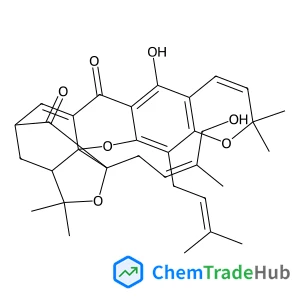
Quantitative analysis of multiple high-resolution mass spectrometry images using chemometric methods: quantitation of chlordecone in mouse liver
文献情報
出版日
2018-04-05
DOI
10.1039/C7AN02059G
インパクトファクター
4.616
著者
Saeedeh Mohammadi, Hadi Parastar
原文を見る
要旨
In this work, a chemometrics-based strategy is developed for quantitative mass spectrometry imaging (MSI). In this regard, quantification of chlordecone as a carcinogenic organochlorinated pesticide (C10Cll0O) in mouse liver using the matrix-assisted laser desorption ionization MSI (MALDI-MSI) method is used as a case study. The MSI datasets corresponded to 1, 5 and 10 days of mouse exposure to the standard chlordecone in the quantity range of 0 to 450 μg g−1. The binning approach in the m/z direction is used to group high resolution m/z values and to reduce the big data size. To consider the effect of bin size on the quality of results, three different bin sizes of 0.25, 0.5 and 1.0 were chosen. Afterwards, three-way MSI data arrays (two spatial and one m/z dimensions) for seven standards and four unknown samples were column-wise augmented with m/z values as the common mode. Then, these datasets were analyzed using multivariate curve resolution-alternating least squares (MCR-ALS) using proper constraints. The resolved mass spectra were used for identification of chlordecone in the presence of a complex background and interference. Additionally, the augmented spatial profiles were post-processed and 2D images for each component were obtained in calibration and unknown samples. The sum of these profiles was utilized to set the calibration curve and to obtain the analytical figures of merit (AFOMs). Inspection of the results showed that the lower bin size (i.e., 0.25) provides more accurate results. Finally, the obtained results by MCR for three datasets were compared with those of gas chromatography-mass spectrometry (GC-MS) and MALDI-MSI. The results showed that the MCR-assisted method gives a higher amount of chlordecone than MALDI-MSI and a lower amount than GC-MS. It is concluded that a combination of chemometric methods with MSI can be considered as an alternative way for MSI quantification.
関連文献
Theoretical study of the mechanism of the solvent dependency of ESIPT in HBT
Keiji Naka
2021-07-19
Paper
DOI: 10.1039/D0CP06604D
A theoretical study on the electronic, structural and optical properties of armchair, zigzag and chiral silicon–germanium nanotubes
Alejandro Herrera-Carbajal, Ventura Rodríguez-Lugo, Juan Hernández-Ávila, Ariadna Sánchez-Castillo
2021-05-09
Paper
DOI: 10.1039/D1CP00519G
CNT/Al2O3 core–shell nanostructures for the electrochemical detection of dihydroxybenzene isomers
Muhammad Hamid Raza, Nicola Pinna, Nicola Donato, Giovanni Neri
2021-05-26
Paper
DOI: 10.1039/D1CP00315A
Infrared spectroscopy of CeO2 nanoparticles using Bergman's spectral representation: effects of phonon confinement and lattice strain
Leire del Campo, Domingos De Sousa Meneses
2021-05-25
Paper
DOI: 10.1039/D1CP01259B
Surface hopping dynamics reveal ultrafast triplet generation promoted by S1–T2–T1 spin-vibronic coupling in 2-mercaptobenzothiazole
Chithra M. J., Probal Nag, Sivaranjana Reddy Vennapusa
2021-08-27
Paper
DOI: 10.1039/D1CP02587B
First principles characterisation of bio–nano interface
Ian Rouse, David Power, Erik G. Brandt, Matthew Schneemilch, Konstantinos Kotsis, Nick Quirke, Alexander P. Lyubartsev, Vladimir Lobaskin
2021-06-10
Paper
DOI: 10.1039/D1CP01116B
Origin of the hydrophobicity of sulfur-containing iron surfaces
Hao Li, Weijie Yang, Chongchong Wu, Jiang Xu
2021-05-28
Paper
DOI: 10.1039/D1CP00588J
Heparin remodels the microtubule-binding repeat R3 of Tau protein towards fibril-prone conformations
Xuewei Dong, Ruxi Qi, Qin Qiao, Xuhua Li, Fangying Li, Jiaqian Wan, Qingwen Zhang, Guanghong Wei
2021-08-20
Paper
DOI: 10.1039/D1CP02651H
The necessity of periodic boundary conditions for the accurate calculation of crystalline terahertz spectra
Peter A. Banks, Luke Burgess, Michael T. Ruggiero
2021-09-08
Perspective
DOI: 10.1039/D1CP02496E
Novel organic semiconductors based on 2-amino-anthracene: Synthesis, charge transport and photo-conductive properties
K. Kondratenko, I. Carlescu, P.-E. Danjou, Y. Boussoualem, A. Simion, B. Duponchel, J. F. Blach, C. Legrand, N. Hurduc, A. Daoudi
2021-05-25
Paper
DOI: 10.1039/D1CP01427G
こちらもおすすめ
化合物よくある質問
3-イチチルビフェニルはどのように合成されますか?
3-イチチルビフェニルは、ビフェニルとイチプロピオニトリルを回収率約90%で反応させて合成されます。触媒は通常、亜リチウムホウ素を用います。
5668-93-93-Ethylbiphenyl
化合物よくある質問
8-溴-5-三氟甲基喹啉はどのように合成されますか?
8-溴-5-三氟甲基喹啉は、5-トリフルオロメチル-2-メチル-1,3-ベンゼンジオールをブロモエタノールと反応させて生成します。この反応は塩基性条件下で行われ...
917251-92-48-Bromo-5-(trifluoro...
化合物よくある質問
ジメチル4-(4,4,5,5-テトラメチル-1,3,2-ドioxaborolan-2-基)-2,6-ピリジンジカルボイル酸フェニルアミニドの代替品はありますか?
ジメチル4-(4,4,5,5-テトラメチル-1,3,2-ドioxaborolan-2-基)-2,6-ピリジンジカルボイル酸フェニルアミニドの代替品としては、4-...
741709-66-0Dimethyl 4-(4,4,5,5-...
化合物よくある質問
N-(3,5-ヘキサクロロ-4-ピリドインイル)-8-メチオキシ-5-キノリンカーボン酸の市場動向や研究トレンドはどのようなものでしょうか?
N-(3,5-ヘキサクロロ-4-ピリドインイル)-8-メチオキシ-5-キノリンカーボン酸の市場動向は、主に産業用途での需要により影響を受けます。研究トレンドとし...
199871-63-1N-(3,5-Dichloro-4-py...
化合物よくある質問
イソステアロイルグリセリルは安全ですか?
イソステアロイルグリセリルは一般的に安全性が高いとされていますが、過度な使用や個人差により皮�owsん炎などの反応が起こる可能性があります。使用前に医師に相談す...
222723-55-92-[(5Z,8Z,11Z,14Z)-5...
化合物よくある質問
1-(二苯甲基)-3,3-二氟-氮杂环丁烷の市場動向や研究トレンドはどうですか?
1-(二苯甲基)-3,3-二氟-氮杂环丁烷の市場動向は、医薬品や合成化学の研究分野で注目を集めています。新興研究は、該当化合物の合成改良と生体内での作用メカニズ...
288315-02-61-Benzhydryl-3,3-dif...
化合物よくある質問
3-チオフェンスチオールの物理化学的性質は何ですか?
3-チオフェンスチオールのCAS番号は7774-73-4です。結晶性の白色粉末で、分子量は122.17です。この化合物は水に微溶解し、エタノールやジクロロメタン...
7774-73-43-Thiophenethiol
化合物よくある質問
2-Methyl-2-propanyl (2S)-2-(aminomethyl)-1-piperidinecarboxylateは安全ですか?
2-Methyl-2-propanyl (2S)-2-(aminomethyl)-1-piperidinecarboxylateは一定の安全性基準を満たしていま...
475105-35-22-Methyl-2-propanyl ...
化合物よくある質問
CAS番号1316822-90-8の化合物は安全ですか?
CAS番号1316822-90-8の化合物は安全性に関しては評価が不足していますが、一般的には生物学的に活性な物質であり、取り扱いには適切な安全防護措置が必要で...
1316822-90-8Gal beta(1-3)[Neu5Ac...
化合物よくある質問
Tert-butyl 2-(2-羟基乙基)哌嗪-1-羧酸はどのように保存すればよいですか?
Tert-butyl 2-(2-羟基乙基)哌嗪-1-羧酸は、冷暗所で保存し、直射日光から遠ざけてください。容器は密閉し、高湿度や高温を避けて保管してください。
517866-79-4Tert-butyl 2-(2-hydr...
掲載誌
Analyst

CiteScore:
7.8
自己引用率:
5.6%
年間論文数:
653
Analyst publishes analytical and bioanalytical research that reports premier fundamental discoveries and inventions, and the applications of those discoveries, unconfined by traditional discipline barriers.
おすすめ化合物


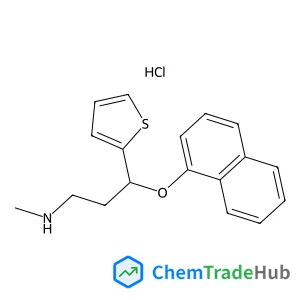
N-Methyl-3-(1-naphthyloxy)-3-(2-thienyl)-1-propanamine hydrochloride (1:1)
CAS番号:
1188266-11-6
分子式:
C18H20ClNOS
![1-{3-[4-Amino-3-(4-phenoxyphenyl)-1H-pyrazolo[3,4-d]pyrimidin-1-yl]-1-piperidinyl}-2,3-dihydroxy-1-propanone structure](https://static.chemtradehub.com/structs/122/1226872-27-0-e037.webp "1-{3-[4-Amino-3-(4-phenoxyphenyl)-1H-pyrazolo[3,4-d]pyrimidin-1-yl]-1-piperidinyl}-2,3-dihydroxy-1-propanone structure")
おすすめサプライヤー





免責事項
このページに表示される学術雑誌情報は、参考および研究目的のみを目的としています。当社は雑誌出版社とは提携しておらず、投稿の取り扱いも行っておりません。出版に関するお問い合わせは、各雑誌出版社に直接ご連絡ください。
表示されている情報に誤りがある場合は、support@chemtradehub.com までご連絡ください。迅速に確認し、対応いたします。