












Film morphology evolution during solvent vapor annealing of highly efficient small molecule donor/acceptor blends
文献情報
出版日
2016-09-15
DOI
10.1039/C6TA05056E
インパクトファクター
12.732
著者
Sebastian Engmann, Hyun Wook Ro, Andrew Herzing, Chad R. Snyder, Lee J. Richter, Paul B. Geraghty, David J. Jones
原文を見る
要旨
Solution-processable small molecule photovoltaics based on the novel molecular donor, benzodithiophene terthiophene rhodanine (BTR), recently have shown maximum power conversion efficiencies above 8% for active layer thicknesses up to 400 nm, using post process solvent vapor annealing (SVA) with tetrahydrofuran (THF). Here we report an in situ study on the morphology evolution during SVA using the moderate solvent THF and the good solvent chloroform (CF). The combination of real-time grazing incidence X-ray diffraction (GIXD) and grazing incidence small angle X-ray scattering (GISAXS) allows us to draw a complete picture of the evolution of crystallinity and phase purity during post process annealing. We find that the relative crystallinity compared to the as-cast films is only modestly affected by SVA and solvent choice. However, both the phase purity and the characteristic domain sizes within the film vary significantly and are controlled by the solvent quality as well as exposure time. Using THF, films with high phase purity and desirable characteristic length scales of about 30 nm can be achieved, while the use of CF rapidly leads to excessive film coarsening and less preferable domain sizes on the order of 60 nm, too large for optimized charge separation.
関連文献
Pd-Catalyzed coupling reaction of cyclobutanols with propargylic carbonates
Penglin Wu, Minqiang Jia
2019-04-01
Research Article
DOI: 10.1039/C9QO00192A
Oxalamide-based bisdiamidophosphites: synthesis, coordination, and application in asymmetric metallocatalysis
Konstantin N. Gavrilov, Igor S. Mikhel, Sergey V. Zheglov, Vladislav K. Gavrilov, Ilya V. Chuchelkin, Ilya D. Firsin, Kirill P. Birin, Ivan S. Pytskii, Ksenia A. Paseshnichenko, Victor A. Tafeenko, Alexei A. Shiryaev
2019-03-28
Research Article
DOI: 10.1039/C9QO00237E
Visible-light-mediated hydrodehalogenation and Br/D exchange of inactivated aryl and alkyl halides with a palladium complex
Jia-Hui Zhao, Xue-Ya Gou, Xi-Meng Chen, Yong-Min Liang
2019-03-28
Research Article
DOI: 10.1039/C9QO00240E
A pore-expanded supramolecular organic framework and its enrichment of photosensitizers and catalysts for visible-light-induced hydrogen production
Meng Yan, Xu-Bo Liu, Zhong-Zheng Gao, Yi-Peng Wu, Jun-Li Hou, Hui Wang, Dan-Wei Zhang, Yi Liu, Zhan-Ting Li
2019-04-16
Research Article
DOI: 10.1039/C9QO00382G
Stereospecific acyloin ring contraction controlled by glucose and concise total synthesis of saffloneoside
Wan Gao, Jian-Shuang Jiang, Zhong Chen, Ya-Nan Yang, Zi-Ming Feng, Xu Zhang, Xiang Yuan, Pei-Cheng Zhang
2019-04-11
Research Article
DOI: 10.1039/C9QO00279K
[Ag(bpy)(PPhtBu2)(OCF3)]: a stable nucleophilic reagent for chemoselective and stereospecific trifluoromethoxylation of secondary alkyl nosylates
Daoqian Chen, Long Lu, Qilong Shen
2019-04-11
Research Article
DOI: 10.1039/C9QO00278B
Photoredox-catalyzed sulfonylation of alkenylcyclobutanols with the insertion of sulfur dioxide through semipinacol rearrangement
Fu-Sheng He, Youqian Wu, Xiaofang Li, Hongguang Xia
2019-04-11
Research Article
DOI: 10.1039/C9QO00300B
Endo/exo binding of alkyl and aryl diammonium ions by cyclopentanocucurbit[6]uril
Yun-Xia Qu, Rui-Lian Lin, Yun-Qian Zhang, Kai-Zhi Zhou, Qing-Di Zhou, Qian-Jiang Zhu, Zhu Tao, Pei-Hua Ma, Jing-Xin Liu, Gang Wei
2017-06-12
Research Article
DOI: 10.1039/C7QO00376E
Correction: Functionalisable acyclic cucurbiturils
Daniel Bauer, Beatrice Andrae, Patrick Gaß, Danjano Trenz, Sabine Becker, Stefan Kubik
2019-03-18
Correction
DOI: 10.1039/C9QO90027F
こちらもおすすめ
化合物よくある質問
6- bromo-1-cyclopropyl-1H-benzimidazoleの市場動向や研究トレンドはどうですか?
6- bromo-1-cyclopropyl-1H-benzimidazoleは、抗炎症、抗ウイルス作用を持つことが報告されており、新薬開発の研究対象として注目...
1416713-53-56-Bromo-1-cyclopropy...
化合物よくある質問
環氧プロpanol-d5を取り扱う際の実験室安全事項は何ですか?
取り扱う際には、防護眼鏡と手袋を使用し、ドラフトチャンバー内で操作することを推奨します。漏洩時には適切な手順で処理し、安全データシートを常に参照してください。
1246819-20-4Glycidol-d5
化合物よくある質問
2,2’-ジメチル-3,3’-ビピリジンはどのように合成されますか?
2,2’-ジメチル-3,3’-ビピリジンは、ピリジンと2-メチルアクリルアミドを有機合成反応で合成します。この反応では、ピリジンと2-メチルアクリルアミドを含有...
86156-55-02,2’-Dimethyl-3,3’-b...
化合物よくある質問
6-甲基ピリジン-2-ボリック酸の主な用途は何ですか?
6-甲基ピリジン-2-ボリック酸は、合成化学、医薬品合成、以及研究用途などに広く使用され、特に組換えDNA技術や分子生物学の研究において重要な役割を果たします。
372963-50-3(6-Methyl-2-pyridiny...
化合物よくある質問
(R)-3-(1-甲基-2-氧環己基)プロpano酸メチルは安全ですか?
(R)-3-(1-甲基-2-氧環己基)プロpano酸メチルは一定の安全性がありますが、直接的な皮膚接触や吸入は避けるべきです。使用する際は適切な個々の安全データ...
94089-47-1methyl 3-[(1R)-1-met...
化合物よくある質問
ketorolacはどのように保存すればよいですか?
ketorolacは、密封して遮光容器に保管し、直射日光や高温を避けて保存してください。温度は常温で保存し、湿度をなるべく低く保つことが推奨されます。
74103-06-3rac Ketorolac
化合物よくある質問
L-2,3-二氨基丙酸二盐酸盐を取り扱う際の実験室安全事項は何ですか?
L-2,3-二氨基丙酸二盐酸盐は腐食性が強く、皮膚や粘膜に刺激を与える可能性があります。取り扱う際は、防塵マスク、ゴーグル、手袋を使用し、適切な排気設備を使用し...
19777-68-5(S)-2,3-Diaminopropa...
化合物よくある質問
2-(4-溴ピリジン-2-基)乙腈の物理化学的性質は何ですか?
2-(4-溴ピリジン-2-基)乙腈のCAS番号は312325-73-8です。主に結晶形態で存在し、分子量は159.01 g/molです。この化合物は水に溶けやす...
312325-73-8(4-Bromo-2-pyridinyl...
化合物よくある質問
3-フローロ-[1,1-ベンジレン]-3,4-ジカルボン酸を取り扱う際の実験室安全事項は何ですか?
この化合物は毒性は低いですが、直接的な接触や吸入に注意が必要です。PPE(個人防護具)を着用し、ドラフトチャンバーを使用して操作することを推奨します。また、漏洩...
1261915-32-53'-Fluoro-[1,1'-biph...
化合物よくある質問
3-(1-氧代-1,3-二氢-2H-2-异吲哚)丙酸の主な用途は何ですか?
3-(1-氧代-1,3-二氢-2H-2-异吲哚)丙酸は、薬理学研究や医薬品製造において広く用いられる化合物です。また、工業的な用途でも一部の化学反応の触媒や助剤...
83747-30-23-(1-Oxo-1,3-dihydro...
掲載誌
Journal of Materials Chemistry A

CiteScore:
19.5
自己引用率:
4.7%
年間論文数:
2211
Journal of Materials Chemistry A, B & C cover high quality studies across all fields of materials chemistry. The journals focus on those theoretical or experimental studies that report new understanding, applications, properties and synthesis of materials. The journals have a strong history of publishing quality reports of interest to interdisciplinary communities and providing an efficient and rigorous service through peer review and publication. The journals are led by an international team of Editors-in-Chief and Associate Editors who are all active researchers in their fields. Journal of Materials Chemistry A, B & C are separated by the intended application of the material studied. Broadly, applications in energy and sustainability are of interest to Journal of Materials Chemistry A, applications in biology and medicine are of interest to Journal of Materials Chemistry B, and applications in optical, magnetic and electronic devices are of interest to Journal of Materials Chemistry C. More than one Journal of Materials Chemistry journal may be suitable for certain fields and researchers are encouraged to submit their paper to the journal that they feel best fits for their particular article. Example topic areas within the scope of Journal of Materials Chemistry A are listed below. This list is neither exhaustive nor exclusive. Artificial photosynthesis Batteries Carbon dioxide conversion Catalysis Fuel cells Gas capture/separation/storage Green/sustainable materials Hydrogen generation Hydrogen storage Photocatalysis Photovoltaics Self-cleaning materials Self-healing materials Sensors Supercapacitors Thermoelectrics Water splitting Water treatment
おすすめ化合物
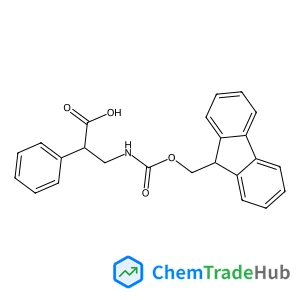
(S)-3-((((9H-Fluoren-9-yl)methoxy)carbonyl)amino)-2-phenylpropanoic acid
CAS番号:
1217663-60-9
分子式:
C24H21NO4
おすすめサプライヤー




免責事項
このページに表示される学術雑誌情報は、参考および研究目的のみを目的としています。当社は雑誌出版社とは提携しておらず、投稿の取り扱いも行っておりません。出版に関するお問い合わせは、各雑誌出版社に直接ご連絡ください。
表示されている情報に誤りがある場合は、support@chemtradehub.com までご連絡ください。迅速に確認し、対応いたします。