












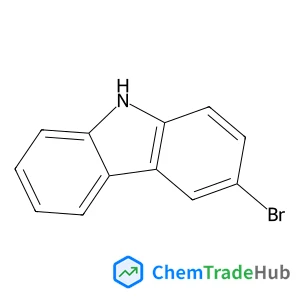
Recent developments for the photoinduced Ar–X bond dissociation reaction
文献情報
出版日
2016-06-13
DOI
10.1039/C6QO00103C
インパクトファクター
5.281
著者
Guanyinsheng Qiu, Yuewen Li
原文を見る
要旨
Recent developments in the photochemical carbon–carbon and carbon–heteroatom bond formation via photoinduced Ar–X bond dissociation are summarized. The transformations through the Ar–X bond dissociation enabled by photoenergy include nucleophilic substitution, arylation, alkylation, aminocarbonylation, aminosulfonylation and decarboxylative coupling reactions. Usually, the reactions undergo one-electron-transfer couplings and aryl radicals or cations are involved as the key intermediates. Under ultraviolet irradiation or visible light, the reactions of aryl halides with reactive partners proceed smoothly under mild conditions. In some cases, the transformations can proceed without any metals or photo-redox catalysts. Moreover, the broad reaction scope is demonstrated with good functional group tolerance.
関連文献
Self-assembly of a bis(adeninyl)–Cu(i) complex: a cationic nucleobase duplex mimic
Miguel A. Galindo, David Amantia, William Clegg, Ross W. Harrington, Richard J. Eyre, Jonathon P. Goss, Patrick R. Briddon, William McFarlane, Andrew Houlton
2009-03-02
Communication
DOI: 10.1039/B817329J
The non-covalent assembly of benzene-bridged metallosalphen dimers: photoconductive tapes with large carrier mobility and spatially distinctive conduction anisotropy
Long Chen, Lu Wang, Xingfa Gao, Shigeru Nagase, Yoshihito Honsho, Akinori Saeki
2009-04-17
Communication
DOI: 10.1039/B904337C
A simple recycling and reuse hydrothermal route to ZnOnanorod arrays, nanoribbon bundles, nanosheets, nanocubes and nanoparticles
Peng Gao, Yujin Chen, Ying Wang, Qin Zhang, Xuefei Li, Min Hu
2009-03-25
Communication
DOI: 10.1039/B900391F
High-density, vertically aligned crystalline CrO2nanorod arrays derived from chemical vapor deposition assisted by AAO templates
Qiang Zhao, Gehui Wen, Zhigang Liu, Jujun Yuan, Dongmei Li, Guangtian Zou, Rongkun Zheng, Simon P. Ringer, Ho-Kwang Mao
2009-05-29
Communication
DOI: 10.1039/B905308E
Solid-phase combinatorial synthesis of ester-type banana-shaped molecules by sequential palladium-catalyzed carbonylation
Sungmin Kang, Junji Watanabe, Takashi Takahashi
2009-03-23
Communication
DOI: 10.1039/B901788G
Electrochemiluminescent immunosensor for detection of protein cancer biomarkers using carbon nanotube forests and [Ru-(bpy)3]2+-doped silica nanoparticles
Naimish Sardesai, Shenmin Pan
2009-07-10
Communication
DOI: 10.1039/B909220J
こちらもおすすめ
化合物よくある質問
3-(5-フェニル-2-ファイル)-プロパン酸の市場動向や研究トレンドはどうですか?
この化合物の市場動向は不明ですが、類似化合物の需要は化学繊維、医薬品、農薬分野で安定しています。研究トレンドとしては、該当化合物の生物学的活性の評価や、その他の...
3465-61-03-(5-Phenyl-2-furyl)...
化合物よくある質問
3- Chloro-1H-indazol-5-olはどのように保存すればよいですか?
3- チロロ-1H-吲唑-5-醇は遮光し、直射日光を避けて、温度は室温を推奨し、密閉容器に保存してください。
885519-34-63-Chloro-1H-indazol-...
849924-76-11,2,3,4,5-Cyclopenta...
化合物よくある質問
L-(1-~13~C)メチオニンの市場動向や研究トレンドはどうですか?
L-(1-~13~C)メチオニンは、医薬品やバイオテクノロジー分野での研究が増加しており、その価格は安定しています。新興研究分野では、代謝解析や遺伝子機能解析で...
81202-04-2L-(1-~13~C)Methionin...
化合物よくある質問
1,3-フェニレンビスメチレンビスアクリレートは安全ですか?
1,3-フェニレンビスメチレンビスアクリレートは一般的に安全ですが、直接皮膚に触れる場合は保護用具を使用することを推奨します。高濃度の蒸気が吸入された場合は呼吸...
22757-16-01,3-Phenylenebis(met...
化合物よくある質問
丹参醇Aはどのように保存すればよいですか?
丹参醇Aは、直射日光を避けて室温で保存し、密栓容器に入れることをお勧めします。適切な保存条件は、安定性を保ち、安全性を確保する上で重要です。
189308-08-5Danshenol A
化合物よくある質問
4-メチル-2-(1,1,1-三フロロ-2-メチルプロパニル)ピリドインとは何ですか?
CAS番号1378865-93-0の4-メチル-2-(1,1,1-三フロロ-2-メチルプロパニル)ピリドインは、合成化学分野で用いられる有機化合物の一種です。こ...
1378865-93-04-Methyl-2-(1,1,1-tr...
化合物よくある質問
N-フェニルベンジル-2-クロロ酢氨を取り扱う際の実験室安全事項は何ですか?
N-フェニルベンジル-2-クロロ酢氨は毒性があり、皮膚や粘膜に刺激を与えます。取り扱う際には、保護眼鏡、手袋、ゴーグルを着用することを強く推奨します。ドラフトチ...
2653-14-7N-benzyl-2-chloro-N-...
化合物よくある質問
UCN-02を取り扱う際の実験室安全事項は何ですか?
UCN-02は毒性は低いですが、人体への直接的な接触は避けるべきです。PPE要件はグローブと顔面保護具を着用することです。ドラフトチャンバーを使用して漏洩を処理...
121569-61-7UCN-02
化合物よくある質問
N-[3-[2-(二甲基氨基)乙氧基]-4-甲氧基苯基]-2'-甲基-4'-(5-甲基-1,2,4-恶二唑-3-基)-[1,1'-联苯]-4-甲酰胺を取り扱う際の実験室安全事項は何ですか?
手袋と保護眼鏡を着用し、漏洩時には吸気防止装置を使用してください。室温、乾燥した場所に保管し、直日光から隔離してください。SDS(安全データシート)を参照してく...
170230-39-4N-{3-[2-(Dimethylami...
掲載誌
Organic Chemistry Frontiers

CiteScore:
7.8
自己引用率:
8.7%
年間論文数:
724
Organic Chemistry Frontiers publishes high-quality research from across organic chemistry. Emphases are placed on studies that make significant contributions to the field of organic chemistry by reporting either new or significantly improved protocols or methodologies. Topics include, but are not limited to the following: Organic synthesis Development of synthetic methodologies Catalysis Natural products Functional organic materials Supramolecular and macromolecular chemistry Physical and computational organic chemistry
おすすめ化合物
![(1S)-1,5-Anhydro-1-[3-(1-benzothiophen-2-ylmethyl)-4-fluorophenyl]-D-glucitol structure](https://static.chemtradehub.com/structs/761/761423-87-4-dbeb.webp "(1S)-1,5-Anhydro-1-[3-(1-benzothiophen-2-ylmethyl)-4-fluorophenyl]-D-glucitol structure")
(1S)-1,5-Anhydro-1-[3-(1-benzothiophen-2-ylmethyl)-4-fluorophenyl]-D-glucitol
CAS番号:
761423-87-4
分子式:
C21H21FO5S

おすすめサプライヤー






免責事項
このページに表示される学術雑誌情報は、参考および研究目的のみを目的としています。当社は雑誌出版社とは提携しておらず、投稿の取り扱いも行っておりません。出版に関するお問い合わせは、各雑誌出版社に直接ご連絡ください。
表示されている情報に誤りがある場合は、support@chemtradehub.com までご連絡ください。迅速に確認し、対応いたします。