












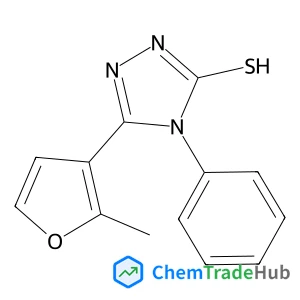
5-(2-Methyl-3-furyl)-4-phenyl-2,4-dihydro-3H-1,2,4-triazole-3-thione
CAS番号:
346464-59-3
分子式:
C13H11N3OS
Run Zhao, Dan Wu, Fuwu Zhang, Li Shao, Jiong Zhou, Jie Yang, Guping Tang, Xiaoyuan Chen, Feihe Huang
Supramolecular brush copolymers have attracted continuing interest due to their unusual architectures, fascinating properties, and potential applications in many fields involving smart stimuli-responsive drug delivery systems. Herein, the first pillararene-based amphiphilic supramolecular brush copolymer (P5-PEG-Biotin⊃PTPE) was constructed on the basis of the host–guest molecular recognition between a water-soluble pillar[5]arene (P5) and a viologen salt (M). P5-PEG-Biotin⊃PTPE self-assembled into supramolecular nanoparticles (SNPs), which were utilized as a self-imaging drug delivery vehicle by taking advantage of the aggregation-induced emission (AIE) effect. Encapsulation of anticancer drug doxorubicin (DOX) caused deactivation of the fluorescence of both the tetraphenylethene (TPE) and DOX chromophores due to the energy transfer relay (ETR) effect, mediated by Förster resonance energy transfer (FRET) and aggregation-caused quenching (ACQ). The release of loaded DOX molecules can be triggered by low pH and reductase, recovering the “silenced” fluorescence caused by the interruption of the ETR effect, achieving in situ visualization of the drug release process by observing the location and magnitude of the energy transfer-dependent fluorescence variation. The biotin ligands on the surfaces of the DOX-loaded SNPs act as targeting agents to deliver DOX preferentially to cancer cells over-expressing biotin receptors. In vitro studies demonstrated that the loading of DOX by this supramolecular nanomaterial exhibited selective cytotoxicity towards cancer cells over normal cells. The potency of this sophisticated supramolecular drug delivery system in cancer therapy was further evaluated in HeLa tumor-bearing mice. In vivo experiments confirmed that the DOX-loaded SNPs possess excellent antitumor efficacy with negligible systemic toxicity.
Chaoying Liu, Fang Pu, Jinsong Ren, Xiaogang Qu
DOI: 10.1039/C6AN00997B
DOI: 10.1039/C6AN00795C
Patrick Esch, Sven Heiles
DOI: 10.1039/C9AN02260K
Dawn White, Mehdi Keramane, Alfredo Capretta, John D. Brennan
DOI: 10.1039/C9AN02219H
Kai Hu, Da-Wei Li, Yi-Tao Long
DOI: 10.1039/C6AN00319B
Ruqiao Zhou, Guiling Cui, Qingrong Qi, Wencai Huang, Li Yang
DOI: 10.1039/C9AN02323B
Kamonwad Ngamchuea, Christopher Batchelor-McAuley, Philip J. Cowen, Clare Williams, Luís Moreira Gonçalves, Richard G. Compton
DOI: 10.1039/C6AN01139J
DOI: 10.1039/C6AN90038K
Yu Du, Xiaojian Li, Xiang Ren, Huan Wang, Dan Wu, Hongmin Ma, Dawei Fan, Qin Wei
DOI: 10.1039/C9AN02288K
Soham Samanta, Barun Kumar Datta, Madhurima Boral, Abhijit Nandan, Gopal Das
DOI: 10.1039/C6AN00657D
取り扱いにはPPE(プロテクティブ・パーソナル・エイド)が必要で、防ぐ手袋と保護眼鏡を着用してください。ドラフトチャンバーの使用を推奨します。漏洩した場合は、適...
この化合物の代替品としては、BOC保護基を有さないアミノ酸やその他の保護基化合物が考えられます。また、メチオキシ基を有しない他の芳香族アミノ酸も代替品として挙げ...
Methyl 2-(chloromethyl)-3-nitrobenzoate(1218910-61-2)の代替品としては、化学組成を変えることで効果を達成する...
(2R)-2-アミノ-N-ベンジル-3-ヒドロキシプロパナミドを含む廃棄物は、適切な廃棄物管理ガイドラインに基づき処理する必要があります。まず、廃棄物を適切に収...
6,7-二氢-咪唑並[1,2-a]ピリドイン-8(5h)-酮は、2-ブロモフェニルアセトインとリン酸ハロゲン化物を反応させることで合成できます。この反応は高温で...
エチル(3R)-3-ピロリジニル酢酸水和塩は、CAS番号1332459-32-1の化合物で、(R)-乙基2-(ピロリジン-3-基)酢酸塩水和塩と呼ばれます。この...
(2S)-{[(2-メチルエチルオキシ]カルボニル}アミノ)[2-(トリアフルオロメチルフェニル]エチカシック酸のCAS番号は1203454-45-8です。この...
2-ブロモ-1-(2-メチル-2-プロパニル)-4-ニトロベンゼンは、直射日光を避けて暗所で、室温(約15℃〜25℃)、乾燥した場所に保存する必要があります。ま...
市場動向としては、1-[(4-硝基フェニル)スルホニル]-1H-1,2,4-三唑は主に農業用除草剤や合成化学製品の原料として利用されています。研究トレンドとして...

Polymer Chemistry welcomes submissions in all areas of polymer science that have a strong focus on macromolecular chemistry. Manuscripts may cover a broad range of fields, yet no direct application focus is required.
![N-[2-(2-Pyridinyl)ethyl]-1-propanamine structure](https://static.chemtradehub.com/structs/554/55496-57-6-22b4.webp "N-[2-(2-Pyridinyl)ethyl]-1-propanamine structure")
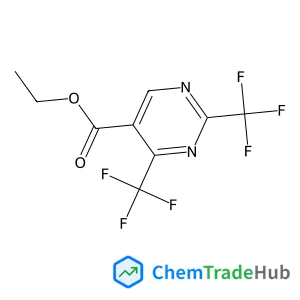
![Benzeneacetic acid, 2-bromo-α-[[(1,1-dimethylethoxy)carbonyl]amino]-, (αS)- structure](https://static.chemtradehub.com/structs/122/1228547-87-2-f296.webp "Benzeneacetic acid, 2-bromo-α-[[(1,1-dimethylethoxy)carbonyl]amino]-, (αS)- structure")
![6-(Benzyloxy)-8-(2-bromoacetyl)-2H-benzo[b][1,4]oxazin-3(4H)-one structure](https://static.chemtradehub.com/structs/926/926319-53-1-2287.webp "6-(Benzyloxy)-8-(2-bromoacetyl)-2H-benzo[b][1,4]oxazin-3(4H)-one structure")



