












Modular segmented hyperbranched copolymers
文献情報
出版日
2016-06-06
DOI
10.1039/C6PY00819D
インパクトファクター
5.582
著者
Patricia R. Bachler, Kaitlyn E. Forry, Chelsea A. Sparks, Michael D. Schulz, Kenneth B. Wagener, Brent S. Sumerlin
原文を見る
要旨
Modular segmented hyperbranched polymers, amenable to facile post-polymerization functionalization, were created via two distinct approaches. Self-condensing vinyl polymerization via reversible addition–fragmentation chain transfer (RAFT) polymerization and RAFT polymerization with a divinyl comonomer were employed to create well-defined highly branched materials containing activated esters amenable to highly efficient functionalization in a modular manner.
関連文献
CO Tolerance of Pt alloy electrocatalysts for polymer electrolyte fuel cells and the detoxification mechanism
Hiroshi Igarashi, Takeshi Fujino, Yimin Zhu, Hiroyuki Uchida, Masahiro Watanabe
2001-01-08
Paper
DOI: 10.1039/B007768M
Self-assembly of poly(vinylidene fluoride)-block-poly(2-(dimethylamino)ethylmethacrylate) block copolymers prepared by CuAAC click coupling
Marc Guerre, Mona Semsarilar, Cedric Totée, Gilles Silly, Bruno Améduri, Vincent Ladmiral
2017-05-12
Paper
DOI: 10.1039/C7PY00346C
Ligand field effect on the chemical shift in XANES spectra of Cu(II) compounds
Ken-ichi Shimizu, Hajime Maeshima, Hisao Yoshida, Atsushi Satsuma, Tadashi Hattori
2001-02-06
Paper
DOI: 10.1039/B007276L
Characterization of different Pt–Ru catalysts by X-ray diffraction and transmission electron microscopy
2000-11-10
Paper
DOI: 10.1039/B004887I
Chalcogenide hybrid inorganic/organic polymers (CHIPs) via inverse vulcanization and dynamic covalent polymerizations
Yueyan Zhang, Katrina M. Konopka, Richard S. Glass, Kookheon Char
2017-04-19
Paper
DOI: 10.1039/C7PY00587C
The effect of conjugated π-bridge and fluorination on the properties of asymmetric-building-block-containing polymers (ABC polymers) based on dithienopyran donor and benzothiadiazole acceptors
Xiaochen Wang, Ailing Tang
2017-07-26
Paper
DOI: 10.1039/C7PY00964J
Helically twining polymerization for constructing polymeric double helices
Huajun Huang, Song Hong, Junya Liang, Yan Shi, Jianping Deng
2017-08-21
Paper
DOI: 10.1039/C7PY00729A
Validation and evaluation of electrochemical impedance spectra of systems with states that change with time
F. Richter, E. Gülzow, N. Wagner
2000-12-19
Paper
DOI: 10.1039/B007678N
Synthesis of molecular brushes by telomerization
Coralie Teulère, Renaud Nicolaÿ
2017-06-23
Paper
DOI: 10.1039/C7PY00875A
こちらもおすすめ
化合物よくある質問
6- bromo-1-cyclopropyl-1H-benzimidazoleの市場動向や研究トレンドはどうですか?
6- bromo-1-cyclopropyl-1H-benzimidazoleは、抗炎症、抗ウイルス作用を持つことが報告されており、新薬開発の研究対象として注目...
1416713-53-56-Bromo-1-cyclopropy...
化合物よくある質問
環氧プロpanol-d5を取り扱う際の実験室安全事項は何ですか?
取り扱う際には、防護眼鏡と手袋を使用し、ドラフトチャンバー内で操作することを推奨します。漏洩時には適切な手順で処理し、安全データシートを常に参照してください。
1246819-20-4Glycidol-d5
化合物よくある質問
2,2’-ジメチル-3,3’-ビピリジンはどのように合成されますか?
2,2’-ジメチル-3,3’-ビピリジンは、ピリジンと2-メチルアクリルアミドを有機合成反応で合成します。この反応では、ピリジンと2-メチルアクリルアミドを含有...
86156-55-02,2’-Dimethyl-3,3’-b...
化合物よくある質問
6-甲基ピリジン-2-ボリック酸の主な用途は何ですか?
6-甲基ピリジン-2-ボリック酸は、合成化学、医薬品合成、以及研究用途などに広く使用され、特に組換えDNA技術や分子生物学の研究において重要な役割を果たします。
372963-50-3(6-Methyl-2-pyridiny...
化合物よくある質問
(R)-3-(1-甲基-2-氧環己基)プロpano酸メチルは安全ですか?
(R)-3-(1-甲基-2-氧環己基)プロpano酸メチルは一定の安全性がありますが、直接的な皮膚接触や吸入は避けるべきです。使用する際は適切な個々の安全データ...
94089-47-1methyl 3-[(1R)-1-met...
化合物よくある質問
ketorolacはどのように保存すればよいですか?
ketorolacは、密封して遮光容器に保管し、直射日光や高温を避けて保存してください。温度は常温で保存し、湿度をなるべく低く保つことが推奨されます。
74103-06-3rac Ketorolac
化合物よくある質問
L-2,3-二氨基丙酸二盐酸盐を取り扱う際の実験室安全事項は何ですか?
L-2,3-二氨基丙酸二盐酸盐は腐食性が強く、皮膚や粘膜に刺激を与える可能性があります。取り扱う際は、防塵マスク、ゴーグル、手袋を使用し、適切な排気設備を使用し...
19777-68-5(S)-2,3-Diaminopropa...
化合物よくある質問
2-(4-溴ピリジン-2-基)乙腈の物理化学的性質は何ですか?
2-(4-溴ピリジン-2-基)乙腈のCAS番号は312325-73-8です。主に結晶形態で存在し、分子量は159.01 g/molです。この化合物は水に溶けやす...
312325-73-8(4-Bromo-2-pyridinyl...
化合物よくある質問
3-フローロ-[1,1-ベンジレン]-3,4-ジカルボン酸を取り扱う際の実験室安全事項は何ですか?
この化合物は毒性は低いですが、直接的な接触や吸入に注意が必要です。PPE(個人防護具)を着用し、ドラフトチャンバーを使用して操作することを推奨します。また、漏洩...
1261915-32-53'-Fluoro-[1,1'-biph...
化合物よくある質問
3-(1-氧代-1,3-二氢-2H-2-异吲哚)丙酸の主な用途は何ですか?
3-(1-氧代-1,3-二氢-2H-2-异吲哚)丙酸は、薬理学研究や医薬品製造において広く用いられる化合物です。また、工業的な用途でも一部の化学反応の触媒や助剤...
83747-30-23-(1-Oxo-1,3-dihydro...
掲載誌
Polymer Chemistry

CiteScore:
8.6
自己引用率:
7.3%
年間論文数:
457
Polymer Chemistry welcomes submissions in all areas of polymer science that have a strong focus on macromolecular chemistry. Manuscripts may cover a broad range of fields, yet no direct application focus is required.
おすすめ化合物

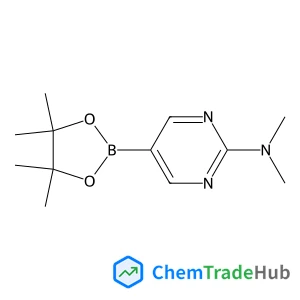
N,N-Dimethyl-5-(4,4,5,5-tetramethyl-1,3,2-dioxaborolan-2-yl)-2-pyrimidinamine
CAS番号:
1032759-30-0
分子式:
C12H20BN3O2
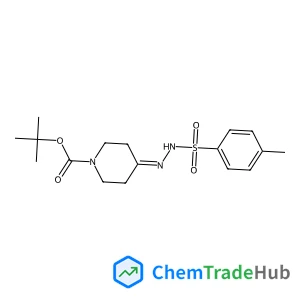
tert-Butyl 4-(2-(p-Tolylsulfonyl)hydrazono)piperidine-1-carboxylate
CAS番号:
1046478-89-0
分子式:
C17H25N3O4S
おすすめサプライヤー




免責事項
このページに表示される学術雑誌情報は、参考および研究目的のみを目的としています。当社は雑誌出版社とは提携しておらず、投稿の取り扱いも行っておりません。出版に関するお問い合わせは、各雑誌出版社に直接ご連絡ください。
表示されている情報に誤りがある場合は、support@chemtradehub.com までご連絡ください。迅速に確認し、対応いたします。