


Fabrication of honeycomb films from highly functional dendritic structures: electrostatic force driven immobilization of biomolecules
文献情報
出版日
2016-05-23
DOI
10.1039/C6PY00601A
インパクトファクター
5.582
著者
A. S. De León, S. Malhotra, M. Molina, A. Muñoz-Bonilla, J. Rodríguez-Hernández
原文を見る
要旨
Herein we report the preparation of honeycomb porous films for selective immobilization of biomolecules via the breath figure technique, a water-assisted micropatterning method. In particular, porous films are obtained from polymeric blends composed of high molecular weight polystyrene as the major component and an oligoglycerol based dendron covalently bonded to a hydrophobic polystyrene chain as the minor constituent. The multivalent dendritic architecture presents a well-defined molecular structure with controlled glycine arrays on their surfaces. Due to the mechanism of the breath figure formation, the resulting films exhibit an especial chemical distribution at the surfaces, in which the dendritic functional polymer is located preferentially in the interior of the pores while the rest of the polymer surface is mainly formed by the high molecular weight polystyrene. The high amount of amine functional groups inside the pores allowed the specific immobilization of biomolecules into the cavities by electrostatic interactions. In particular, the protein bovine serum albumin (BSA) and a DNA sequence were attached onto the films as a proof of concept. Besides, it was demonstrated that the density of biomolecules immobilized can be easily tuned by varying the content of the dendritic functional polymer in the film. These unique characteristics open new alternatives for the use of these platforms in biorelated applications including bio-recognition processes, or the understanding of cell–protein and even cell–DNA interactions on biofunctional microstructured polymeric supports.
おすすめジャーナル

Saudi Pharmaceutical Journal

Journal of Peptide Science

Russian Journal of Applied Chemistry

Russian Journal of Coordination Chemistry

Current Opinion in Solid State & Materials Science

Russian Journal of General Chemistry

Current Opinion in Colloid & Interface Science

Russian Journal of Bioorganic Chemistry

Russian Chemical Bulletin

Journal of Saudi Chemical Society
関連文献
The mechanistic exploration of porous activated graphene sheets-anchored SnO2nanocrystals for application in high-performance Li-ion battery anodes
Yingchang Yang, Xiaobo Ji, Fang Lu, Qiyuan Chen, Craig E. Banks
2013-08-07
Paper
DOI: 10.1039/C3CP52808A
Structural and spectroscopic characterization of potassium fluoroborohydrides
Richard H. Heyn, Ivan Saldan, Magnus H. Sørby, Christoph Frommen, Bjørnar Arstad, Aud M. Bougza, Helmer Fjellvåg, Bjørn C. Hauback
2013-05-17
Communication
DOI: 10.1039/C3CP52070F
Multidimensional local mode calculations for the vibrational spectra of OH−(H2O)2 and OH−(H2O)2·Ar
Masato Morita, Kaito Takahashi
2013-07-01
Paper
DOI: 10.1039/C3CP51903A
Hydrogen bond network topology in liquid water and methanol: a graph theory approach
Imre Bakó, Ákos Bencsura, Kersti Hermannson, Szabolcs Bálint, Tamás Grósz, Julianna Oláh
2013-08-08
Paper
DOI: 10.1039/C3CP52271G
Observing reduction of 4-nitrobenzenthiol on gold nanoparticlesin situ using surface-enhanced Raman spectroscopy
Xiaoqian Ren, Tingting You, Li Jiang, Hongyan Zhang, Penggang Yin, Lin Guo
2013-06-18
Paper
DOI: 10.1039/C3CP51385H
Shape-dependent two-photon absorption in two-dimensionally extended benzoporphyrin arrays
Pyosang Kim, Sujin Ham, Juwon Oh, Hiroki Uoyama, Hajime Watanabe, Kazunari Tagawa, Hidemitsu Uno, Dongho Kim
2013-04-04
Communication
DOI: 10.1039/C3CP50166C
Dye-sensitized solar cells based on hydroquinone/benzoquinone as bio-inspired redox couple with different counter electrodes
Ming Cheng, Xichuan Yang, Cheng Chen, Jianghua Zhao, Fuguo Zhang
2013-06-24
Paper
DOI: 10.1039/C3CP51980E
Compact large area and high-quality Au film with a hierarchical structure and its application in SERS
Youyi Xia, Tenjiao Li, Jun Chen
2013-05-15
Paper
DOI: 10.1039/C3CP51080H
こちらもおすすめ
化合物よくある質問
6- bromo-1-cyclopropyl-1H-benzimidazoleの市場動向や研究トレンドはどうですか?
6- bromo-1-cyclopropyl-1H-benzimidazoleは、抗炎症、抗ウイルス作用を持つことが報告されており、新薬開発の研究対象として注目...
1416713-53-56-Bromo-1-cyclopropy...
化合物よくある質問
環氧プロpanol-d5を取り扱う際の実験室安全事項は何ですか?
取り扱う際には、防護眼鏡と手袋を使用し、ドラフトチャンバー内で操作することを推奨します。漏洩時には適切な手順で処理し、安全データシートを常に参照してください。
1246819-20-4Glycidol-d5
化合物よくある質問
2,2’-ジメチル-3,3’-ビピリジンはどのように合成されますか?
2,2’-ジメチル-3,3’-ビピリジンは、ピリジンと2-メチルアクリルアミドを有機合成反応で合成します。この反応では、ピリジンと2-メチルアクリルアミドを含有...
86156-55-02,2’-Dimethyl-3,3’-b...
化合物よくある質問
6-甲基ピリジン-2-ボリック酸の主な用途は何ですか?
6-甲基ピリジン-2-ボリック酸は、合成化学、医薬品合成、以及研究用途などに広く使用され、特に組換えDNA技術や分子生物学の研究において重要な役割を果たします。
372963-50-3(6-Methyl-2-pyridiny...
化合物よくある質問
(R)-3-(1-甲基-2-氧環己基)プロpano酸メチルは安全ですか?
(R)-3-(1-甲基-2-氧環己基)プロpano酸メチルは一定の安全性がありますが、直接的な皮膚接触や吸入は避けるべきです。使用する際は適切な個々の安全データ...
94089-47-1methyl 3-[(1R)-1-met...
化合物よくある質問
ketorolacはどのように保存すればよいですか?
ketorolacは、密封して遮光容器に保管し、直射日光や高温を避けて保存してください。温度は常温で保存し、湿度をなるべく低く保つことが推奨されます。
74103-06-3rac Ketorolac
化合物よくある質問
L-2,3-二氨基丙酸二盐酸盐を取り扱う際の実験室安全事項は何ですか?
L-2,3-二氨基丙酸二盐酸盐は腐食性が強く、皮膚や粘膜に刺激を与える可能性があります。取り扱う際は、防塵マスク、ゴーグル、手袋を使用し、適切な排気設備を使用し...
19777-68-5(S)-2,3-Diaminopropa...
化合物よくある質問
2-(4-溴ピリジン-2-基)乙腈の物理化学的性質は何ですか?
2-(4-溴ピリジン-2-基)乙腈のCAS番号は312325-73-8です。主に結晶形態で存在し、分子量は159.01 g/molです。この化合物は水に溶けやす...
312325-73-8(4-Bromo-2-pyridinyl...
化合物よくある質問
3-フローロ-[1,1-ベンジレン]-3,4-ジカルボン酸を取り扱う際の実験室安全事項は何ですか?
この化合物は毒性は低いですが、直接的な接触や吸入に注意が必要です。PPE(個人防護具)を着用し、ドラフトチャンバーを使用して操作することを推奨します。また、漏洩...
1261915-32-53'-Fluoro-[1,1'-biph...
化合物よくある質問
3-(1-氧代-1,3-二氢-2H-2-异吲哚)丙酸の主な用途は何ですか?
3-(1-氧代-1,3-二氢-2H-2-异吲哚)丙酸は、薬理学研究や医薬品製造において広く用いられる化合物です。また、工業的な用途でも一部の化学反応の触媒や助剤...
83747-30-23-(1-Oxo-1,3-dihydro...
掲載誌
Polymer Chemistry

CiteScore:
8.6
自己引用率:
7.3%
年間論文数:
457
Polymer Chemistry welcomes submissions in all areas of polymer science that have a strong focus on macromolecular chemistry. Manuscripts may cover a broad range of fields, yet no direct application focus is required.
おすすめ化合物
![4-[(3-Chloro-2-fluorophenyl)amino]-7-methoxy-6-quinazolinyl acetate structure](https://static.chemtradehub.com/structs/740/740081-22-5-f58f.webp "4-[(3-Chloro-2-fluorophenyl)amino]-7-methoxy-6-quinazolinyl acetate structure")
4-[(3-Chloro-2-fluorophenyl)amino]-7-methoxy-6-quinazolinyl acetate
CAS番号:
740081-22-5
分子式:
C17H13ClFN3O3
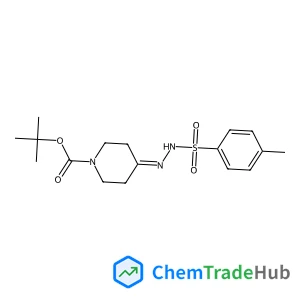
tert-Butyl 4-(2-(p-Tolylsulfonyl)hydrazono)piperidine-1-carboxylate
CAS番号:
1046478-89-0
分子式:
C17H25N3O4S
![(2S)-2-{[(9H-Fluoren-9-ylmethoxy)carbonyl]amino}-4-(methylselanyl)butanoic acid structure](https://static.chemtradehub.com/structs/121/1217852-49-7-f252.webp "(2S)-2-{[(9H-Fluoren-9-ylmethoxy)carbonyl]amino}-4-(methylselanyl)butanoic acid structure")
(2S)-2-{[(9H-Fluoren-9-ylmethoxy)carbonyl]amino}-4-(methylselanyl)butanoic acid
CAS番号:
1217852-49-7
分子式:
C20H21NO4Se
おすすめサプライヤー



免責事項
このページに表示される学術雑誌情報は、参考および研究目的のみを目的としています。当社は雑誌出版社とは提携しておらず、投稿の取り扱いも行っておりません。出版に関するお問い合わせは、各雑誌出版社に直接ご連絡ください。
表示されている情報に誤りがある場合は、support@chemtradehub.com までご連絡ください。迅速に確認し、対応いたします。