












Tris-bipyridine based dinuclear ruthenium(ii)–osmium(iii) complex dyads grafted onto TiO2 nanoparticles for mimicking the artificial photosynthetic Z-scheme
文献情報
出版日
2017-01-04
DOI
10.1039/C6CP06679H
インパクトファクター
3.676
著者
Ludovic Favereau, Abhinandan Makhal, David Provost, Yann Pellegrin, Errol Blart, Erik Göransson, Leif Hammarström, Fabrice Odobel
原文を見る
要旨
The Z-Scheme function within molecular systems has been rarely reported for solar energy conversion although it offers the possibility to achieve higher efficiency than single photon absorber photosystems due to the use of a wider range of visible light. In this study, we synthesized and investigated the electrochemical and spectroscopic properties of two new dyads based on ruthenium and osmium tris-bipyridine complexes covalently linked via a butane bridge to explore their ability to realize the Z-scheme function once immobilized on TiO2. These dyads can be grafted onto a nanocrystalline TiO2 film via the osmium complex bearing two dicarboxylic acid bipyridine ligands, while the ruthenium complex contains either two unsubstituted bipyridine ancillary ligands (RuH–Os) or two (4,4′-bis-trifluoromethyl-bipyridine) ancillary ligands (RuCF3–Os). Transient absorption spectroscopy studies of the Ru(II)–Os(III) dyads with femtosecond and nanosecond lasers were conducted both in solution and on TiO2. For both conditions, the photophysical studies revealed that the MLCT excited state of the ruthenium complex is strongly quenched and predominantly decays by energy transfer to the LMCT of the adjacent Os(III) complex, in spite of the high driving force for electron transfer. This unexpected result, which is in sharp contrast to previously reported Ru(II)–Os(III) dyads, precluded us to achieve the expected Z-scheme function. However, the above results may be a guide for designing new artificial molecular systems reproducing the complex function of a Z-scheme with molecular systems grafted onto a TiO2 mesoporous film.
関連文献
Bonding and spectroscopic properties of complexes of SO2–O2 and SO2–N2 and its atmospheric consequences
Samiyara Begum, Ranga Subramanian
2014-06-26
Paper
DOI: 10.1039/C4CP01084A
Electrodeposition of iron and iron–aluminium alloys in an ionic liquid and their magnetic properties
P. Giridhar, B. Weidenfeller, F. Endres
2014-03-26
Paper
DOI: 10.1039/C4CP00613E
Self-powered ultraviolet photodetectors based on selectively grown ZnO nanowire arrays with thermal tuning performance
Zhiming Bai, Xiang Chen, Xiaoqin Yan, Xin Zheng, Zhuo Kang
2014-04-03
Paper
DOI: 10.1039/C4CP00892H
Effect of the electropositive elements A = Sc, La, and Ce on the microscopic dynamics of AV2Al20
Michael Marek Koza, Andreas Leithe-Jasper, Erik Sischka, Walter Schnelle, Horst Borrmann, Hannu Mutka, Yuri Grin
2014-10-22
Paper
DOI: 10.1039/C4CP04097J
Theoretical investigation and design of high-efficiency dithiafulvenyl-based sensitizers for dye-sensitized solar cells: the impacts of elongating π-spacers and rigidifying dithiophene
Wei Li, Jian Wang, Jie Chen, Fu-Quan Bai, Hong-Xing Zhang
2014-03-31
Paper
DOI: 10.1039/C4CP00968A
Observing Pt nanoparticle formation at the atomic level during polyol synthesis
Jocenir Boita, Lucas Nicolao, Maria C. M. Alves, Jonder Morais
2014-07-10
Paper
DOI: 10.1039/C4CP01925C
Effect of water on the transport properties of protic and aprotic imidazolium ionic liquids – an analysis of self-diffusivity, conductivity, and proton exchange mechanism
N. Yaghini, L. Nordstierna, A. Martinelli
2014-03-18
Paper
DOI: 10.1039/C4CP00527A
Conformational changes of globular proteins upon adsorption on a hydrophobic surface
Yevgeny Moskovitz, Simcha Srebnik
2014-04-16
Paper
DOI: 10.1039/C4CP00354C
High DNP efficiency of TEMPONE radicals in liquid toluene at low concentrations
Nikolay Enkin, Guoquan Liu, Igor Tkach, Marina Bennati
2014-03-20
Communication
DOI: 10.1039/C4CP00854E
Solvent-mediated molar conductivity of protic ionic liquids
Sachin Thawarkar, Nageshwar D. Khupse, Anil Kumar
2014-11-05
Paper
DOI: 10.1039/C4CP04591B
こちらもおすすめ
化合物よくある質問
2-メトキシ-4-(メチルスルフィニル)アミンの主な用途は何ですか?
2-メトキシ-4-(メチルスルフィニル)アミンは、主に医薬品および農薬の製造に使用されます。また、合成化学の一部として研究用材料としても利用されます。
41608-73-52-Methoxy-4-(methyls...
118684-13-24-(Bromomethyl)-3-me...
化合物よくある質問
4,6-二氯-N-甲基ピラミジンアミンの代替品はありますか?
代替品としては、4,6-二クロロピラミジンアミンや他のピラミジン系化合物が考えられます。ただし、目的と用途によって最適な代替品は異なります。
10397-15-64,6-Dichloro-N-methy...
化合物よくある質問
6-氯-4-甲基-1H-吲哚を含む廃棄物はどのように処理すべきですか?
6-氯-4-甲基-1H-吲哚の廃棄物は、適切な容器に収集し、密閉して保管します。温度は常温、湿度は低く、直射日光を避けて保管することを推奨します。廃棄処理は専門...
885520-84-36-chloro-4-methyl-1H...
化合物よくある質問
2-フローユロ-4-(トリフルオロメチル)ベンゾイドについて「に適用される法規ガイドラインは何ですか」
2-フローユロ-4-(トリフルオロメチル)ベンゾイドのCAS番号は207974-08-1です。この化合物はGHS分類で毒性物質と有害な反応物質として分類されます...
207974-08-1[2-Fluoro-4-(trifluo...
化合物よくある質問
4-ニトロフェニルN-[(ベンゼルオキシルカーボンイル]グリシングリシングリシン酸はどのように保存すればよいですか?
4-ニトロフェニルN-[(ベンゼルオキシルカーボンイル]グリシングリシングリシン酸は、室温で暗所に保管し、乾燥した環境で保存することを推奨します。容器は密閉性の...
19811-64-44-Nitrophenyl N-[(be...
化合物よくある質問
イソデスロラタドリンの代替品はありますか?
イソデスロラタドリンの代替品としては、デスロラタドリンや他の抗ヒスタミン薬が挙げられます。具体的には、デスロラタドリン、ラセカミド、フェルタドリンなどが、症状や...
183198-49-4Iso Desloratadine
化合物よくある質問
5-甲氧基-1,2,3,4-四氢异喹啉盐酸盐はどのように合成されますか?
5-甲氧基-1,2,3,4-四氢异喹啉盐酸盐の一般的な合成方法は、メタノール中で5-メトキシ-1,2,3,4-四ヒュドロイソキシンを塩酸で塩化します。この反応で...
103030-69-95-Methoxy-1,2,3,4-te...
化合物よくある質問
4-アミノ-5-メトキシ-2-トルエンサルホニック酸についての法規ガイドラインは何ですか?
CAS番号6471-78-9の4-アミノ-5-メトキシ-2-トルエンサルホニック酸は、GHS分類では corrosive(腐食性)と識別されます。EUのREAC...
6471-78-94-Amino-5-Methoxy-2-...
化合物よくある質問
甲基孕酮を取り扱う際の実験室安全事項は何ですか?
甲基孕酮の取り扱いは、PPE(個人保護具)の使用が必要な重要な安全事項を伴います。防塵マスク、ゴーグル、手袋を着用することが推奨されます。ドラフトチャンバーを使...
204063-33-22-[(Diphenylmethyl)a...
掲載誌
Physical Chemistry Chemical Physics

CiteScore:
5.5
自己引用率:
10.3%
年間論文数:
3036
Physical Chemistry Chemical Physics (PCCP) is an international journal co-owned by 19 physical chemistry and physics societies from around the world. This journal publishes original, cutting-edge research in physical chemistry, chemical physics and biophysical chemistry. To be suitable for publication in PCCP, articles must include significant innovation and/or insight into physical chemistry; this is the most important criterion that reviewers and Editors will judge against when evaluating submissions. The journal has a broad scope and welcomes contributions spanning experiment, theory, computation and data science. Topical coverage includes spectroscopy, dynamics, kinetics, statistical mechanics, thermodynamics, electrochemistry, catalysis, surface science, quantum mechanics, quantum computing and machine learning. Interdisciplinary research areas such as polymers and soft matter, materials, nanoscience, energy, surfaces/interfaces, and biophysical chemistry are welcomed if they demonstrate significant innovation and/or insight into physical chemistry. Joined experimental/theoretical studies are particularly appreciated when complementary and based on up-to-date approaches.
おすすめ化合物


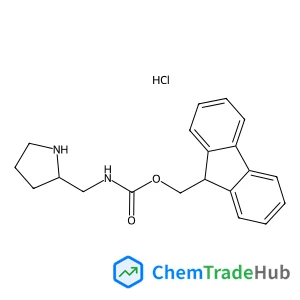
(S)-(9H-Fluoren-9-yl)methyl (pyrrolidin-2-ylmethyl)carbamate hydrochloride
CAS番号:
1217813-15-4
分子式:
C20H23ClN2O2
おすすめサプライヤー





免責事項
このページに表示される学術雑誌情報は、参考および研究目的のみを目的としています。当社は雑誌出版社とは提携しておらず、投稿の取り扱いも行っておりません。出版に関するお問い合わせは、各雑誌出版社に直接ご連絡ください。
表示されている情報に誤りがある場合は、support@chemtradehub.com までご連絡ください。迅速に確認し、対応いたします。