












A first-principles study of the preventive effects of Al and Mg doping on the degradation in LiNi0.8Co0.1Mn0.1O2 cathode materials
文献情報
出版日
2016-11-15
DOI
10.1039/C6CP06270A
インパクトファクター
3.676
著者
Kyoungmin Min, Seung-Woo Seo, You Young Song, Hyo Sug Lee, Eunseog Cho
原文を見る
要旨
First-principles calculations have been used to investigate the effects of Al and Mg doping on the prevention of degradation phenomena in Li(Ni0.8Co0.1Mn0.1)O2 cathode materials. Specifically, we have examined the effects of dopants on the suppression of oxygen evolution and cation disordering, as well as their correlation. It is found that Al doping can suppress the formation of oxygen vacancies effectively, while Mg doping prevents the cation disordering behaviors, i.e., excess Ni and Li/Ni exchange, and Ni migration. This study also demonstrates that formation of oxygen vacancies can facilitate the construction of the cation disordering, and vice versa. Delithiation can increase the probabilities of formation of all defect types, especially oxygen vacancies. When oxygen vacancies are present, Ni can migrate to the Li site during delithiation. However, Al and Mg doping can inhibit Ni migration, even in structures with preformed oxygen defects. The analysis of atomic charge variations during delithiation demonstrates that the degree of oxidation behavior in oxygen atoms is alleviated in the case of Al doping, indicating the enhanced oxygen stability in this structure. In addition, changes in the lattice parameters during delithiation are suppressed in the Mg-doped structure, which suggests that Mg doping may improve the lattice stability.
関連文献
A redox-active radical as an effective nanoelectronic component: stability and electrochemical tunnelling spectroscopy in ionic liquids
Carlos Franco, Núria Crivillers, Gonca Seber, Andrea Droghetti, Ivan Rungger, Ilya V. Pobelov, Jaume Veciana, Marta Mas-Torrent, Concepció Rovira
2016-09-26
Communication
DOI: 10.1039/C6CP05658J
Cation–cation and anion–anion complexes stabilized by halogen bonds
David Quiñonero, Ibon Alkorta, José Elguero
2016-09-09
Paper
DOI: 10.1039/C6CP03662G
Reaction mechanisms of carbon dioxide, ethylene oxide and amines catalyzed by ionic liquids BmimBr and BmimOAc: a DFT study
Zhoujie Luo, Binsen Wang, Yuan Liu, Guohua Gao
2016-09-13
Paper
DOI: 10.1039/C6CP05291F
Versatile fabrication of a superhydrophobic and ultralight cellulose-based aerogel for oil spillage clean-up
Hui Zhang, Yuqi Li, Yaoguang Xu, Zexiang Lu, Lihui Chen, Liulian Huang
2016-09-16
Paper
DOI: 10.1039/C6CP04932J
Initial dissolution of D2O at the gas–liquid interface of the ionic liquid [C4min][NTf2] associated with hydrogen-bond network formation
H. Ohoyama, T. Teramoto
2016-09-26
Paper
DOI: 10.1039/C6CP03448A
Effect of caffeic acid adsorption in controlling the morphology of gold nanoparticles: role of surface coverage and functional groups
Kyeounghak Kim, Jeong Woo Han
2016-08-15
Paper
DOI: 10.1039/C6CP04122A
Resonant excitation energy transfer from carbon dots to different sized silver nanoparticles
Roopali Prajapati, Arpan Bhattacharya, Tushar Kanti Mukherjee
2016-09-23
Paper
DOI: 10.1039/C6CP05451J
Hole-conductor-free perovskite solar cells with carbon counter electrodes based on ZnO nanorod arrays
B. X. Wang, T. F. Liu, Y. B. Zhou, X. Chen, X. B. Yuan, Y. Y. Yang, W. P. Liu, J. M. Wang, H. W. Han, Y. W. Tang
2016-09-02
Communication
DOI: 10.1039/C6CP04793A
Interfacial charge separation and photovoltaic efficiency in Fe(ii)–carbene sensitized solar cells
Mariachiara Pastore, Thibaut Duchanois, Li Liu, Antonio Monari, Xavier Assfeld, Stefan Haacke, Philippe C. Gros
2016-09-16
Paper
DOI: 10.1039/C6CP05535D
An approach to the electronic structure of molecular junctions with metal clusters of atomic thickness
Daniel Aranda, Isabel López-Tocón, Juan Soto, Juan C. Otero, Francisco Avila
2016-09-13
Communication
DOI: 10.1039/C6CP05403J
こちらもおすすめ
化合物よくある質問
4'-ブロモビフェニル-3-メトークシーディ.ActionBarはどのように保存すればよいですか?
4'-ブロモビフェニル-3-メトークシーディ.ActionBarは、冷暗所で、直射日光を避け、密栓の容器に保存し、遠隔場所に保管してください。温度は常温(0〜2...
149506-25-24'-Bromo-biphenyl-3-...
2947-60-6(3-Methylphenyl)acet...
化合物よくある質問
2-異丙基フェニルヒドラジン塩酸塩とは何ですか?
2-異丙基フェニルヒドラジン塩酸塩は、CAS番号58928-82-8を有する化合物で、構造式はC11H14N2HClです。これは塩基性化合物であり、水に溶けやす...
58928-82-8(2-Isopropylphenyl)h...
化合物よくある質問
5-(4-クロロフェニル)-4H-1,2,4-三氮唑-3-アミンを取り扱う際の実験室安全事項は何ですか?
5-(4-クロロフェニル)-4H-1,2,4-三氮唑-3-アミンは取り扱いに注意が必要です。PPEとして防塵マスク、ゴーグル、手袋を使用し、ドラフトチャンバーを...
98554-00-85-(4-Chlorophenyl)-1...
化合物よくある質問
去甲基雷贝拉唑硫醚はどのように合成されますか?
去甲基雷贝拉唑硫醚は、ベンジミダゾール硫化物と3-メチル-4-ピリジノールの反応によって合成されます。具体的には、2-チオキシドベンジミダゾールと3-メチル-4...
117976-91-73-({2-[(1H-Benzimida...
化合物よくある質問
2-ブロモ-5-フロロ-N-(2-フェノールメチル)ベンゼンウレアは安全ですか?
2-ブロモ-5-フロロ-N-(2-フェノールメチル)ベンゼンウレアは、毒性や刺激性の実験データに基づき、適切な取扱いと防護措置を講じることで安全に使用できます。...
923722-86-52-Bromo-5-fluoro-N-(...
化合物よくある質問
対甲苯磺酸酯-四聚乙二醇-四氢吡喃醚の物理化学的性質は何ですか?
対甲苯磺酸酯-四聚乙二醇-四氢吡喃醚のCAS番号は86259-89-4です。この化合物は無色の液体で、分子量は約724.8です。高濃度では溶血性が報告されており...
86259-89-42-(2-{2-[2-(Tetrahyd...
化合物よくある質問
2-(3-(二氟甲基)-4-氟苯基)-4,4,5,5-四甲基-1,3,2-二噁硼戊環はどのように保存すればよいですか?
2-(3-(二氟甲基)-4-氟苯基)-4,4,5,5-四甲基-1,3,2-二噁硼戊環は、室温で暗い場所に保管し、直射日光から遠ざけ、容器は密閉状態で保存してくだ...
445303-65-12-[3-(difluoromethyl...
化合物よくある質問
6-アミノ-5-クロロ-2-シクロプロピルピリミジンカルボン酸の代替品はありますか?
この化合物の代替品には、ピロリミジン酸やその類似物、またピロリミジンカルボン酸の他の異性体があります。これらの代替品は、特定の化学反応や目的に応じて選択すること...
858956-08-86-Amino-5-chloro-2-c...
化合物よくある質問
5-クロロベンゾ[1,3]二オキセイン-4-アミンに適用される法規ガイドラインは何ですか?
5-クロロベンゾ[1,3]二オキセイン-4-アミンはCAS番号379228-45-2に該当します。この化合物はGHS分類でH314(接触により急性毒性がある)と...
379228-45-25-Chloro-1,3-benzodi...
掲載誌
Physical Chemistry Chemical Physics

CiteScore:
5.5
自己引用率:
10.3%
年間論文数:
3036
Physical Chemistry Chemical Physics (PCCP) is an international journal co-owned by 19 physical chemistry and physics societies from around the world. This journal publishes original, cutting-edge research in physical chemistry, chemical physics and biophysical chemistry. To be suitable for publication in PCCP, articles must include significant innovation and/or insight into physical chemistry; this is the most important criterion that reviewers and Editors will judge against when evaluating submissions. The journal has a broad scope and welcomes contributions spanning experiment, theory, computation and data science. Topical coverage includes spectroscopy, dynamics, kinetics, statistical mechanics, thermodynamics, electrochemistry, catalysis, surface science, quantum mechanics, quantum computing and machine learning. Interdisciplinary research areas such as polymers and soft matter, materials, nanoscience, energy, surfaces/interfaces, and biophysical chemistry are welcomed if they demonstrate significant innovation and/or insight into physical chemistry. Joined experimental/theoretical studies are particularly appreciated when complementary and based on up-to-date approaches.
おすすめ化合物
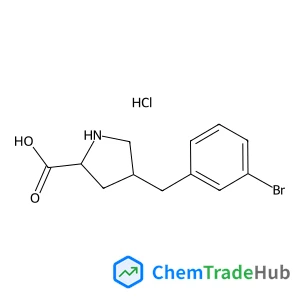
(2S,4R)-4-(3-Bromobenzyl)pyrrolidine-2-carboxylic acid hydrochloride
CAS番号:
1049734-10-2
分子式:
C12H15BrClNO2
![(3S,4aS,8aS)-2-[(2R,3S)-3-Amino-2-hydroxy-4-phenylbutyl]-N-(2-methyl-2-propanyl)decahydro-3-isoquinolinecarboxamide structure](https://static.chemtradehub.com/structs/136/136522-17-3-4d77.webp "(3S,4aS,8aS)-2-[(2R,3S)-3-Amino-2-hydroxy-4-phenylbutyl]-N-(2-methyl-2-propanyl)decahydro-3-isoquinolinecarboxamide structure")
おすすめサプライヤー





免責事項
このページに表示される学術雑誌情報は、参考および研究目的のみを目的としています。当社は雑誌出版社とは提携しておらず、投稿の取り扱いも行っておりません。出版に関するお問い合わせは、各雑誌出版社に直接ご連絡ください。
表示されている情報に誤りがある場合は、support@chemtradehub.com までご連絡ください。迅速に確認し、対応いたします。