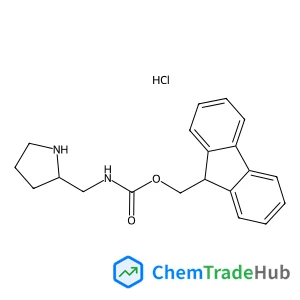
(S)-(9H-Fluoren-9-yl)methyl (pyrrolidin-2-ylmethyl)carbamate hydrochloride
CAS番号:
1217813-15-4
分子式:
C20H23ClN2O2
Chuan-Sen Yang, Da-Shan Shang, Yi-Sheng Chai, Li-Qin Yan, Bao-Gen Shen, Young Sun
Solid state electrochemical cells with synaptic functions have important applications in building smart-terminal networks. Here, the essential synaptic functions including potentiation and depression of synaptic weight, transition from short- to long-term plasticity, spike-rate-dependent plasticity, and spike-timing-dependent plasticity behavior were successfully realized in an Ag/MoOx/fluorine-doped tin oxide (FTO) cell with continual resistance switching. The synaptic plasticity underlying these functions was controlled by tuning the excitatory post-synaptic current (EPSC) decay, which is determined by the applied voltage pulse number, width, frequency, and intervals between the pre- and post-spikes. The physical mechanism of the artificial synapse operation is attributed to the interfacial electrochemical reaction processes of the MoOx films with the adsorbed water, where protons generated by water decomposition under an electric field diffused into the MoOx films and intercalated into the lattice, leading to the short- and long-term retention of cell resistance, respectively. These results indicate the possibility of achieving advanced artificial synapses with solid state electrochemical cells and will contribute to the development of smart-terminal networking systems.

Journal of Asian Natural Products Research

Bioorganic & Medicinal Chemistry

Main Group Chemistry

Journal of the Indian Institute of Science

Cellulose

Critical Reviews in Solid State and Materials Sciences

Chinese Journal of Chemistry

Topics in Catalysis

Atomization and Sprays

Bioorganic & Medicinal Chemistry Letters
Michio Ikezawa, Xiuying Wang, Pengtao Jing, Haibo Li, Yasuaki Masumoto
DOI: 10.1039/C5CP00034C
Masaki Hiratsuka, Ryo Ohmura, Amadeu K. Sum, Saman Alavi, Kenji Yasuoka
DOI: 10.1039/C4CP05732E
Jian-Hao Li, T. J. Zuehlsdorff, M. C. Payne, N. D. M. Hine
DOI: 10.1039/C5CP01018G
Adam M. Scheer, Oliver Welz, Subith S. Vasu, David L. Osborn, Craig A. Taatjes
DOI: 10.1039/C4CP06097K
Robert Schennach
DOI: 10.1039/C5CP00070J
Jing Ge, Zhigang Geng, Shenlong Jiang, Kaili Fan, Zhenkun Guo, Jiahua Hu, Zongwei Chen
DOI: 10.1039/C5CP00323G
Yuan Jin, Xiao-Peng Cui, Wei-Hua Han, Shi-Xun Cao, Yu-Ze Gao, Jin-Cang Zhang
DOI: 10.1039/C5CP00842E
Xinqiang Wang, Hengjiang Zhu
DOI: 10.1039/C4CP05739B
R. L. Hudson, P. A. Gerakines, M. J. Loeffler
DOI: 10.1039/C5CP00975H
2-メトキシ-4-(メチルスルフィニル)アミンは、主に医薬品および農薬の製造に使用されます。また、合成化学の一部として研究用材料としても利用されます。
代替品としては、4,6-二クロロピラミジンアミンや他のピラミジン系化合物が考えられます。ただし、目的と用途によって最適な代替品は異なります。
6-氯-4-甲基-1H-吲哚の廃棄物は、適切な容器に収集し、密閉して保管します。温度は常温、湿度は低く、直射日光を避けて保管することを推奨します。廃棄処理は専門...
2-フローユロ-4-(トリフルオロメチル)ベンゾイドのCAS番号は207974-08-1です。この化合物はGHS分類で毒性物質と有害な反応物質として分類されます...
4-ニトロフェニルN-[(ベンゼルオキシルカーボンイル]グリシングリシングリシン酸は、室温で暗所に保管し、乾燥した環境で保存することを推奨します。容器は密閉性の...
イソデスロラタドリンの代替品としては、デスロラタドリンや他の抗ヒスタミン薬が挙げられます。具体的には、デスロラタドリン、ラセカミド、フェルタドリンなどが、症状や...
5-甲氧基-1,2,3,4-四氢异喹啉盐酸盐の一般的な合成方法は、メタノール中で5-メトキシ-1,2,3,4-四ヒュドロイソキシンを塩酸で塩化します。この反応で...
CAS番号6471-78-9の4-アミノ-5-メトキシ-2-トルエンサルホニック酸は、GHS分類では corrosive(腐食性)と識別されます。EUのREAC...
甲基孕酮の取り扱いは、PPE(個人保護具)の使用が必要な重要な安全事項を伴います。防塵マスク、ゴーグル、手袋を着用することが推奨されます。ドラフトチャンバーを使...

Physical Chemistry Chemical Physics (PCCP) is an international journal co-owned by 19 physical chemistry and physics societies from around the world. This journal publishes original, cutting-edge research in physical chemistry, chemical physics and biophysical chemistry. To be suitable for publication in PCCP, articles must include significant innovation and/or insight into physical chemistry; this is the most important criterion that reviewers and Editors will judge against when evaluating submissions. The journal has a broad scope and welcomes contributions spanning experiment, theory, computation and data science. Topical coverage includes spectroscopy, dynamics, kinetics, statistical mechanics, thermodynamics, electrochemistry, catalysis, surface science, quantum mechanics, quantum computing and machine learning. Interdisciplinary research areas such as polymers and soft matter, materials, nanoscience, energy, surfaces/interfaces, and biophysical chemistry are welcomed if they demonstrate significant innovation and/or insight into physical chemistry. Joined experimental/theoretical studies are particularly appreciated when complementary and based on up-to-date approaches.
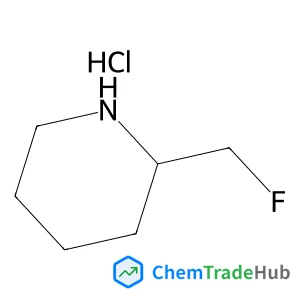
![4-[(2-{2-[2-(2-Aminoethoxy)ethoxy]ethoxy}ethyl)amino]-2-(2,6-dioxo-3-piperidinyl)-1H-isoindole-1,3(2H)-dione structure](https://static.chemtradehub.com/structs/209/2093416-31-8-3162.webp "4-[(2-{2-[2-(2-Aminoethoxy)ethoxy]ethoxy}ethyl)amino]-2-(2,6-dioxo-3-piperidinyl)-1H-isoindole-1,3(2H)-dione structure")