












![4-[2-(Trichlorosilyl)ethyl]benzenesulfonyl chloride structure](https://static.chemtradehub.com/structs/797/79793-00-3-de16.webp "4-[2-(Trichlorosilyl)ethyl]benzenesulfonyl chloride structure")
Interaction between charged nanoparticles and vesicles: coarse-grained molecular dynamics simulations
文献情報
出版日
2016-10-27
DOI
10.1039/C6CP05998H
インパクトファクター
3.676
著者
Linying Liu, Jianhua Zhang, Xiaowei Zhao, Zheng Mao, Na Liu, Youyu Zhang
原文を見る
要旨
An enhanced understanding of the interactions between charged nanoparticles (CNPs) and a curved vesicle membrane may have important implications for the design of nanocarrier agents and drug delivery systems. In this work, coarse-grained molecular dynamics (CGMD) simulations of the CNPs with vesicles were performed to evaluate the effects of hydrophobicity, surface charge density and distribution on the curved vesicle membrane. The simulations reveal that there exist four distinct modes (insertion, repulsion, adhesion, and penetration) in the CNP–vesicle interaction. In contrast to previous studies on a planar membrane, the interactions of CNPs and a curved vesicle membrane show some novel properties. CNPs with low surface charge density (or neutral ones) can penetrate into the interior of the vesicle membrane more easily because of the increased membrane tension. The asymmetry between two leaflets of the membrane induces different interaction strengths of the negatively CNPs with the outer and inner leaflets. After penetration, the negatively CNPs prefer to stay close to the inner leaflet inside the vesicle where CNPs have stronger interactions with their surroundings. In the present work, we analyze the detailed mechanism of CNP's spontaneous penetration into vesicles, which is rarely mentioned in previous simulations. Moreover, we found that the negatively CNPs with the same surface charge density but different distribution result in different modes: the homogeneous mode is more likely to adsorb on the vesicle surface while the inhomogeneous mode tends to be more penetrable. In addition, the flip-flop phenomenon of the lipid membrane and the exchanging of water in or out of the vesicle were observed during penetration. Our results demonstrate that the electrostatic effect plays an essential role in the interaction between CNPs and vesicles. These findings suggest a way of controlling the CNP–vesicle interaction by coupling the hydrophobic properties, surface charge density and distribution of CNPs to enhance the probability of CNP's penetration into vesicles.
関連文献
Ab initio modelling of methane hydrate thermophysical properties
Z. M. Jendi, P. Servio, A. D. Rey
2016-03-14
Paper
DOI: 10.1039/C5CP06530E
Ionogel based on biopolymer–silica interpenetrated networks: dynamics of confined ionic liquid with lithium salt
Carole V. Cerclier, Jean-Marc Zanotti, Jean Le Bideau
2015-10-13
Paper
DOI: 10.1039/C5CP04889C
Nitrogen content and morphology dependent field emission properties of nitrogen-doped SiC nanowires and density functional calculations
Jian Zhao, Alan Meng, Meng Zhang, Zhenjiang Li
2015-09-28
Paper
DOI: 10.1039/C5CP04064G
Electron delocalization and electron density of small polycyclic aromatic hydrocarbons in singlet excited states
Mar Estévez-Fregoso, Jesús Hernández-Trujillo
2016-01-11
Paper
DOI: 10.1039/C5CP06993A
Anisotropic thermoelectric properties of layered compounds in SnX2 (X = S, Se): a promising thermoelectric material
Zuju Ma, Chao He, Kechen Wu
2015-10-16
Paper
DOI: 10.1039/C5CP03700J
Inhibition mechanism of SAHA in HDAC: a revisit
Jingwei Zhou, Ruibo Wu
2015-10-08
Communication
DOI: 10.1039/C5CP05633K
Theoretical study of polyiodide formation and stability on monolayer and bilayer graphene
Pascal Puech, Iann C. Gerber
2015-10-19
Paper
DOI: 10.1039/C5CP04594K
Kinetic isotope effects for fast deuterium and proton exchange rates
Daniele Mammoli
2016-03-09
Paper
DOI: 10.1039/C5CP07459B
Formation of Li3O4 nano particles in the discharge products of non-aqueous lithium–oxygen batteries leads to lower charge overvoltage
L. Shi, A. Xu, T. S. Zhao
2015-10-02
Paper
DOI: 10.1039/C5CP03886C
A perylene bisimide derivative with pyrene and cholesterol as modifying structures: synthesis and fluorescence behavior
Gang Wang, Weina Wang, Rong Miao, Congdi Shang, Meixia He, Haonan Peng, Gang He, Yu Fang
2016-03-31
Paper
DOI: 10.1039/C6CP01447J
こちらもおすすめ
化合物よくある質問
カルボニル基が付いた5-氰基-1-{[(2-メチル-2-プロpanyl)オキシ]カーボンイル}1H-吲哚-2-イリド-2-ボリン酸はどのように保存すればよいですか?
カルボニル基が付いた5-氰基-1-{[(2-メチル-2-プロpanyl)オキシ]カーボンイル}1H-吲哚-2-イリド-2-ボリン酸は、直射日光を避けて室温(15...
475102-15-9(5-Cyano-1-{[(2-meth...
化合物よくある質問
tert-ブチル2-クロロメチルピリジン-3-基炭酸エステルの市場動向や研究トレンドはどうですか?
この化合物は合成化学分野において、特にピリジン化合物の合成や改良に用いられます。最近の研究では、ピリジン化合物の新規合成法や特性の改良が注目されています。市場動...
1203498-98-9tert-Butyl 2-chloro-...
化合物よくある質問
聚二季戊四醇六丙烯酸酯はどの業界で使用されていますか?
聚二季戊四醇六丙烯酸酯は、医薬品、ポリマー、センサー、半導体などの業界で広く使用されています。特にポリマー業界では硬化剤として、医薬分野では医療機器の製造に使用...
29570-58-93-(Acryloyloxy)-2-({...
化合物よくある質問
1-氯-5-硝基异喹啉の市場動向や研究トレンドはどうですか?
1-氯-5-硝基异喹啉は、薬理学や合成化学の研究分野で注目されています。市場動向としては、その生物学的な活性や合成可能性を評価する研究が増えています。また、代替...
58142-97-51-Chloro-5-nitroisoq...
化合物よくある質問
2-チロール-5-メチルスルフェニル-3-trifルオルメチルベンゼンはどのように合成されますか?
2-チロール-5-メチルスルフェニル-3-trifルオルメチルベンゼンは、トリフルオロメチル化反応と硫化反応を経て合成されます。通常、トリフルオロメチル化剤と硫...
957066-04-51-Chloro-4-(methylsu...
化合物よくある質問
p-トールイルマグネシウムブロミドの物理化学的性質は何ですか?
p-トールイルマグネシウムブロミドのCAS番号は4294-57-9です。この化合物は白色の結晶性粉末で、分子量は204.32です。溶剤中で良好に溶解しますが、水...
4294-57-9p-Tolylmagnesium bro...
化合物よくある質問
1-(5-甲基-2-硫化素基)プロパン-1-酮の市場動向や研究トレンドはどうですか?
1-(5-甲基-2-硫化素基)プロパン-1-酮の市場動向は、化学産業全体の需要に影響を受けますが、最近では pharmaceutical 分野での応用が注目され...
59303-13-81-(5-Methyl-2-thieny...
化合物よくある質問
十一碳烯酰甘氨酸を取り扱う際の実験室安全事項は何ですか?
十一碳烯酰甘氨酸は吸入や皮膚から吸収されることがあり、取り扱う際には防塵マスクと手袋を使用してください。ドラフトチャンバーを用いて漏洩を処理し、適切なSDS(S...
54301-26-7N-10-Undecenoylglyci...
化合物よくある質問
1H,1H-全氟-3,6-二氧杂葵-1-醇を取り扱う際の実験室安全事項は何ですか?
この化合物は吸入や皮膚吸収による毒性があるため、防塵マスク、ゴーグル、防護手袋を使用する必要があります。ドラフトチャンバーでの操作が必要です。漏洩時には即座に換...
152914-73-32,2-Difluoro-2-[1,1,...
化合物よくある質問
3-(4-(フルオロメチルオキシ)フェニル)-1,2,4-オキサジアゾール-5-カルボハイドライドは安全ですか?
安全性は化合物の使用方法によります。直接的な毒性は報告されていませんが、吸入や皮膚接触には注意が必要です。適切な防護服を着用し、換気を図ることを推奨します。
883028-82-83-(4-(Trifluorometho...
掲載誌
Physical Chemistry Chemical Physics

CiteScore:
5.5
自己引用率:
10.3%
年間論文数:
3036
Physical Chemistry Chemical Physics (PCCP) is an international journal co-owned by 19 physical chemistry and physics societies from around the world. This journal publishes original, cutting-edge research in physical chemistry, chemical physics and biophysical chemistry. To be suitable for publication in PCCP, articles must include significant innovation and/or insight into physical chemistry; this is the most important criterion that reviewers and Editors will judge against when evaluating submissions. The journal has a broad scope and welcomes contributions spanning experiment, theory, computation and data science. Topical coverage includes spectroscopy, dynamics, kinetics, statistical mechanics, thermodynamics, electrochemistry, catalysis, surface science, quantum mechanics, quantum computing and machine learning. Interdisciplinary research areas such as polymers and soft matter, materials, nanoscience, energy, surfaces/interfaces, and biophysical chemistry are welcomed if they demonstrate significant innovation and/or insight into physical chemistry. Joined experimental/theoretical studies are particularly appreciated when complementary and based on up-to-date approaches.
おすすめ化合物
![2-Hydroxy-4-[({[(4-methylphenyl)sulfonyl]oxy}acetyl)amino]benzoic acid structure](https://static.chemtradehub.com/structs/501/501919-59-1-579f.webp "2-Hydroxy-4-[({[(4-methylphenyl)sulfonyl]oxy}acetyl)amino]benzoic acid structure")
2-Hydroxy-4-[({[(4-methylphenyl)sulfonyl]oxy}acetyl)amino]benzoic acid
CAS番号:
501919-59-1
分子式:
C16H15NO7S
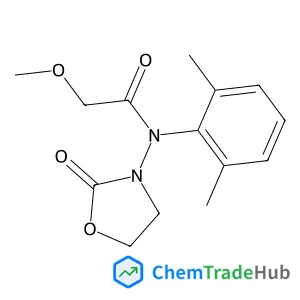
N-(2,6-Dimethylphenyl)-2-methoxy-N-(2-oxo-1,3-oxazolidin-3-yl)acetamide
CAS番号:
77732-09-3
分子式:
C14H18N2O4
おすすめサプライヤー






免責事項
このページに表示される学術雑誌情報は、参考および研究目的のみを目的としています。当社は雑誌出版社とは提携しておらず、投稿の取り扱いも行っておりません。出版に関するお問い合わせは、各雑誌出版社に直接ご連絡ください。
表示されている情報に誤りがある場合は、support@chemtradehub.com までご連絡ください。迅速に確認し、対応いたします。