












Water sorption behaviour of two series of PHA/montmorillonite films and determination of the mean water cluster size
文献情報
出版日
2016-07-04
DOI
10.1039/C6CP04147G
インパクトファクター
3.676
著者
N. Follain, R. Crétois, L. Lebrun, S. Marais
原文を見る
要旨
Biodegradable polyester-based films constituted of poly(hydroxyalkanoates) (PHA) were successfully extruded with various Cloisite 30B contents. The morphology was highly dependent on the matrix, poly(3-hydroxybutyrate-co-3-hydroxyvalerate) and poly(3-hydroxybutyrate-co-4-hydroxybutyrate), the polymer crystalline phase fraction, the matrix/nanoclay interfacial regions as well as the nanoclay content. Water vapour resistance was investigated through sorption kinetics, isotherms, modelling aspect, and diffusivity. A typical sigmoid-shaped isotherm was obtained in every case. It emerges that the nanoclay highly contributed to the increase of water solubility of matrices. The dependence of polymer crystallinity on the affinity of the nanocomposite films for water was highlighted. Thermodynamic and kinetic contributions of the sorption process were also correlated with the film morphology. According to the matrix used, water diffusivity in films was differently impacted by the sorbed water amount. The access of sorbed water molecules within films was examined through a mathematical modelling approach and the deduced mean cluster size of water vs. its activity was corroborated by sorption kinetics.
関連文献
Macroreticular p-(ω-sulfonic-perfluoroalkylated) polystyrene ion-exchange resins: a new type of selective solid acid catalyst
Zhenghuan Lin, Chengxue Zhao
2005-06-15
Communication
DOI: 10.1039/B504767F
Synthesis and characterization of the first trimetallic nitride templated pyrrolidino endohedral metallofullerenes
Ting Cai, Zhongxin Ge, Erick B. Iezzi, Thomas E. Glass, Kim Harich, Harry W. Gibson, Harry C. Dorn
2005-06-15
Communication
DOI: 10.1039/B503333K
Stereoselective E/Z photoisomerization of oxazolidinone functionalized enecarbamates: direct and triplet sensitized irradiation
J. Sivaguru, Steffen Jockusch, Nicholas J. Turro
2005-06-01
Communication
DOI: 10.1039/B504413H
Dibenzothiophene-S,S-dioxide–fluorene co-oligomers. Stable, highly-efficient blue emitters with improved electron affinity
Irene I. Perepichka, Martin R. Bryce, Lars-Olof Pålsson
2005-06-09
Communication
DOI: 10.1039/B417717G
Cysteine methyl ester modified glassy carbon spheres for removal of toxic heavy metals from aqueous media
Gregory G. Wildgoose, Henry C. Leventis, Andrew O. Simm, John H. Jones, Richard G. Compton
2005-06-22
Communication
DOI: 10.1039/B506461A
A general approach towards hierarchical porous carbon particles
J. Eric Hampsey, Qingyuan Hu, Lynn Rice, Jiebin Pang, Zhiwang Wu, Yunfeng Lu
2005-06-09
Communication
DOI: 10.1039/B502866C
こちらもおすすめ
化合物よくある質問
1-{3-[5-(エチルカルボンイル)-2,4-ジメチル-1H-ピロロール-3-基]プロパニル}ピペリジン-4-カルボン酸について、適用される法規ガイドラインは何ですか?
この化合物はCAS番号1142209-81-1であり、GHS分類では corrosive (腐食性物質) と classified (分類物質) として指定され...
1142209-81-11-{3-[5-(Ethoxycarbo...
化合物よくある質問
2,2-二氟-1,3-ベンゾジオキサン-5-カルボキシlic酸とは何ですか?
2,2-二氟-1,3-ベンゾジオキサン-5-カルボキシlic酸は、CAS番号656-46-2の化合物で、化学式はC8H4F2O4です。この化合物は白色の結晶性粉...
656-46-22,2-Difluoro-1,3-ben...
化合物よくある質問
8-氯-4-色原酮の代替品はありますか?
8-氯-4-色原酮(CAS番号: 49701-11-3)の代替品には、他の色原酮類似物や、構造が似ている化合物があります。例えば、8-メチル-4-色原酮や、他の...
49701-11-38-Chloro-2,3-dihydro...
化合物よくある質問
エチル6,6-ジメチル-4,5,6,7-テトラヒドロ-1H-インドアゼー-3-カルボキシレートとは何ですか?
エチル6,6-ジメチル-4,5,6,7-テトラヒドロ-1H-インドアゼー-3-カルボキシレートは、CAS番号1233243-56-5を有する化合物です。これは有...
1233243-56-5Ethyl 6,6-dimethyl-4...
化合物よくある質問
4-叔丁基-6-氯-嘧啶に適用される法規ガイドラインは何ですか?
4-叔丁基-6-氯-嘧啶はCAS番号3435-24-3で、GHS分類では毒性物質とみなし、GHSの危険性分類が適用されます。REACH規則では登録が必要で、Eu...
3435-24-34-Tert-butyl-6-chlor...
化合物よくある質問
維库溴铵杂质Bはどのように合成されますか?
維库溴铵杂质Bは、アンドロステンデンから始まり、一連の合成反応、包括的な選択性と高い収率で合成されます。具体的には、ブロミド化、酸化、ジマーゼ反応、アミド化など...
50587-95-6(2beta,3alpha,5alpha...
化合物よくある質問
2-(4-氟苄基)-吡咯烷の物理化学的性質は何ですか?
CAS番号350017-04-8の2-(4-氟苄基)-吡咯烷は、結晶性の白色粉末です。分子量は199.17 g/molで、水に溶けにくいです。化学反応では比較的...
350017-04-82-(4-Fluorobenzyl)py...
化合物よくある質問
3-喹啉甲醛(2-チロール-8-エチル)は安全ですか?
3-喹啉甲醛(2-チロール-8-エチル)は一定の毒性を持つため、取扱には注意が必要です。使用する際は適切な防護具を着用し、密閉容器で保管・搬送し、直接的な接触を...
335196-05-92-Chloro-8-ethyl-3-q...
化合物よくある質問
エチル3-(ヒドロキシメチル)-1H-ピロール-2-カルボキシレートはどのように保存すればよいですか?
エチル3-(ヒドロキシメチル)-1H-ピロール-2-カルボキシレートは、室温(25℃)以下で保存し、直射日光を避け、乾燥した環境で保管することが推奨されます。ま...
75448-69-0Ethyl 3-(hydroxymeth...
119410-05-88-Chloro-11-(4-piper...
掲載誌
Physical Chemistry Chemical Physics

CiteScore:
5.5
自己引用率:
10.3%
年間論文数:
3036
Physical Chemistry Chemical Physics (PCCP) is an international journal co-owned by 19 physical chemistry and physics societies from around the world. This journal publishes original, cutting-edge research in physical chemistry, chemical physics and biophysical chemistry. To be suitable for publication in PCCP, articles must include significant innovation and/or insight into physical chemistry; this is the most important criterion that reviewers and Editors will judge against when evaluating submissions. The journal has a broad scope and welcomes contributions spanning experiment, theory, computation and data science. Topical coverage includes spectroscopy, dynamics, kinetics, statistical mechanics, thermodynamics, electrochemistry, catalysis, surface science, quantum mechanics, quantum computing and machine learning. Interdisciplinary research areas such as polymers and soft matter, materials, nanoscience, energy, surfaces/interfaces, and biophysical chemistry are welcomed if they demonstrate significant innovation and/or insight into physical chemistry. Joined experimental/theoretical studies are particularly appreciated when complementary and based on up-to-date approaches.
おすすめ化合物
![1-(Hexopyranosyloxy)-4a,5-dihydroxy-7-methyl-1,4a,5,6,7,7a-hexahydrocyclopenta[c]pyran-7-yl 3-phenylacrylate structure](https://static.chemtradehub.com/structs/192/19210-12-9-ecae.webp "1-(Hexopyranosyloxy)-4a,5-dihydroxy-7-methyl-1,4a,5,6,7,7a-hexahydrocyclopenta[c]pyran-7-yl 3-phenylacrylate structure")

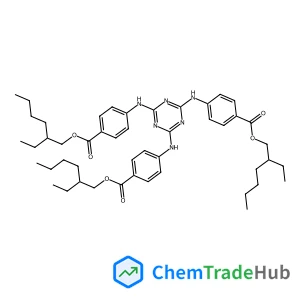
Tris(2-ethylhexyl) 4,4',4''-(1,3,5-triazine-2,4,6-triyltriimino)tribenzoate
CAS番号:
88122-99-0
分子式:
C48H66N6O6

おすすめサプライヤー





免責事項
このページに表示される学術雑誌情報は、参考および研究目的のみを目的としています。当社は雑誌出版社とは提携しておらず、投稿の取り扱いも行っておりません。出版に関するお問い合わせは、各雑誌出版社に直接ご連絡ください。
表示されている情報に誤りがある場合は、support@chemtradehub.com までご連絡ください。迅速に確認し、対応いたします。