












Unlocking the observation of different proton populations in fluorinated polymers by solid-state 1H and 19F double resonance NMR spectroscopy
文献情報
出版日
2016-09-16
DOI
10.1039/C6CP04139F
インパクトファクター
3.676
著者
P. Goossens, F. Saïdi, J. A. Martens
原文を見る
要旨
Nafion proton exchange membranes (PEMs) for fuel cell applications are extensively studied and commercially applied, but their unique proton conduction capabilities are still somewhat unexplained. For studying proton dynamics in situ, molecular level spectroscopic techniques have been of limited utility so far. By solid-state 1H and 19F double resonance nuclear magnetic resonance (NMR) spectroscopy using the recently revived multiple contact cross-polarization (MC-CP) pulse sequence along with double-quantum 1H–1H filtering, high resolution proton populations distinct from the dominant water resonance were observed in Nafion for the first time. This methodology quenches signal decay due to spin–lattice relaxation in the rotating frame and enables magnetization transfer between the relatively mobile 1H and 19F spin baths in Nafion. Further studies of these previously unrevealed proton populations will lead to a better understanding of the Nafion proton conduction mechanism and proton exchange processes in general.
関連文献
Study of electronic structure in the L-edge spectroscopy of actinide materials: UO2 as an example
Harry Ramanantoanina, Goutam Kuri, Matthias Martin, Johannes Bertsch
2019-03-18
Paper
DOI: 10.1039/C9CP01021A
Towards capturing cellular complexity: combining encapsulation and macromolecular crowding in a reverse micelle
Philipp Honegger, Othmar Steinhauser
2019-03-25
Paper
DOI: 10.1039/C9CP00053D
First-principles prediction of phonon-mediated superconductivity in XBC (X = Mg, Ca, Sr, Ba)
Enamul Haque, M. Anwar Hossain, Catherine Stampfl
2019-04-02
Paper
DOI: 10.1039/C8CP07634K
Understanding methane/carbon dioxide partitioning in clay nano- and meso-pores with constant reservoir composition molecular dynamics modeling
Narasimhan Loganathan, Geoffrey M. Bowers, Brice F. Ngouana Wakou, Andrey G. Kalinichev
2019-03-07
Paper
DOI: 10.1039/C9CP00851A
Ozonolysis of 3-carene in the atmosphere. Formation mechanism of hydroxyl radical and secondary ozonides
Lingyu Wang, Yuhong Liu
2019-03-18
Paper
DOI: 10.1039/C8CP07195K
The structural, phonon and optical properties of [CH3NH3]M0.5CrxAl0.5−x(HCOO)3 (M = Na, K; x = 0, 0.025, 0.5) metal–organic framework perovskites for luminescence thermometry
Maciej Ptak, Błażej Dziuk, Dagmara Stefańska, Krzysztof Hermanowicz
2019-03-29
Paper
DOI: 10.1039/C9CP01043B
Plasmon-mediated chemical transformation from alkane to alkene on a silver nanoparticle array under 532 nm excitation
Yuki Takeuchi, Tetsuya Fujita, Nobuyuki Takeyasu
2019-03-11
Paper
DOI: 10.1039/C9CP00129H
The dramatic effect of N-methylimidazole on trans axial ligand binding to ferric heme: experiment and theory
Mohammad Aarabi, Reza Omidyan, Satchin Soorkia, Gilles Grégoire, Maria-Elisa Crestoni, Aurélien de la Lande, Benoît Soep, Niloufar Shafizadeh
2018-12-20
Paper
DOI: 10.1039/C8CP06210B
Modeling of a fast-response magnetic-sensitive hydrogel for dynamic control of microfluidic flow
Qimin Liu, Hua Li, K. Y. Lam
2018-12-19
Paper
DOI: 10.1039/C8CP06556J
The canonical behavior of the entropic component of thermodynamic effective molarity. An attempt at unifying covalent and noncovalent cyclizations
Stefano Di Stefano, Luigi Mandolini
2018-12-17
Perspective
DOI: 10.1039/C8CP06344C
こちらもおすすめ
化合物よくある質問
6- bromo-1-cyclopropyl-1H-benzimidazoleの市場動向や研究トレンドはどうですか?
6- bromo-1-cyclopropyl-1H-benzimidazoleは、抗炎症、抗ウイルス作用を持つことが報告されており、新薬開発の研究対象として注目...
1416713-53-56-Bromo-1-cyclopropy...
化合物よくある質問
環氧プロpanol-d5を取り扱う際の実験室安全事項は何ですか?
取り扱う際には、防護眼鏡と手袋を使用し、ドラフトチャンバー内で操作することを推奨します。漏洩時には適切な手順で処理し、安全データシートを常に参照してください。
1246819-20-4Glycidol-d5
化合物よくある質問
2,2’-ジメチル-3,3’-ビピリジンはどのように合成されますか?
2,2’-ジメチル-3,3’-ビピリジンは、ピリジンと2-メチルアクリルアミドを有機合成反応で合成します。この反応では、ピリジンと2-メチルアクリルアミドを含有...
86156-55-02,2’-Dimethyl-3,3’-b...
化合物よくある質問
6-甲基ピリジン-2-ボリック酸の主な用途は何ですか?
6-甲基ピリジン-2-ボリック酸は、合成化学、医薬品合成、以及研究用途などに広く使用され、特に組換えDNA技術や分子生物学の研究において重要な役割を果たします。
372963-50-3(6-Methyl-2-pyridiny...
化合物よくある質問
(R)-3-(1-甲基-2-氧環己基)プロpano酸メチルは安全ですか?
(R)-3-(1-甲基-2-氧環己基)プロpano酸メチルは一定の安全性がありますが、直接的な皮膚接触や吸入は避けるべきです。使用する際は適切な個々の安全データ...
94089-47-1methyl 3-[(1R)-1-met...
化合物よくある質問
ketorolacはどのように保存すればよいですか?
ketorolacは、密封して遮光容器に保管し、直射日光や高温を避けて保存してください。温度は常温で保存し、湿度をなるべく低く保つことが推奨されます。
74103-06-3rac Ketorolac
化合物よくある質問
L-2,3-二氨基丙酸二盐酸盐を取り扱う際の実験室安全事項は何ですか?
L-2,3-二氨基丙酸二盐酸盐は腐食性が強く、皮膚や粘膜に刺激を与える可能性があります。取り扱う際は、防塵マスク、ゴーグル、手袋を使用し、適切な排気設備を使用し...
19777-68-5(S)-2,3-Diaminopropa...
化合物よくある質問
2-(4-溴ピリジン-2-基)乙腈の物理化学的性質は何ですか?
2-(4-溴ピリジン-2-基)乙腈のCAS番号は312325-73-8です。主に結晶形態で存在し、分子量は159.01 g/molです。この化合物は水に溶けやす...
312325-73-8(4-Bromo-2-pyridinyl...
化合物よくある質問
3-フローロ-[1,1-ベンジレン]-3,4-ジカルボン酸を取り扱う際の実験室安全事項は何ですか?
この化合物は毒性は低いですが、直接的な接触や吸入に注意が必要です。PPE(個人防護具)を着用し、ドラフトチャンバーを使用して操作することを推奨します。また、漏洩...
1261915-32-53'-Fluoro-[1,1'-biph...
化合物よくある質問
3-(1-氧代-1,3-二氢-2H-2-异吲哚)丙酸の主な用途は何ですか?
3-(1-氧代-1,3-二氢-2H-2-异吲哚)丙酸は、薬理学研究や医薬品製造において広く用いられる化合物です。また、工業的な用途でも一部の化学反応の触媒や助剤...
83747-30-23-(1-Oxo-1,3-dihydro...
掲載誌
Physical Chemistry Chemical Physics

CiteScore:
5.5
自己引用率:
10.3%
年間論文数:
3036
Physical Chemistry Chemical Physics (PCCP) is an international journal co-owned by 19 physical chemistry and physics societies from around the world. This journal publishes original, cutting-edge research in physical chemistry, chemical physics and biophysical chemistry. To be suitable for publication in PCCP, articles must include significant innovation and/or insight into physical chemistry; this is the most important criterion that reviewers and Editors will judge against when evaluating submissions. The journal has a broad scope and welcomes contributions spanning experiment, theory, computation and data science. Topical coverage includes spectroscopy, dynamics, kinetics, statistical mechanics, thermodynamics, electrochemistry, catalysis, surface science, quantum mechanics, quantum computing and machine learning. Interdisciplinary research areas such as polymers and soft matter, materials, nanoscience, energy, surfaces/interfaces, and biophysical chemistry are welcomed if they demonstrate significant innovation and/or insight into physical chemistry. Joined experimental/theoretical studies are particularly appreciated when complementary and based on up-to-date approaches.
おすすめ化合物
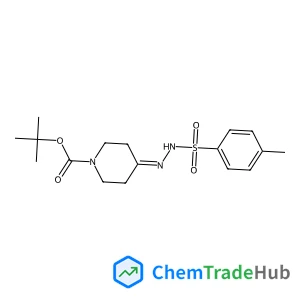
tert-Butyl 4-(2-(p-Tolylsulfonyl)hydrazono)piperidine-1-carboxylate
CAS番号:
1046478-89-0
分子式:
C17H25N3O4S
おすすめサプライヤー





免責事項
このページに表示される学術雑誌情報は、参考および研究目的のみを目的としています。当社は雑誌出版社とは提携しておらず、投稿の取り扱いも行っておりません。出版に関するお問い合わせは、各雑誌出版社に直接ご連絡ください。
表示されている情報に誤りがある場合は、support@chemtradehub.com までご連絡ください。迅速に確認し、対応いたします。