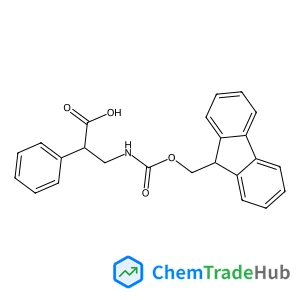
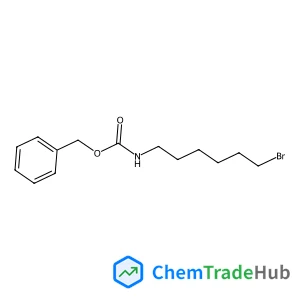
![(2S)-2-{[(9H-Fluoren-9-ylmethoxy)carbonyl]amino}-4-(methylselanyl)butanoic acid structure](https://static.chemtradehub.com/structs/121/1217852-49-7-f252.webp "(2S)-2-{[(9H-Fluoren-9-ylmethoxy)carbonyl]amino}-4-(methylselanyl)butanoic acid structure")
(2S)-2-{[(9H-Fluoren-9-ylmethoxy)carbonyl]amino}-4-(methylselanyl)butanoic acid
CAS番号:
1217852-49-7
分子式:
C20H21NO4Se
Beatrice N. Markiewicz, Thomas Lemmin, Wenkai Zhang, Ismail A. Ahmed, Hyunil Jo, Giacomo Fiorin, William F. DeGrado
The M2 proton channel of the influenza A virus has been the subject of extensive studies because of its critical role in viral replication. As such, we now know a great deal about its mechanism of action, especially how it selects and conducts protons in an asymmetric fashion. The conductance of this channel is tuned to conduct protons at a relatively low biologically useful rate, which allows acidification of the viral interior of a virus entrapped within an endosome, but not so great as to cause toxicity to the infected host cell prior to packaging of the virus. The dynamic, structural and chemical features that give rise to this tuning are not fully understood. Herein, we use a tryptophan (Trp) analog, 5-cyanotryptophan, and various methods, including linear and nonlinear infrared spectroscopies, static and time-resolved fluorescence techniques, and molecular dynamics simulations, to site-specifically interrogate the structure and hydration dynamics of the Trp41 gate in the transmembrane domain of the M2 proton channel. Our results suggest that the Trp41 sidechain adopts the t90 rotamer, the χ2 dihedral angle of which undergoes an increase of approximately 35° upon changing the pH from 7.4 to 5.0. Furthermore, we find that Trp41 is situated in an environment lacking bulk-like water, and somewhat surprisingly, the water density and dynamics do not show a measurable difference between the high (7.4) and low (5.0) pH states. Since previous studies have shown that upon channel opening water flows into the cavity above the histidine tetrad (His37), the present finding thus provides evidence indicating that the lack of sufficient water molecules near Trp41 needed to establish a continuous hydrogen bonding network poses an additional energetic bottleneck for proton conduction.
Amir A. Farajian, Reza Mortezaee, Tim H. Osborn, Olga V. Pupysheva, Michael Wang, Aruna Zhamu, Bor Z. Jang
DOI: 10.1039/C8CP07115B
Jacek Wójcik, Andrzej Ejchart, Michał Nowakowski
DOI: 10.1039/C9CP00590K
Jia Liu, Anping Wang, Kaisong Pu, Shaozheng Zhang, Terence Musho, Liang Chen
DOI: 10.1039/C9CP00151D
Enamul Haque, M. Anwar Hossain, Catherine Stampfl
DOI: 10.1039/C8CP07634K
Hao Wang, Wei Wei, Fengping Li, Baibiao Huang, Ying Dai
DOI: 10.1039/C9CP01196J
Maciej Ptak, Błażej Dziuk, Dagmara Stefańska, Krzysztof Hermanowicz
DOI: 10.1039/C9CP01043B
Giuseppe Cassone, Holger Kruse, Jiri Sponer
DOI: 10.1039/C8CP07492E
William D. Hong, Christopher N. Lam, Yangyang Wang, Youjun He, Luis E. Sánchez-Díaz, Changwoo Do
DOI: 10.1039/C8CP07520D
Qimin Liu, Hua Li, K. Y. Lam
DOI: 10.1039/C8CP06556J
Rosa Becerra, Robin Walsh
DOI: 10.1039/C8CP06208K
6- bromo-1-cyclopropyl-1H-benzimidazoleは、抗炎症、抗ウイルス作用を持つことが報告されており、新薬開発の研究対象として注目...
取り扱う際には、防護眼鏡と手袋を使用し、ドラフトチャンバー内で操作することを推奨します。漏洩時には適切な手順で処理し、安全データシートを常に参照してください。
2,2’-ジメチル-3,3’-ビピリジンは、ピリジンと2-メチルアクリルアミドを有機合成反応で合成します。この反応では、ピリジンと2-メチルアクリルアミドを含有...
6-甲基ピリジン-2-ボリック酸は、合成化学、医薬品合成、以及研究用途などに広く使用され、特に組換えDNA技術や分子生物学の研究において重要な役割を果たします。
(R)-3-(1-甲基-2-氧環己基)プロpano酸メチルは一定の安全性がありますが、直接的な皮膚接触や吸入は避けるべきです。使用する際は適切な個々の安全データ...
ketorolacは、密封して遮光容器に保管し、直射日光や高温を避けて保存してください。温度は常温で保存し、湿度をなるべく低く保つことが推奨されます。
L-2,3-二氨基丙酸二盐酸盐は腐食性が強く、皮膚や粘膜に刺激を与える可能性があります。取り扱う際は、防塵マスク、ゴーグル、手袋を使用し、適切な排気設備を使用し...
2-(4-溴ピリジン-2-基)乙腈のCAS番号は312325-73-8です。主に結晶形態で存在し、分子量は159.01 g/molです。この化合物は水に溶けやす...
この化合物は毒性は低いですが、直接的な接触や吸入に注意が必要です。PPE(個人防護具)を着用し、ドラフトチャンバーを使用して操作することを推奨します。また、漏洩...
3-(1-氧代-1,3-二氢-2H-2-异吲哚)丙酸は、薬理学研究や医薬品製造において広く用いられる化合物です。また、工業的な用途でも一部の化学反応の触媒や助剤...

Physical Chemistry Chemical Physics (PCCP) is an international journal co-owned by 19 physical chemistry and physics societies from around the world. This journal publishes original, cutting-edge research in physical chemistry, chemical physics and biophysical chemistry. To be suitable for publication in PCCP, articles must include significant innovation and/or insight into physical chemistry; this is the most important criterion that reviewers and Editors will judge against when evaluating submissions. The journal has a broad scope and welcomes contributions spanning experiment, theory, computation and data science. Topical coverage includes spectroscopy, dynamics, kinetics, statistical mechanics, thermodynamics, electrochemistry, catalysis, surface science, quantum mechanics, quantum computing and machine learning. Interdisciplinary research areas such as polymers and soft matter, materials, nanoscience, energy, surfaces/interfaces, and biophysical chemistry are welcomed if they demonstrate significant innovation and/or insight into physical chemistry. Joined experimental/theoretical studies are particularly appreciated when complementary and based on up-to-date approaches.